es
es fr
fr de
de nl
nl en
en it
it pt
pt ro
ro sv
sv ru
ru hr
hr da
da si
si pl
pl no
no cs
cs fi
fi el
el sr
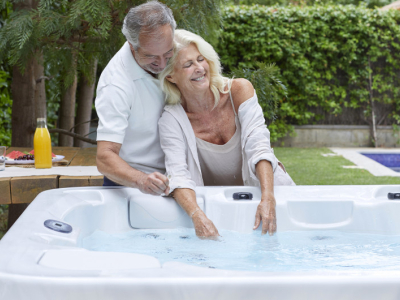
srWhen considering integrating a spa into a terrace or garden, choosing the model is only part of the project. How the spa integrates into its surroundings also plays a crucial role in the final result, both aesthetically and functionally.
Should you choose a spa with a coping , with a clearly visible edge around the basin, or opt for a spa without a coping , more integrated into the terrace? Both solutions can create particularly elegant wellness spaces, but they correspond to different design philosophies.
The choice depends on the desired architectural style, the materials used, accessibility, technical constraints, and maintenance requirements. Current trends in pool design show a growing interest in flush-mounted installations, which create a visual continuity between the water and the terrace.
Spa with or without coping: what is the difference?
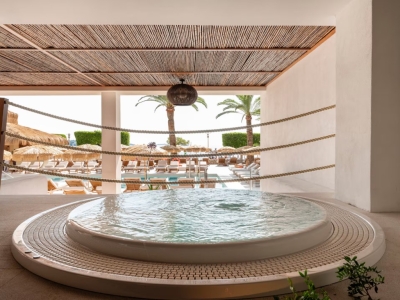
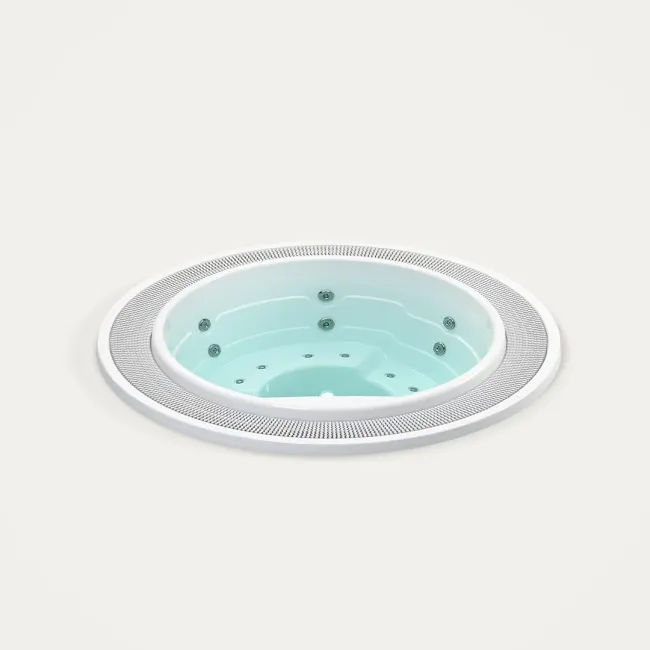
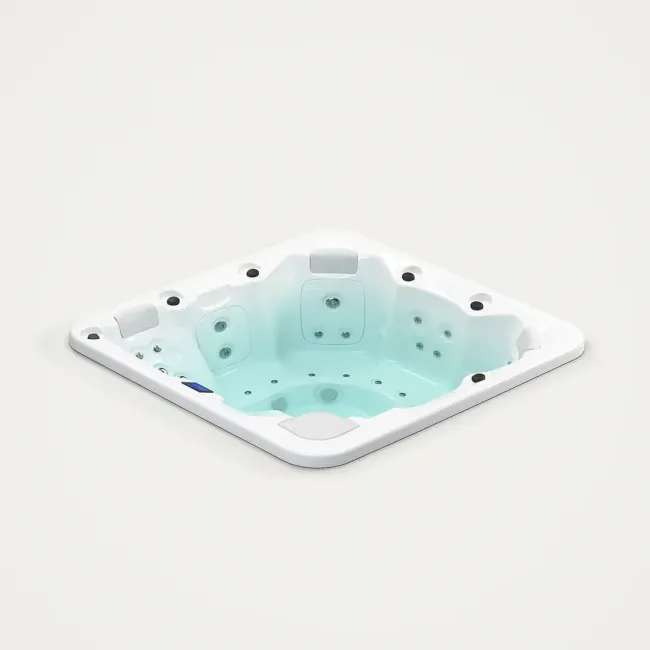
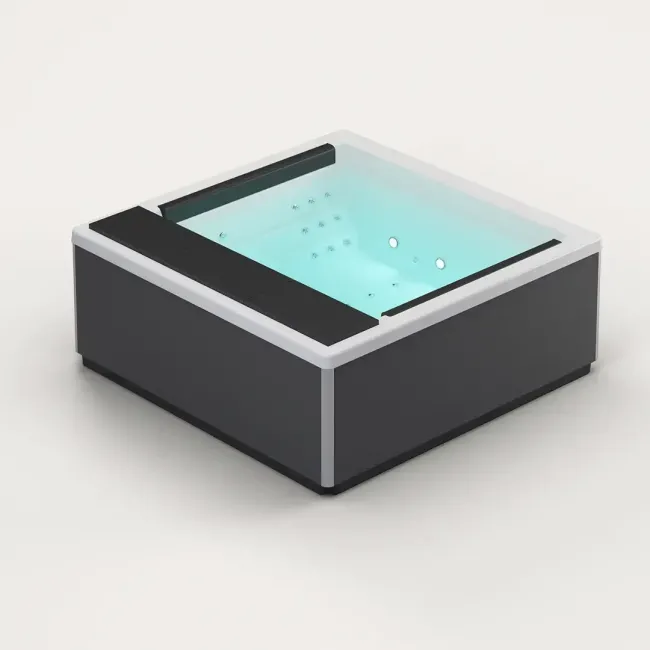
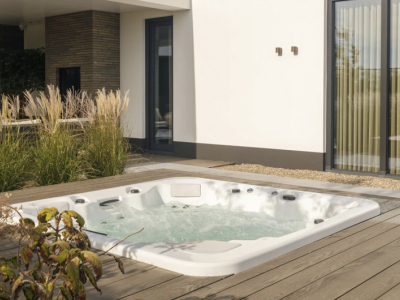
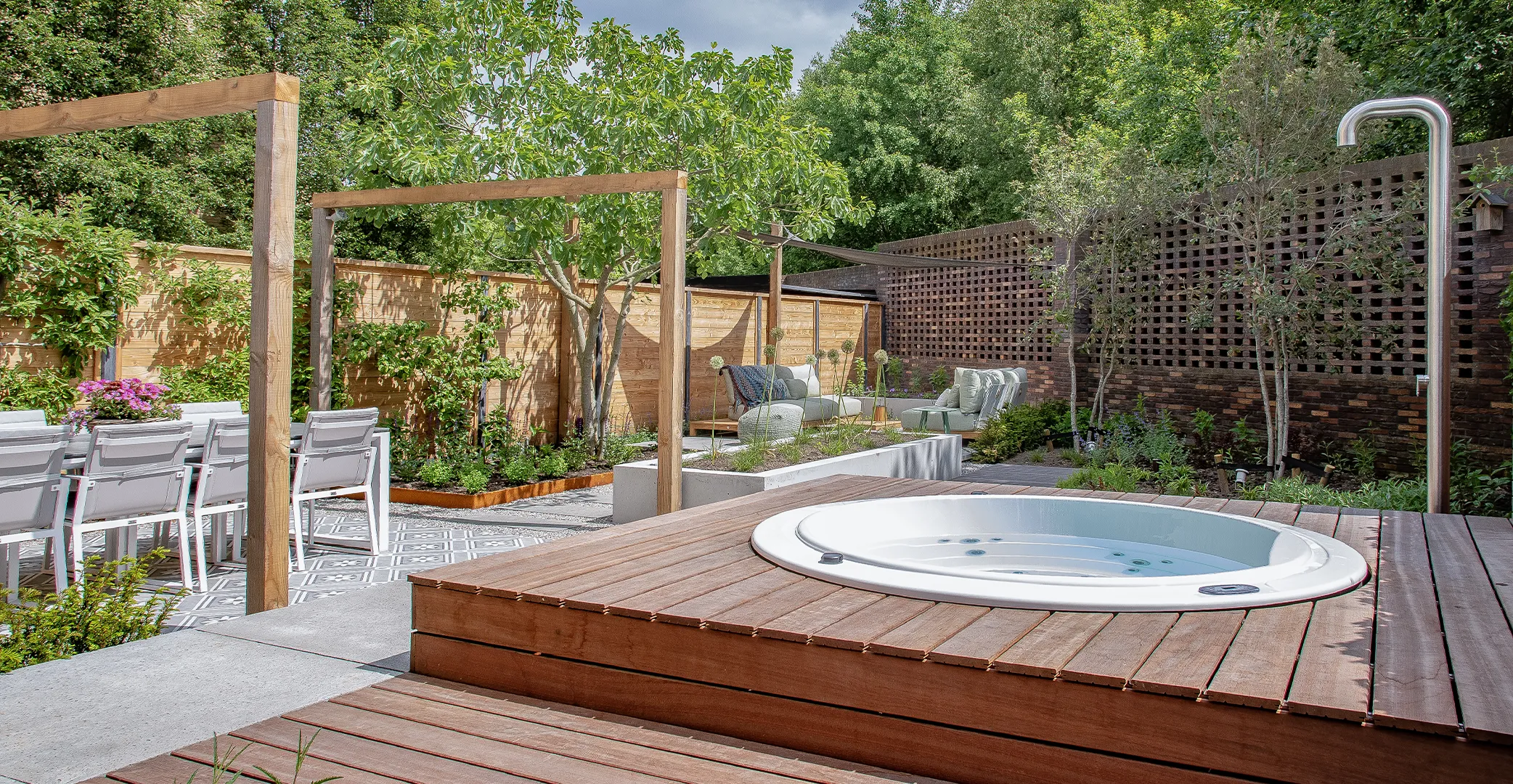
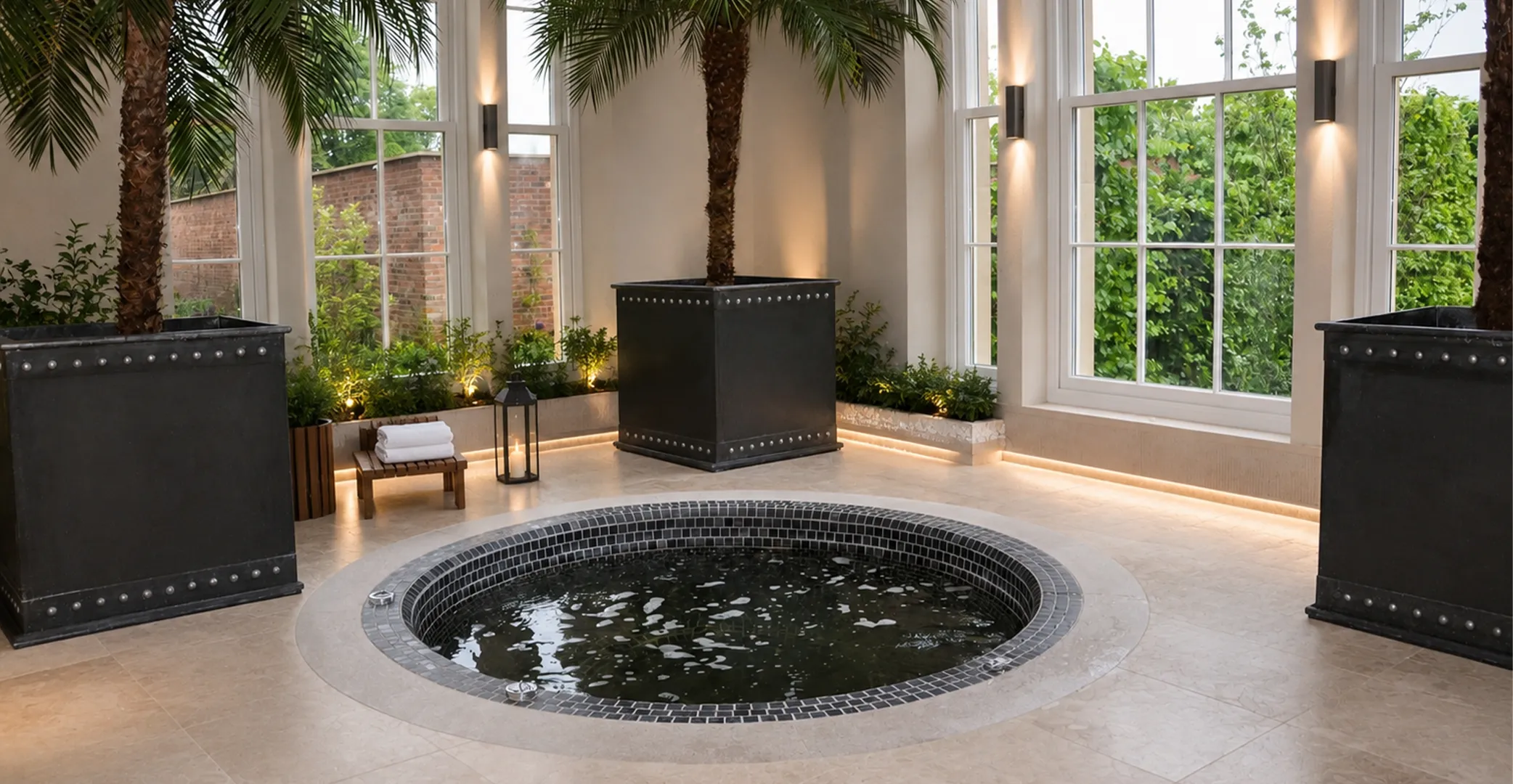
When installing a built-in spa , one of the first decisions to make concerns the finishing of the surrounding area: with or without a coping. The spa coping refers to the edge—made of stone, wood, tile, or concrete—that borders the spa and creates a seamless transition between the spa and the surrounding surface (terrace, garden, pool deck). A spa with coping therefore maintains a visible, raised edge relative to ground level, while a spa without coping is installed flush with the ground, without any visible edge, for a cleaner look and visual continuity with the rest of the landscaping.
This choice is not just an aesthetic issue: it directly influences how the spa should be installed, the work required, and access to technical equipment.
Define the desired type of installation
Before starting the work, it is essential to determine the type of installation required, as this conditions the entire project: preparation of the support, integration height, evacuation system and access for maintenance.
Installation of a spa with coping
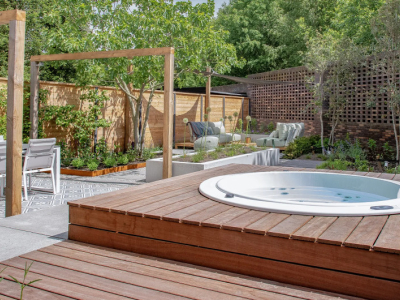
Installing a spa with a coping involves integrating the spa into a structure while maintaining a visible border around it. This border can serve as a seat, a ledge for placing objects, or simply an aesthetic transition between the spa and its surroundings. It generally requires a frame or retaining wall built around the spa before the finishing materials are installed.
Installing a spa without a coping
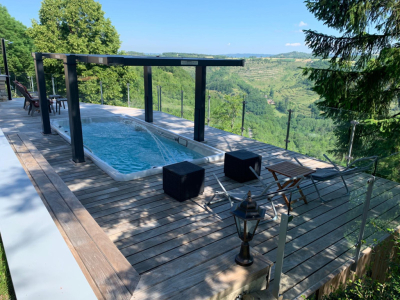
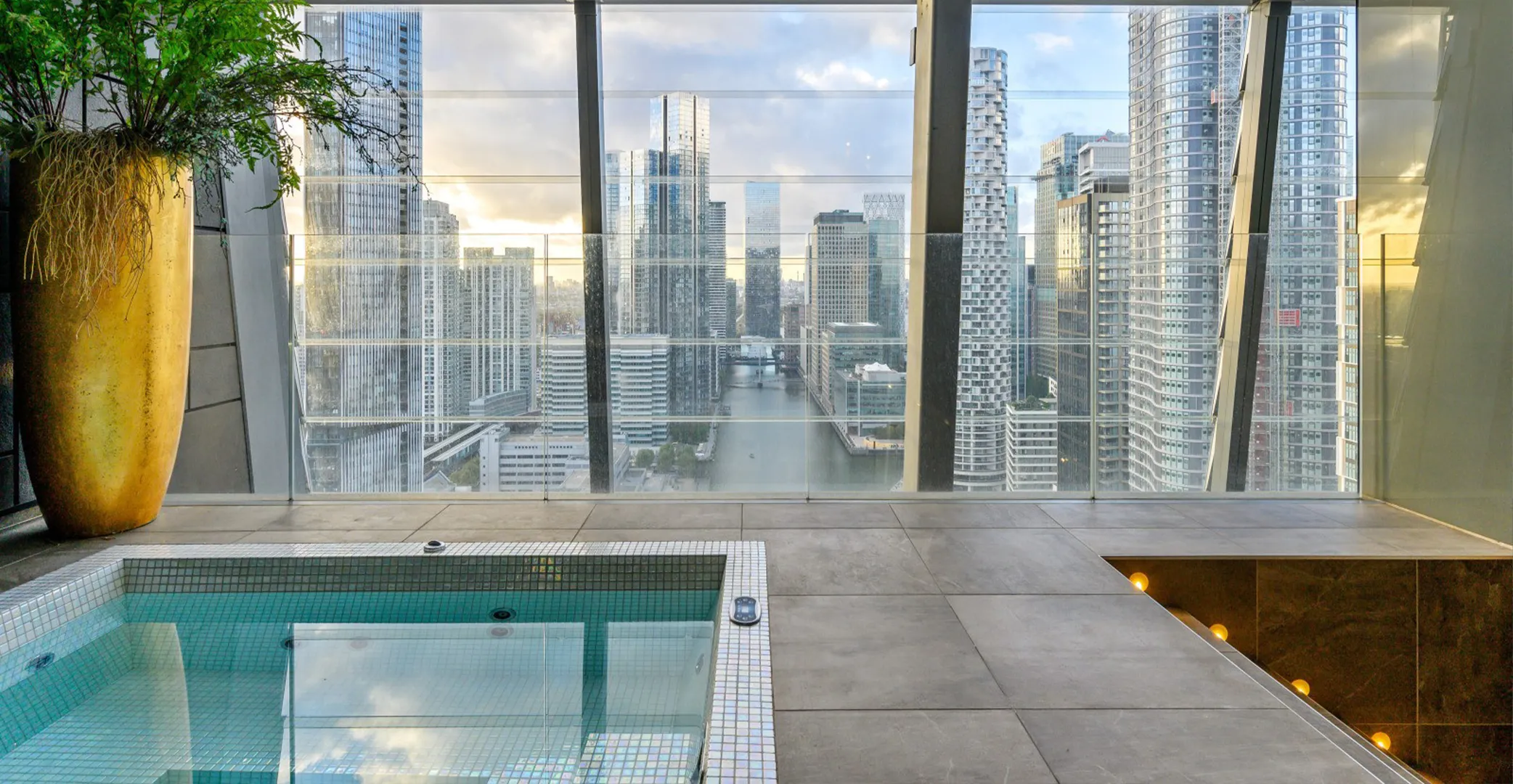
Installing a spa without a coping requires more precise preparation of the base, as the spa's level must be exactly flush with the surrounding ground. This configuration, closer to an overflow design, demands meticulous waterproofing all around and effective drainage to prevent any water infiltration under the finishing materials.
Prepare the spa location
Regardless of the chosen solution, the location must be prepared beforehand: a stable, level surface capable of supporting the total weight of the filled spa (structure, water, and bathers). A built-in spa generally requires a dedicated pit or platform, sized with sufficient space to accommodate both the spa itself and, if applicable, the coping structure.
Plan for technical access
Access to technical equipment—filtration pump, hydromassage pump, water heater—must be planned from the initial design stage. An accessible technical space, usually located on one side of the spa, allows maintenance to be carried out without having to dismantle part of the deck or coping.
Choosing the height and integration of the spa
The height of the pool strongly influences the perception of space.
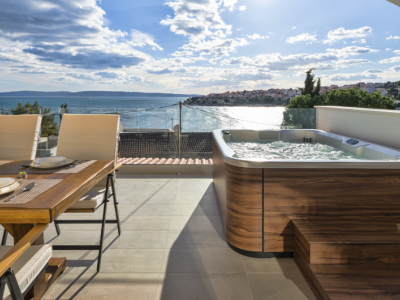
With a spa coping , the spa can maintain a more pronounced architectural presence. The surrounding material emphasizes its geometry and creates a deliberate transition to the terrace.
A flush integration produces the opposite effect: visual boundaries disappear and the spa appears more integrated into the floor.
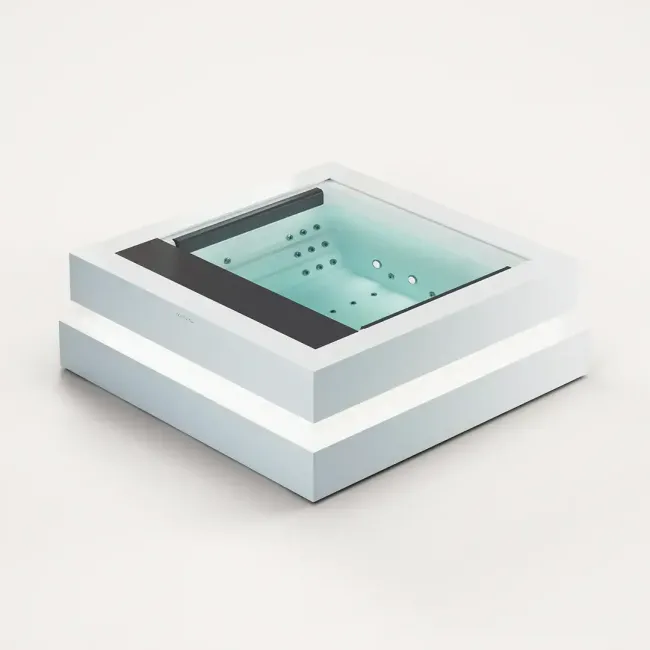
Neither solution is inherently better. In the field of swimming pools as well, the two approaches correspond to different architectural choices: the coping creates a clear separation between the water and the terrace, while a design without coping promotes a more contemporary visual continuity.
Plan for drainage and connections
A good perimeter drainage system is essential to remove rainwater and prevent any stagnation around the spa, whether it has a coping or not. Electrical and plumbing connections must be made according to current standards, ideally by a qualified professional, to guarantee the safety and durability of the installation.
Anticipate access for servicing and maintenance
Regular maintenance—filter cleaning, pH control, heating system checks—requires easy access to technical equipment. This aspect must be considered from the design phase, regardless of the chosen configuration, to avoid dismantling work for each intervention.
Spa with or without a coping: what are the advantages of each solution?
Each configuration has specific advantages, depending on the type of project and the desired aesthetic.
The advantages of a spa with a coping
The presence of a coping stone facilitates access to technical equipment, provides a practical edge for sitting or placing objects, and allows for greater freedom in the choice of finishing materials. It is also often a simpler solution to implement, with fewer waterproofing requirements than a level installation.
The advantages of a spa without a coping
A spa without a rim offers a cleaner visual look and better continuity with the surrounding terrace or garden. It also facilitates direct access to the pool, without steps or ledges to overcome, which can be particularly beneficial for families with children or people with reduced mobility.
What solution should you choose for a terrace or garden?
On a patio, a spa with a coping stone often allows for easier integration with an existing structure, especially when the base wasn't originally designed for a built-in spa. In a garden, on the other hand, a spa without a coping stone blends naturally into the landscape and can be combined with a wooden deck or planted areas for a more harmonious look.
Which solution is best suited for a built-in spa?
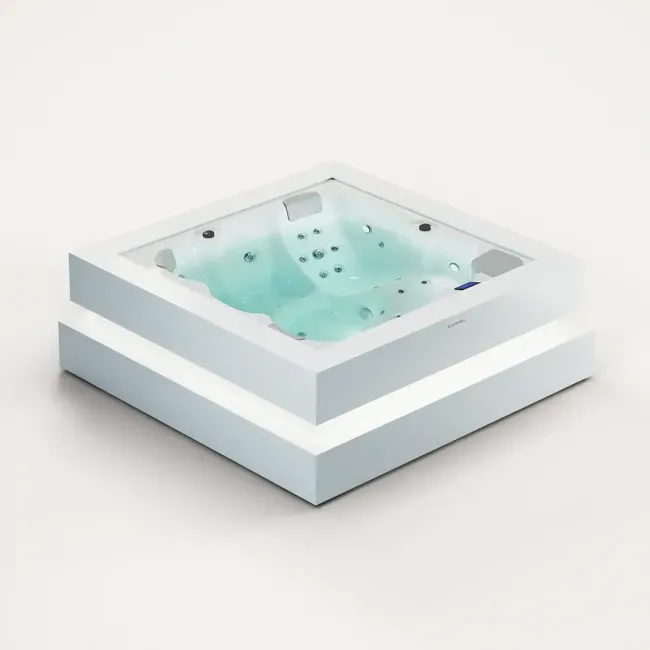
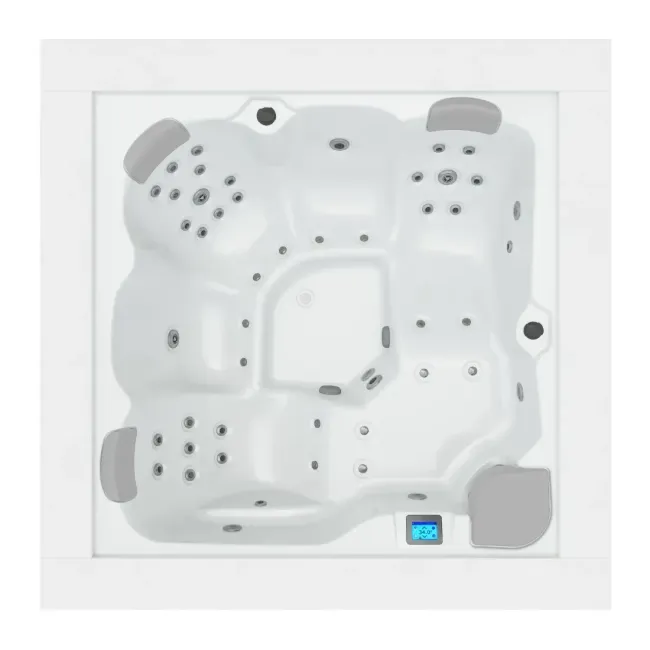
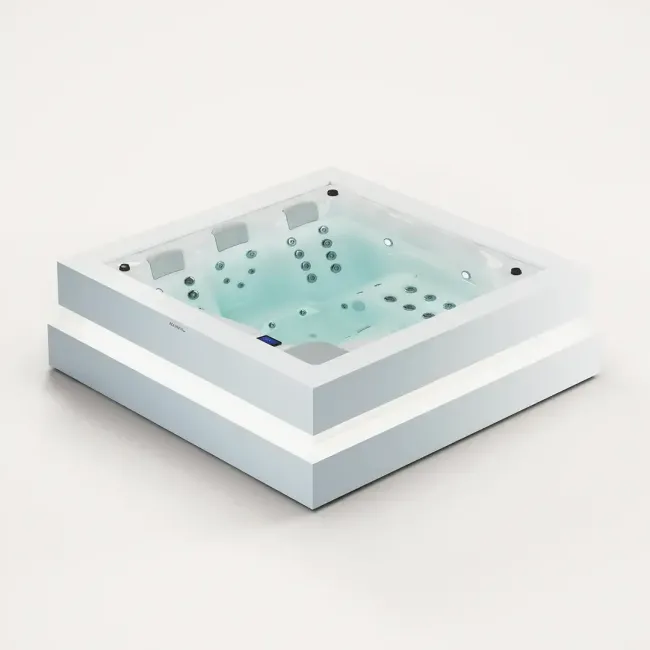
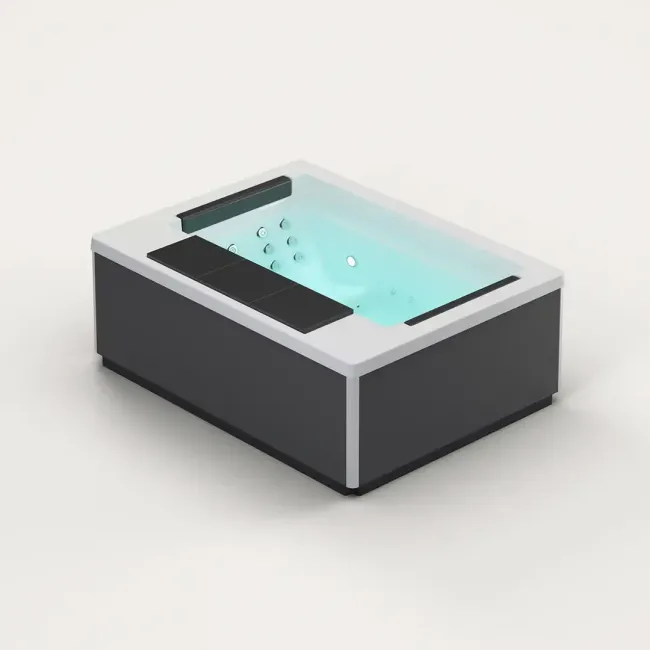
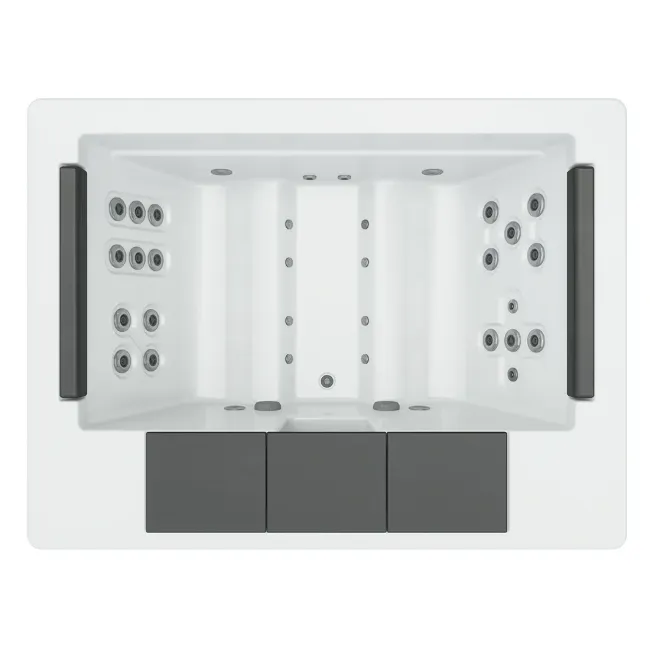
For a built-in spa like the Aquavia Spa Capri , designed for an overflow installation, a coping-less installation is often preferred to maintain the desired visual effect. For more traditional projects, combining the spa with an existing terrace, a coping can simplify installation while providing additional functional space around the spa.
Mistakes to avoid when installing a spa
Certain mistakes frequently occur when installing a built-in spa, with or without a coping:
- Neglecting the load study of the support, especially on an existing terrace.
- Forgetting to provide sufficient technical access for future maintenance.
- Undersizing the drainage system can lead to water infiltration.
- Choosing the configuration based solely on aesthetics, without taking into account the technical constraints of the site.
Which spa should you choose for your outdoor landscaping project?
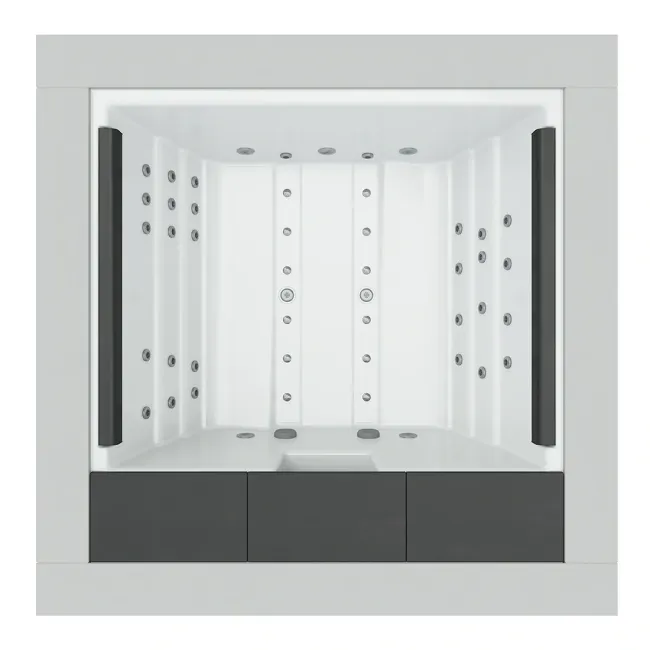
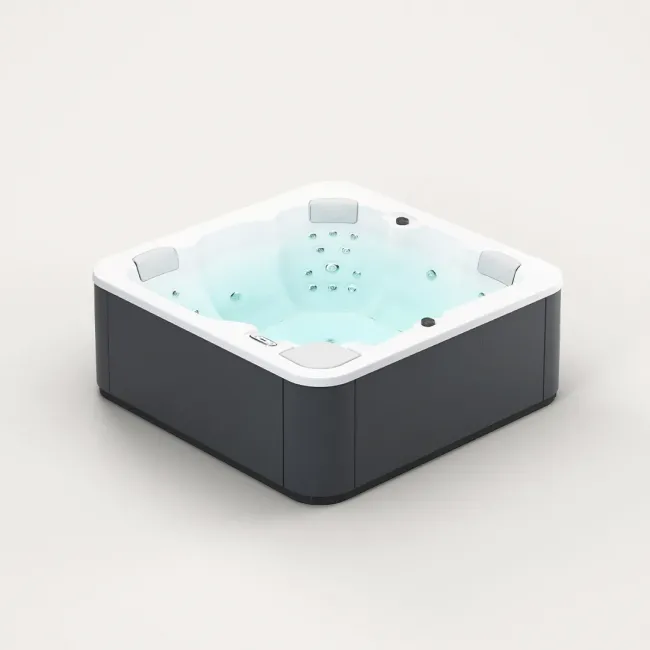
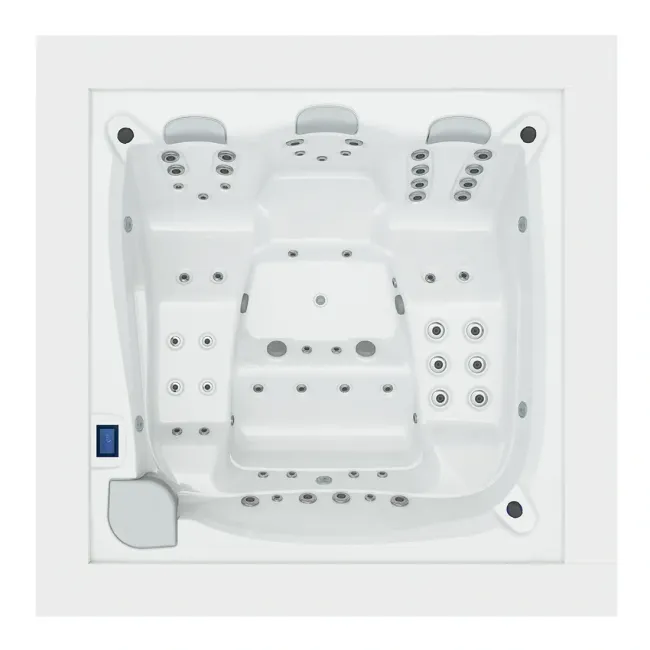
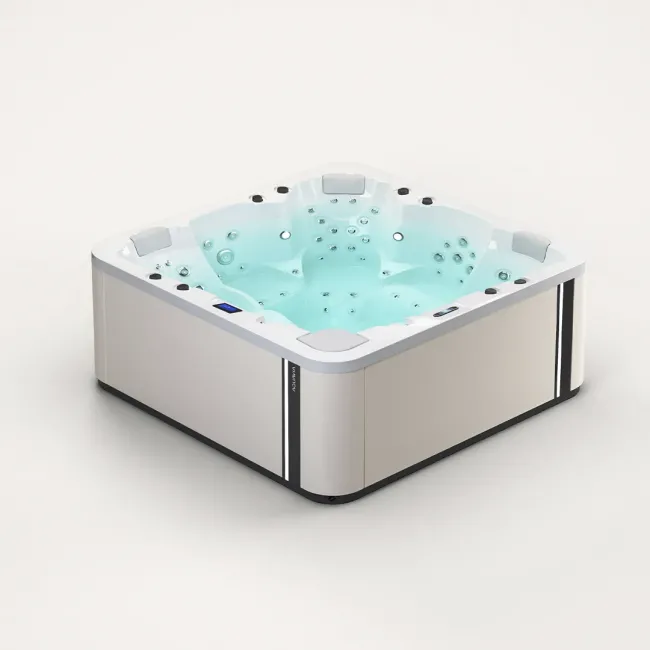
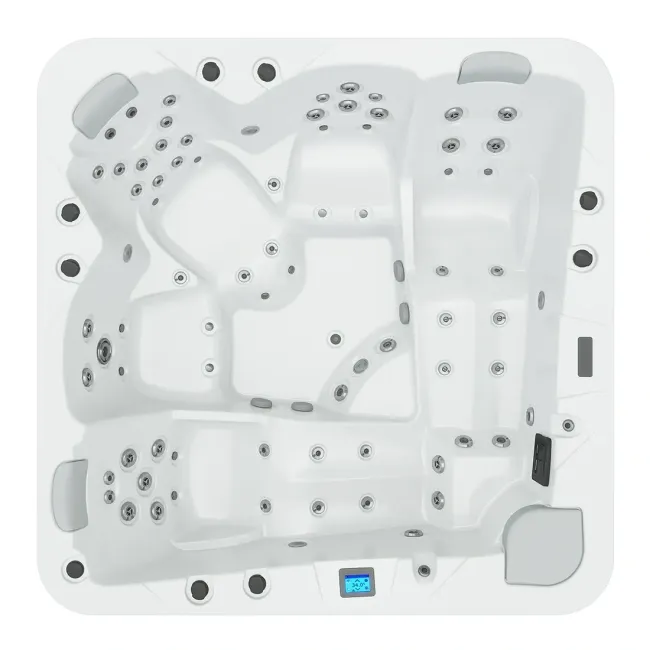
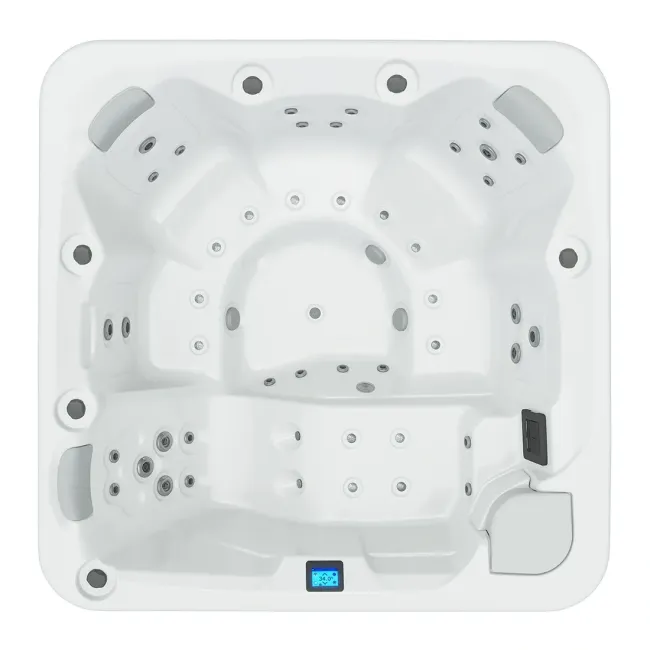
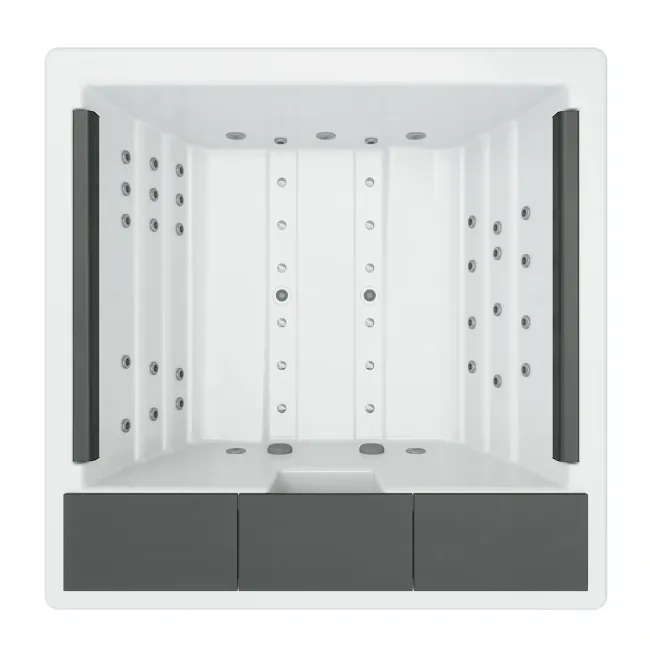
Aquavia Spa offers several ranges for designing a built-in spa, tailored to the desired level of integration, materials, and architectural style. The Built-in Line is specifically designed for built-in installation and includes models such as the Mallorca , a 216 x 216 cm spa for four people, and the Aqua 8 , an XXL model measuring 233 x 233 cm for five people. The Tiled Line provides another solution for projects where customization of integration and finishes is desired, while the Infinity Line , with models like the Martinique and the Bali , is designed for installations where the spa is fully integrated into the surroundings and operates with external technical equipment. For projects seeking a particularly distinctive aesthetic, the Steel Line offers stainless steel spas, such as the Elegant and the InnoVibe 6 , the latter offering six seats and standard LED chromotherapy.
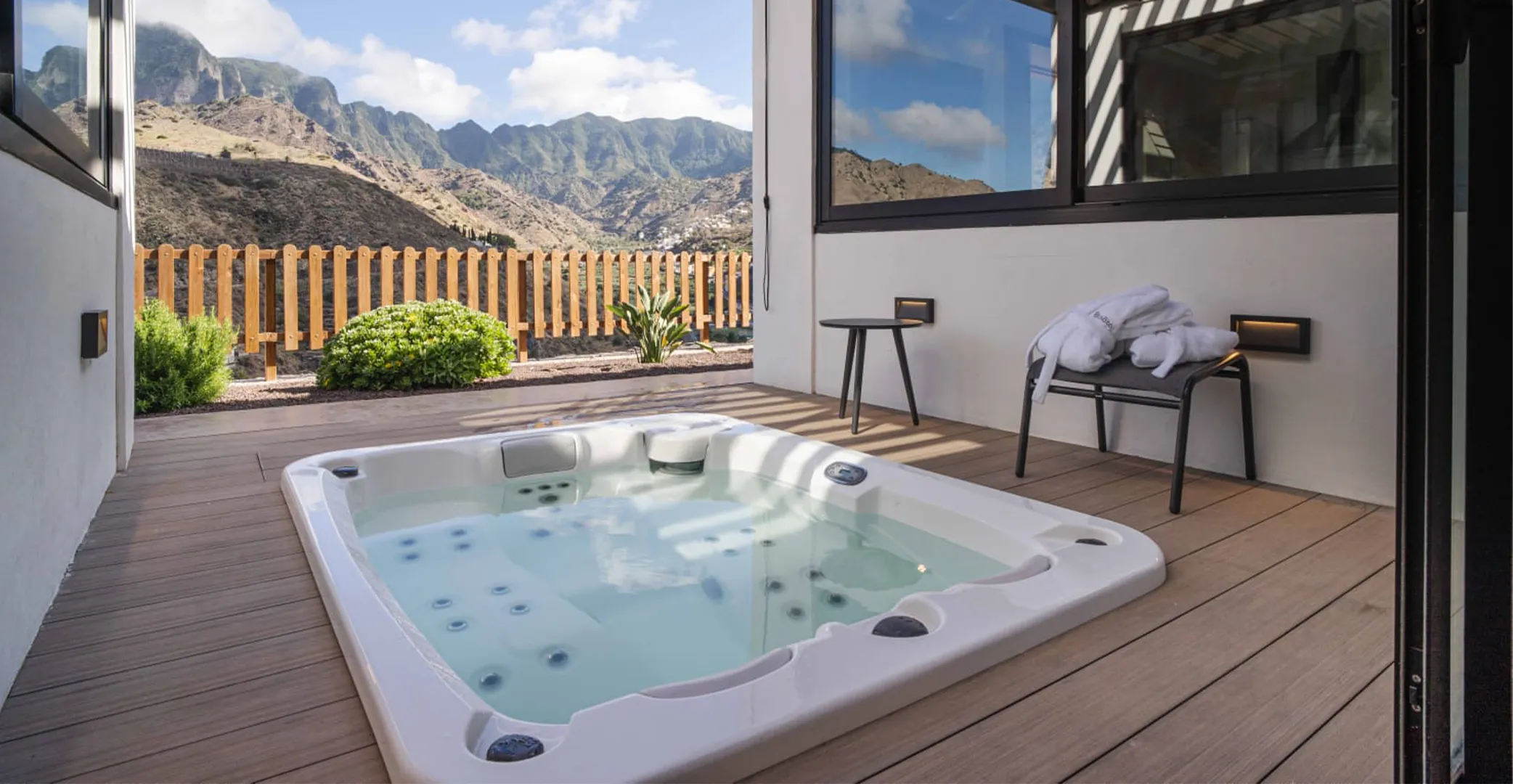
However, built-in installation isn't limited to these collections. Premium Line spas can also be ordered without a cabinet , allowing them to be integrated into a custom-built terrace or structure. This is particularly true for models like the Essence , Soft , Velvet , and Touch PRO. This option is also available for Aqualife Line models, including the Aqualife 5 , Feel , Pulse , and Touch , which can be ordered without a cabinet. The choice therefore depends on the project: architectural integration, custom finish, stainless steel, or acrylic spa without a cabinet. In all cases, the installation must be designed to ensure adequate access to the technical components for maintenance.
Are you planning to install a spa?
With or without a coping, the choice of configuration depends on your space, your landscaping project, and the technical constraints of the installation. Discover Aquavia Spa and find the solution that best integrates with your patio or garden.
Are you thinking about a particular project? Contact us and our team will help you choose the configuration and model best suited to your needs.