es
es fr
fr de
de nl
nl en
en it
it pt
pt ro
ro sv
sv ru
ru hr
hr da
da si
si pl
pl no
no cs
cs fi
fi el
el sr
srChoosing a whirlpool involves deciding on more than just size and number of massage jets. The material of the tub shapes the design, influences maintenance, and determines how the model integrates into a garden, patio, or wellness area. A particularly common choice is... Stainless steel whirlpool and a Acrylic Whirlpool for the election.
Both materials are suitable for high-quality hydromassage. However, their strengths are evident in different projects. Stainless steel whirlpool With its metallic surface, it makes a clear architectural statement. Acrylic offers great freedom in terms of ergonomic shapes, seating and reclining options, and colors. Therefore, to make the right decision, it's worth considering the entire whirlpool: the tub, insulation, cover, technology, installation, and future maintenance.
Stainless steel whirlpool vs. acrylic: What's the difference?
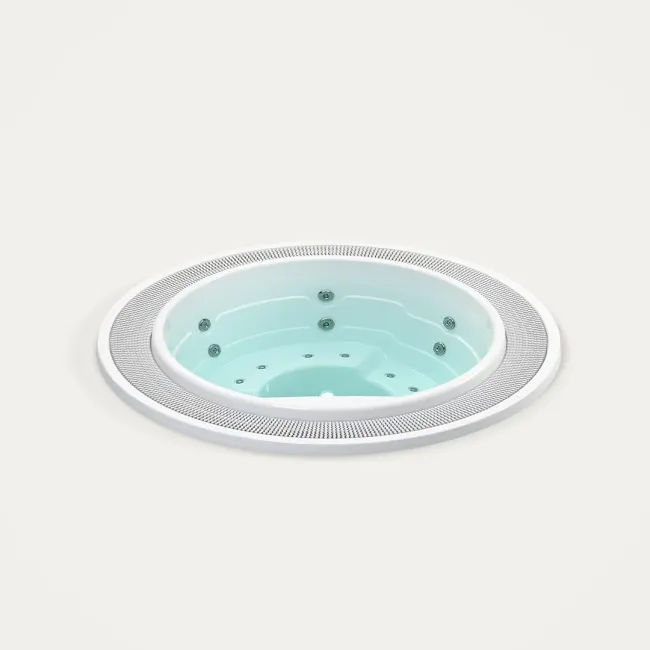
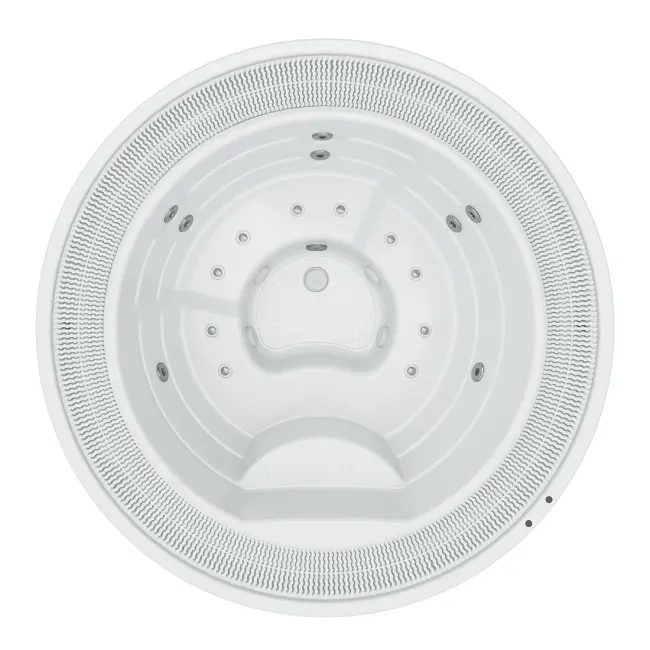
The main difference lies in the water-bearing tub. In a stainless steel model, stainless steel forms the visible inner surface. An acrylic model has a molded acrylic tub whose contours define seating areas, loungers, and massage positions.
One detail is important when searching for products: Stainless steel jets do not automatically make a whirlpool a stainless steel whirlpool.. Acrylic models can also have such nozzles. The material of the tub is the determining factor for this comparison.
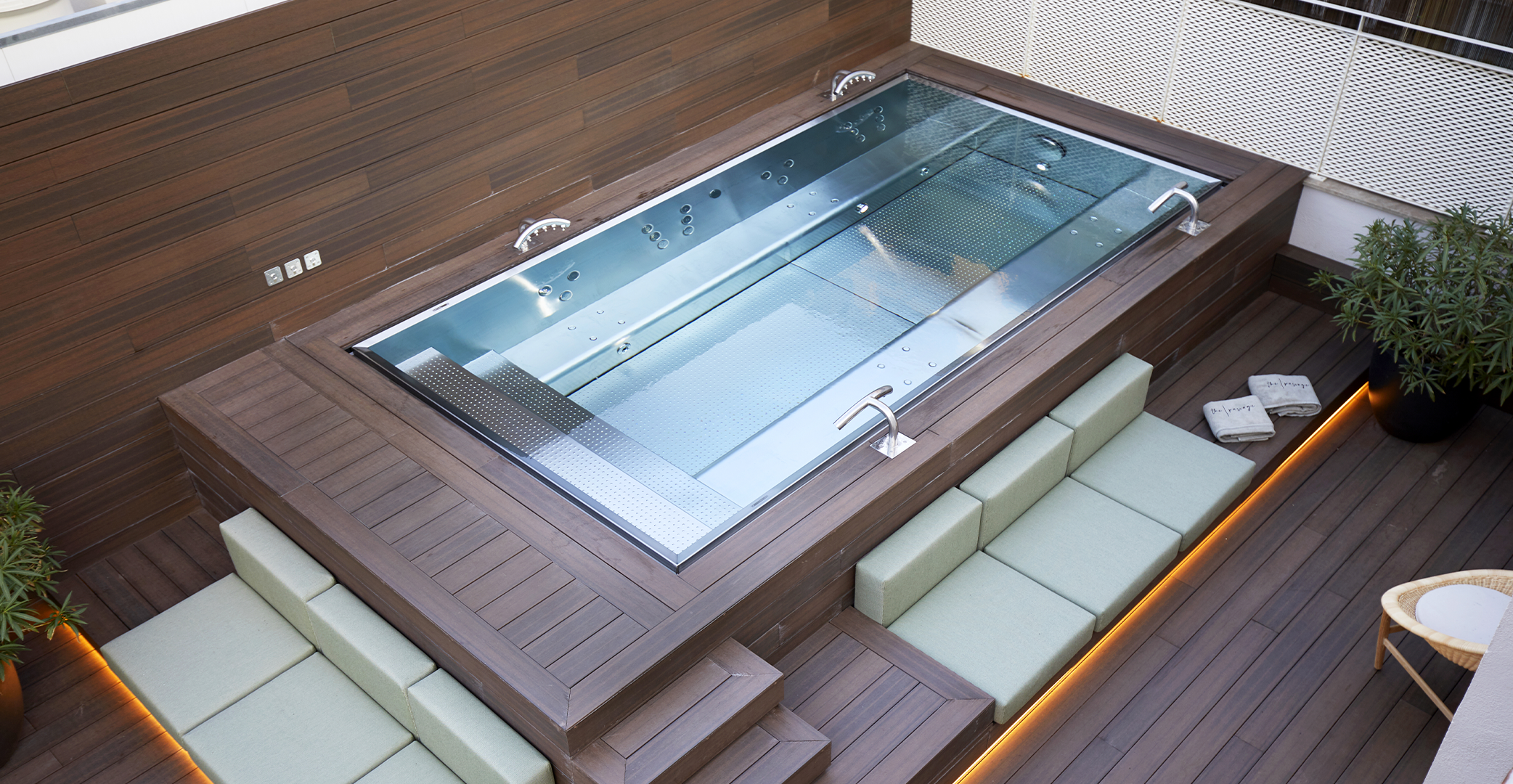
Aquavia Spa leads both Stainless steel whirlpools as well as acrylic models with varying sizes. This allows the choice of material to be adapted to the intended use.
What materials are used for hot tubs?
Stainless steel in whirlpools
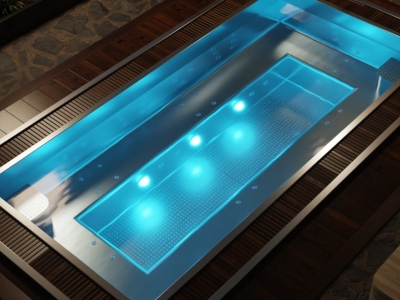
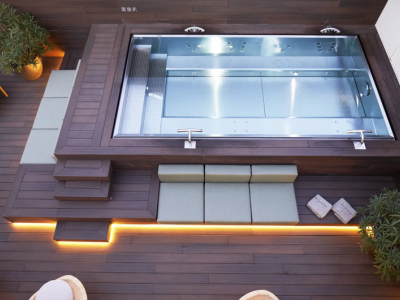
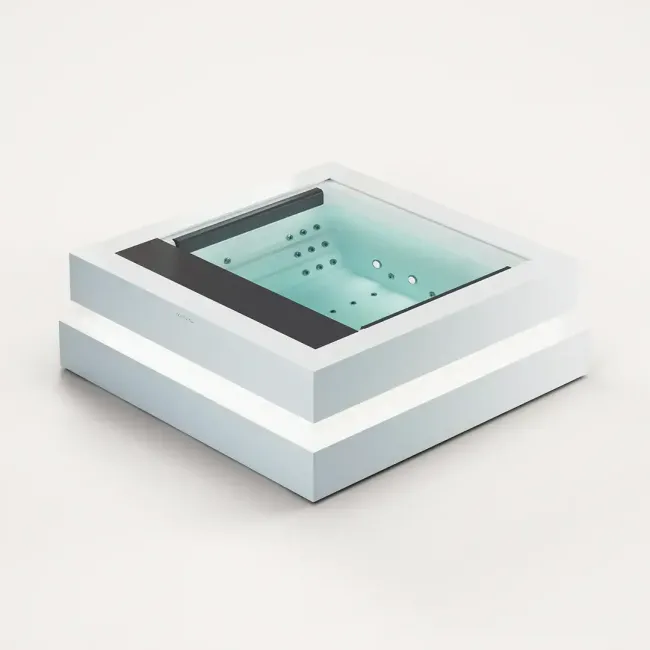
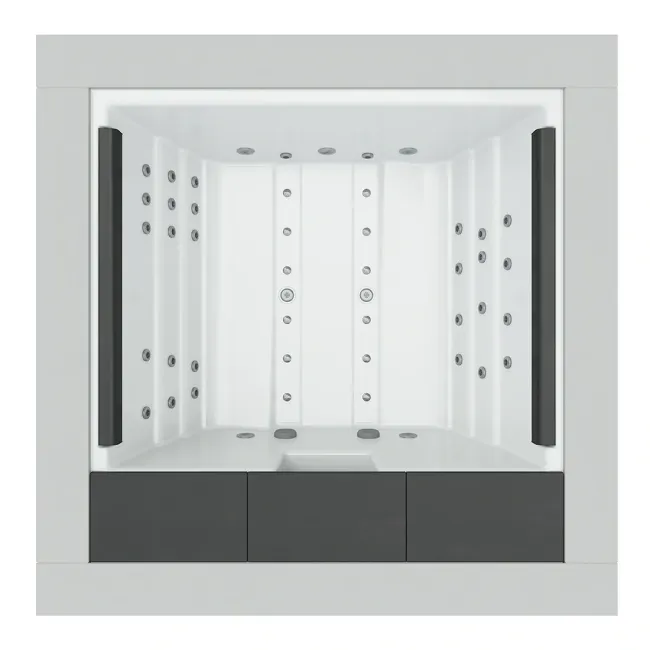
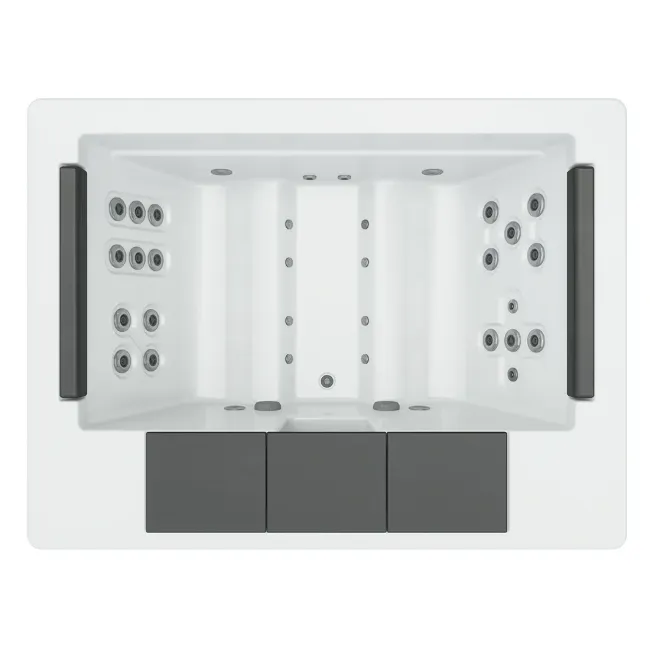
Stainless steel, with its uniform, metallic surface, has a minimalist and precise appearance. Especially when paired with natural stone, glass, concrete, or clean-lined architecture, a steel spa can become a defining element of the room. The Steel Line from Aquavia Spa includes models for private and professional environments, including the Elegant with four seats and the larger InnoVibe models.
The material's durability is no substitute for professional planning. Water treatment, suitable cleaning agents, and the installation intended for the specific location remain crucial. For professional systems, water flow, filtration technology, and maintenance access must also be compatible with the intended use.
Acrylic in whirlpools
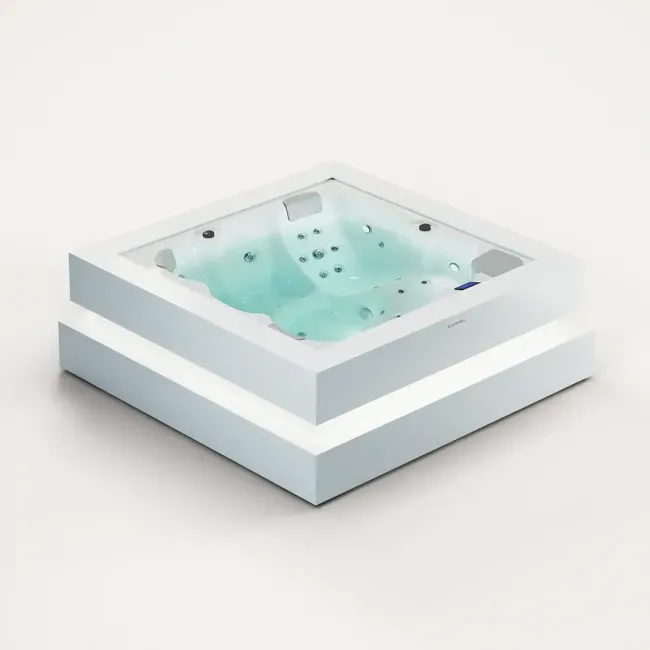
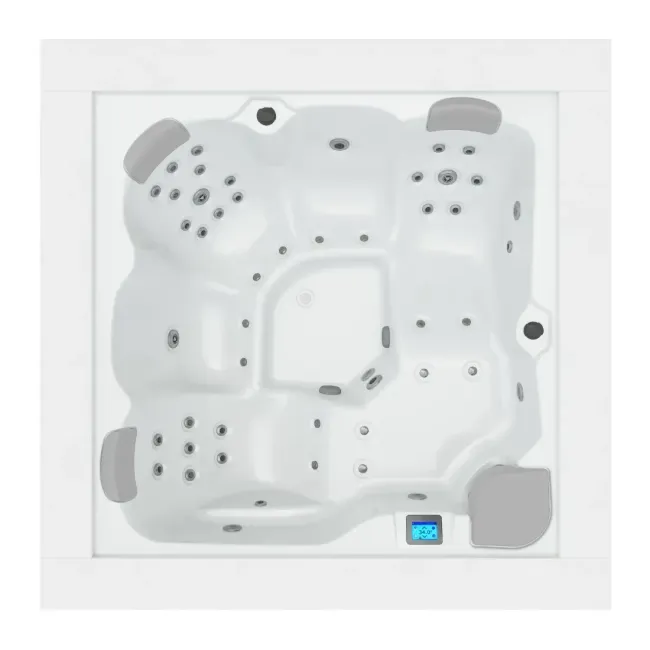
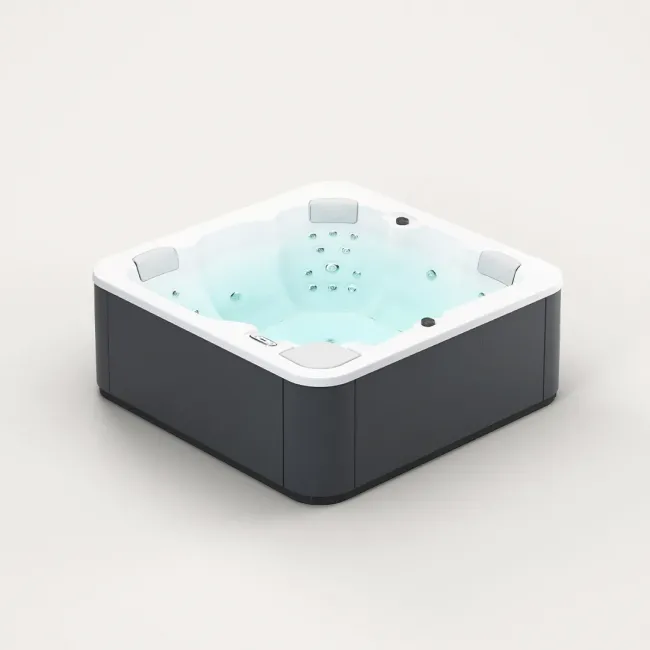
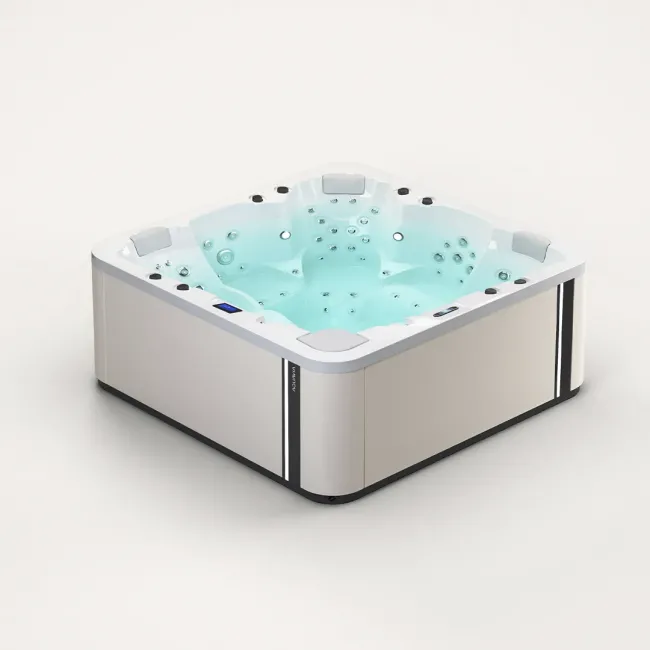
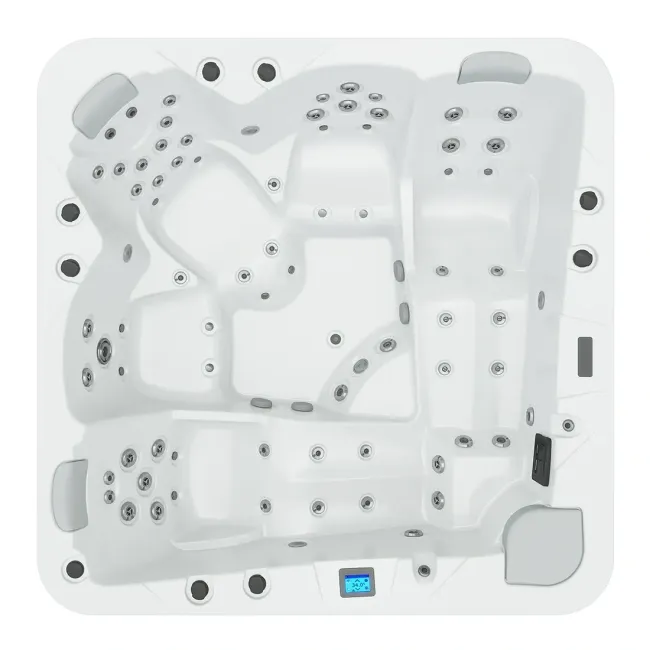
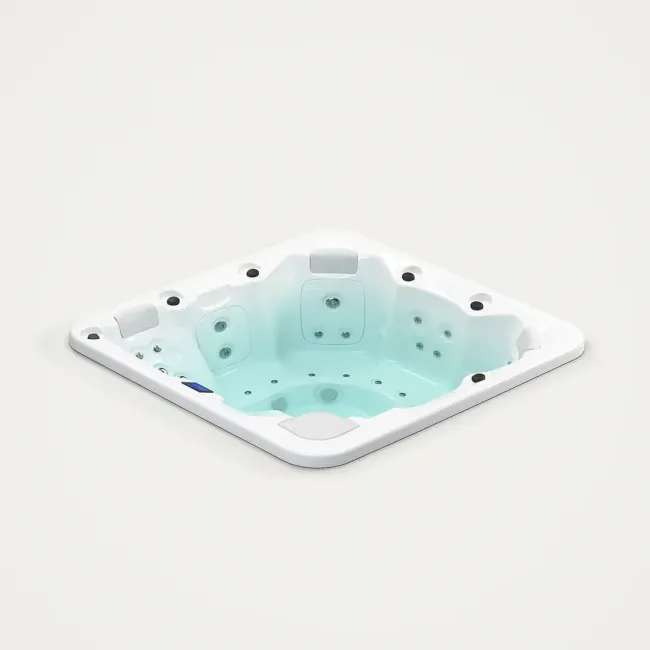
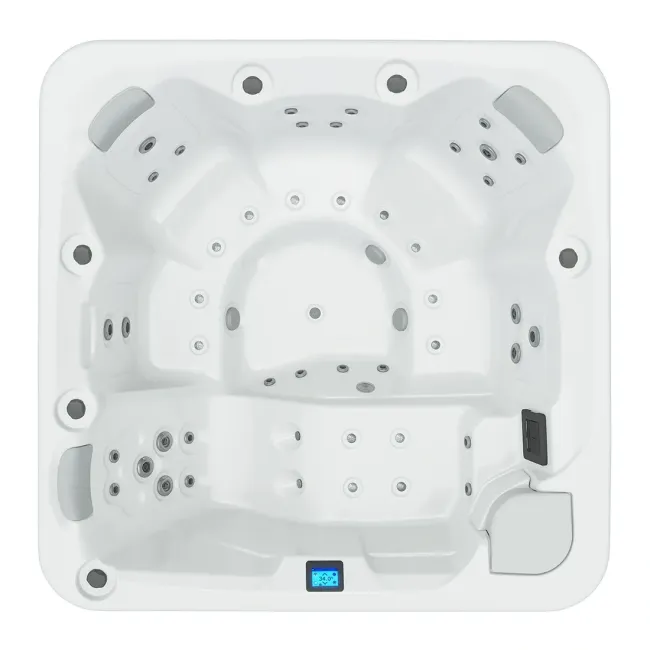
Acrylic can be molded into pronounced, ergonomic contours. This allows for various seat depths, reclining surfaces, and massage jet positions. The surface can be designed in different colors and finishes. Those who choose a whirlpool primarily based on their preferred seating comfort and the type of hydromassage will find a wide range of options here.
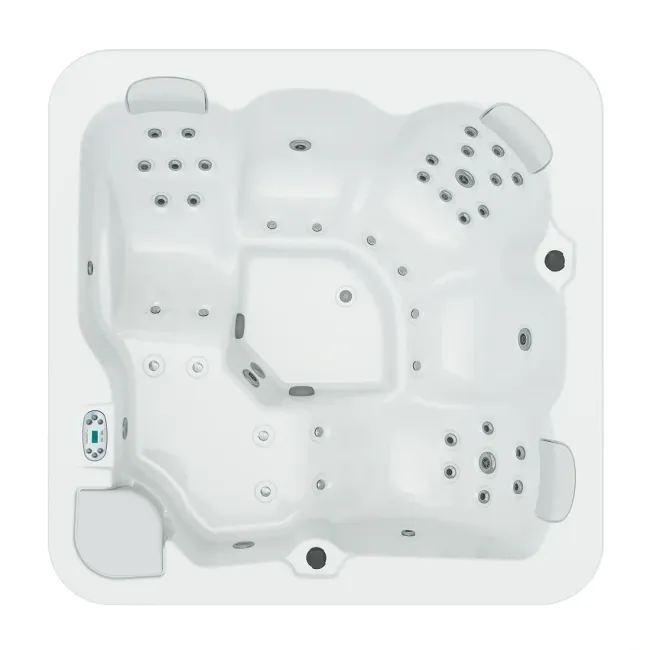
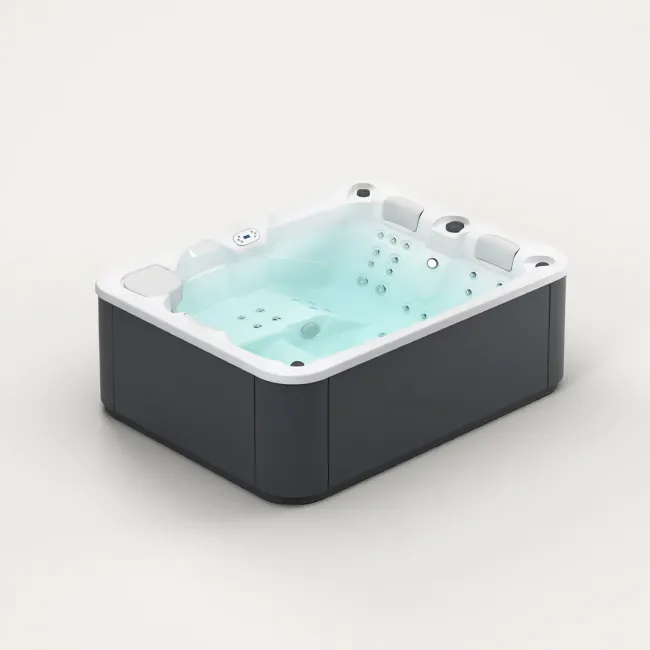
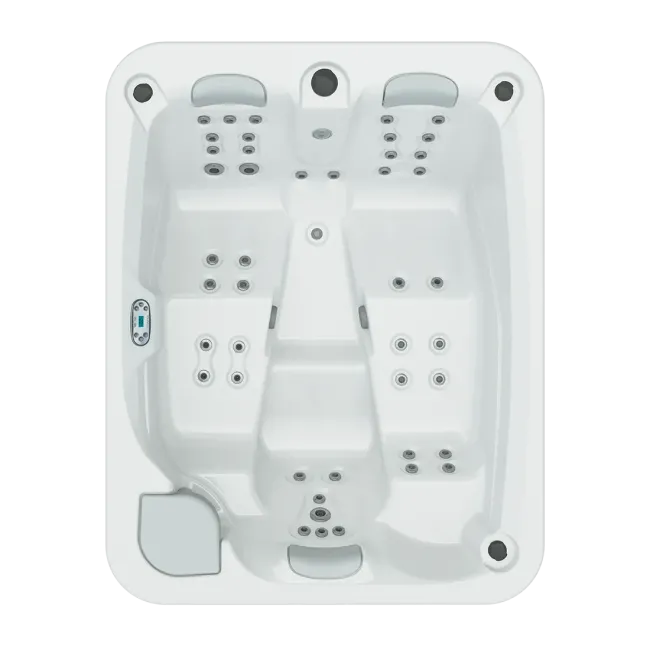
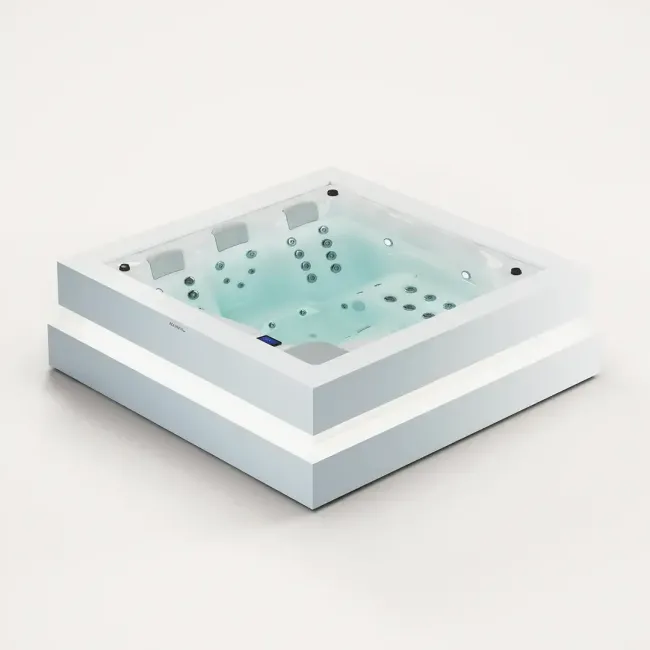
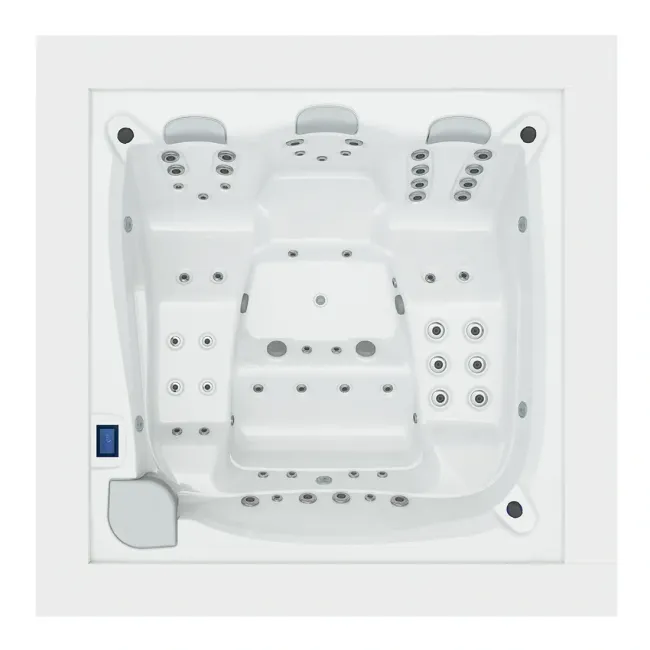
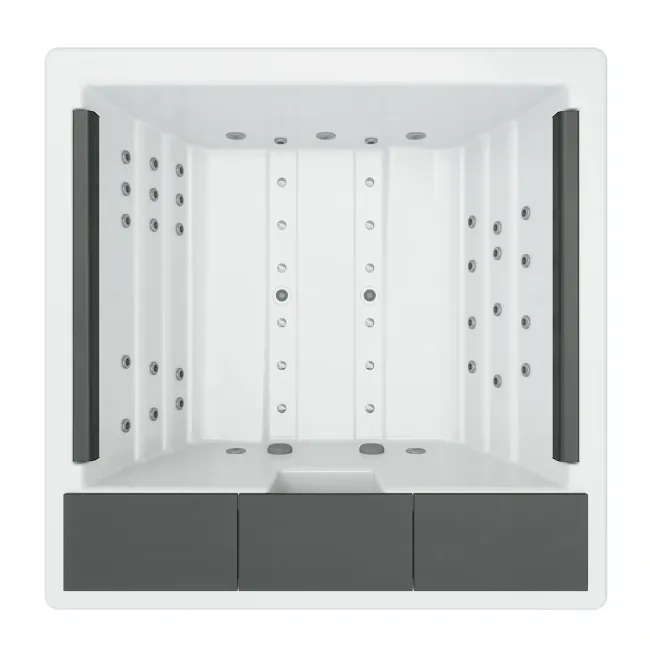
Examples from the Aquavia The range is more compact. Touch Pro, the Essence with two loungers and three seats, as well as the Soft with six seats. The specific equipment and available options should always be checked for the particular model.
Stainless steel whirlpool vs. acrylic in direct comparison
Durability and resistance
The advantages of a stainless steel whirlpool include the material's durability and its suitability for demanding design projects. Aquavia Spa offers 20-year guarantee on the inner tub of its stainless steel whirlpools. Furthermore, proper installation, correct water care and suitable cleaning agents are crucial for a long service life.
Even a high-quality acrylic whirlpool is designed for long-term use. Aquavia Spa offers 10-year warranty on the acrylic inner tubWe guarantee their integrity and protect your investment from potential defects for a decade.
Care and cleaning
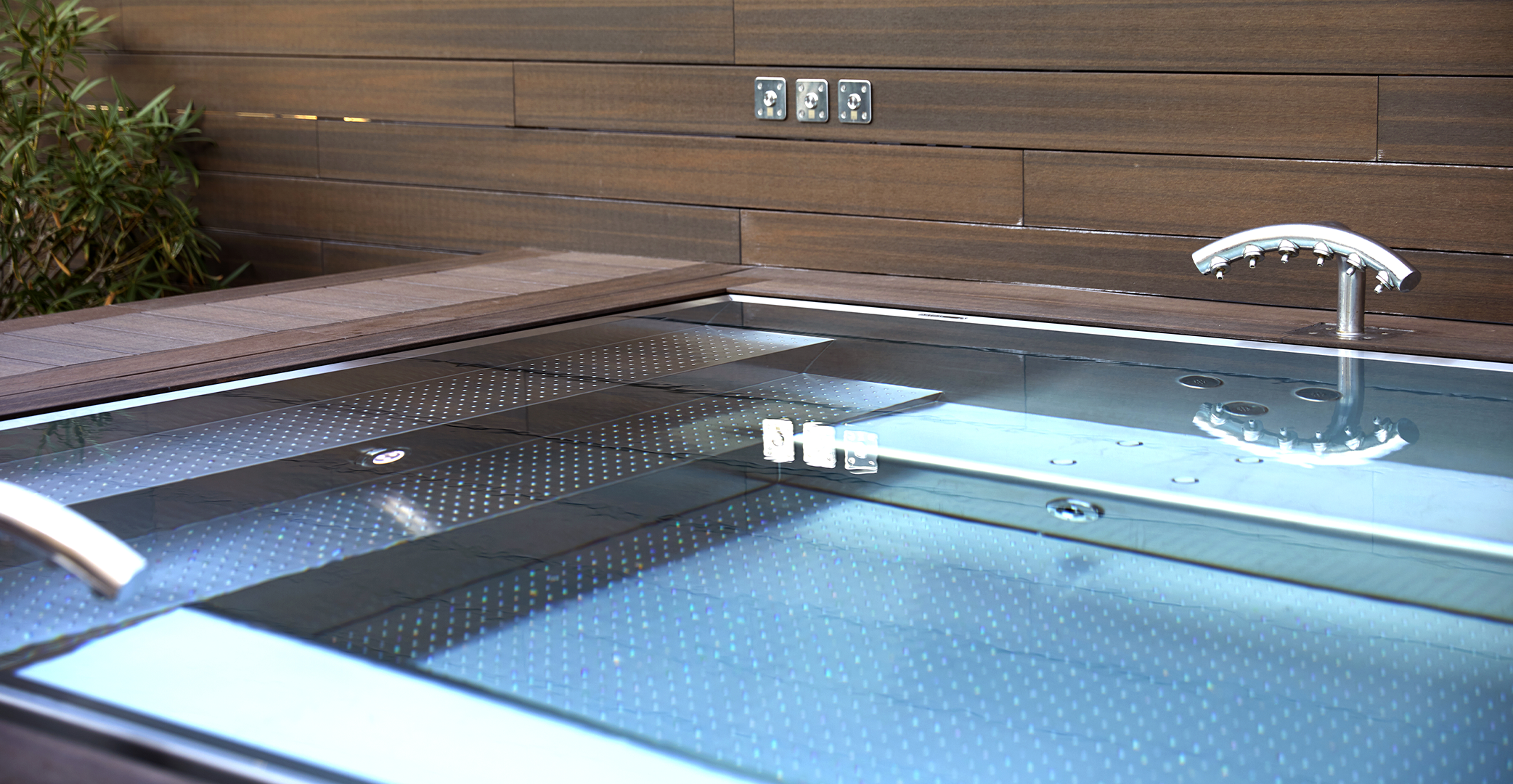
Smooth surfaces generally make regular cleaning easier. However, water spots and deposits on the metallic surface of stainless steel may be more noticeable. To maintain its even shine, residues should be removed promptly, and the manufacturer's cleaning recommendations should be followed.
Acrylic is also cleaned with soft cloths and non-abrasive products. For both materials, the most important maintenance routine remains the same: check water parameters, clean filters, and disinfect according to usage.
Optics and design
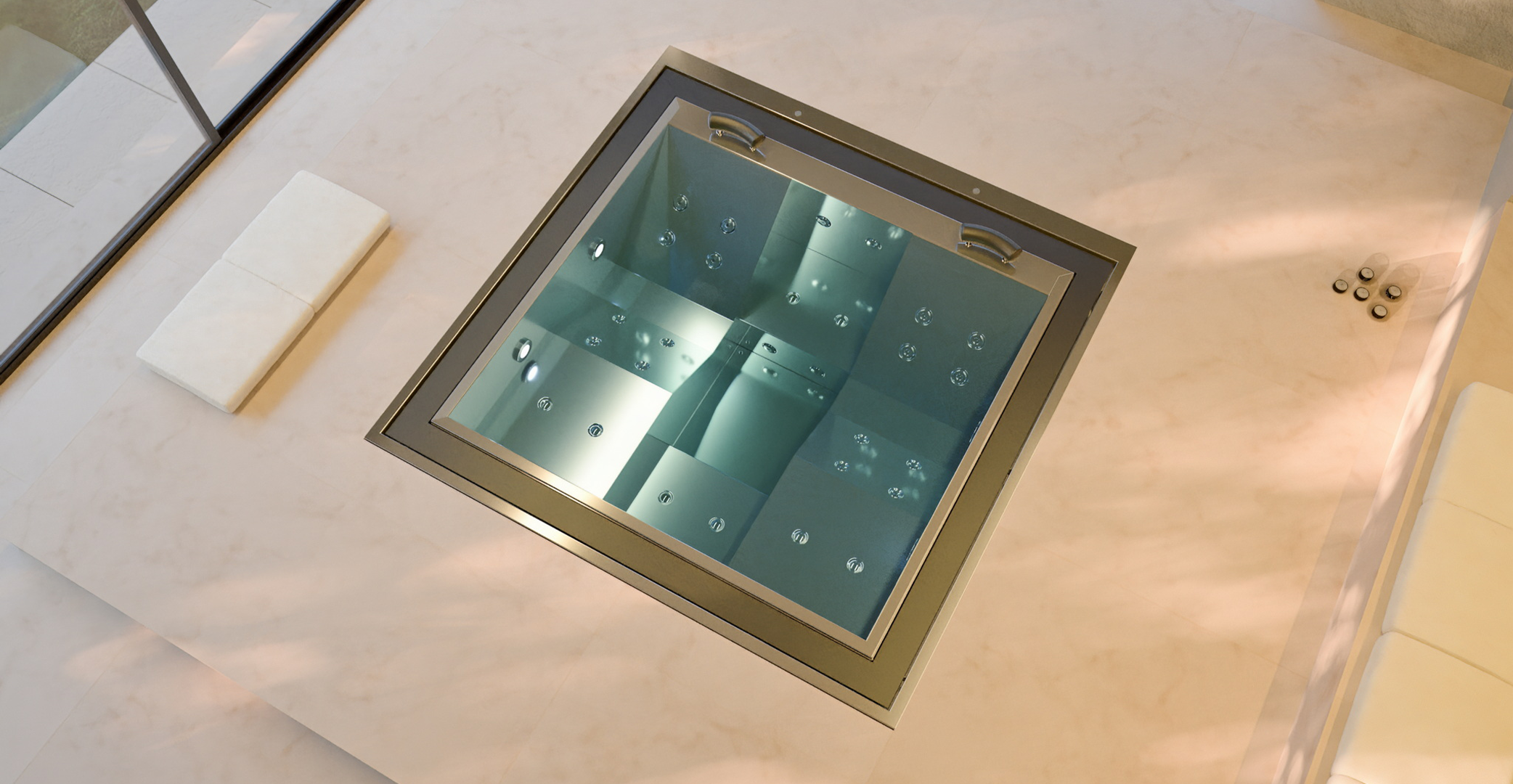
A Stainless steel whirlpool It is particularly well-suited to a deliberately minimalist design. It can be seamlessly integrated into a terrace or wellness area, and its surface creates a clear connection to other architectural materials.
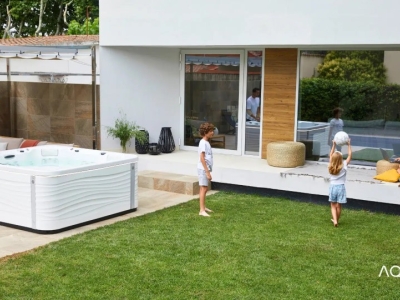
Acrylic offers other possibilities: flowing interior shapes, various colors, and combinations with different exterior claddings. A freestanding acrylic spa can become the visible centerpiece of the garden. Depending on the model, a integrated Installation is possible. Therefore, the crucial factor is not so much a general style rule, but rather how the whirlpool should look in the finished room.
Thermal insulation and energy efficiency
A comparison based solely on the tub material is misleading. Heat loss depends significantly on the entire construction: insulation of the tub and the technical area, the base, the cover, the location, and the outside temperature all play a role. Water volume, desired temperature, and frequency of use also influence energy consumption.
Aquavia Spa offers the following for suitable models Thermal insulation system EcoSpa on. For cold climates, there is also the Nordic Insulation System. Which solution is standard, optional, or available depends on the model. Therefore, when comparing offers, one should inquire about the specific insulation and cover, rather than drawing conclusions about future energy consumption based on "stainless steel" or "acrylic."
Individualization and design options
An acrylic model offers a wide selection of tub colors, seating arrangements, and exterior finishes. The best way to start the decision is by considering the people who will be using the hot tub regularly: Do they want two loungers? Should several people be able to sit upright? How deep should the individual seats be?
With stainless steel, the design strength often lies in its integration into an overall concept. Shape, basin edge, surrounding materials, and access can all be planned together. The available options vary from model to model; therefore, a custom-planned installation should be discussed with a specialist partner early on.
Repair and long-term maintenance
With both materials, the location of the damage and its accessibility are crucial factors. Minor surface damage requires a different approach than a problem with pipes, nozzles, or filter technology. Blanket statements like "always easily repairable" are of little help in making a purchase decision.
A more practical approach is to conduct an inspection before installation: Will pumps, connections, and other maintenance-relevant parts remain accessible? Who will be responsible for the model on-site? Are spare parts and service available? Especially with a flush-mounted whirlpool, well-planned technical access should be part of the initial planning.
Price and investment
A stainless steel spa often involves a higher initial investment. However, the prices of the tubs alone are not sufficient for a reliable cost comparison. Depending on the project, site preparation, transport, installation, external equipment, electrical wiring, and subsequent operating costs must also be considered.
A Whirlpool Acrylic For private use, a stainless steel model can be an economically viable solution without sacrificing comfort or sophisticated design. Its value is particularly evident where the visible material quality is a key element of the overall room concept. Therefore, request quotes for comparable spaces, similar features, and clearly defined installation services.
What are the advantages of a stainless steel whirlpool?
Particularly robust and durable
The material properties and clear design make stainless steel an attractive option for projects intended for long-term use. Proper water maintenance and cleaning remain essential. Those planning a spa for intensive use should also consider the design of the entire system, not just the tub.
High-quality and modern look
The smooth stainless steel surface lends a distinctive character to a wellness area. It can provide a calming contrast to warm materials like wood or echo the lines of modern architecture. In this way, the whirlpool becomes a consciously designed element of the room.
Suitable for demanding wellness projects
For hotels, private wellness areas, and spacious terraces, design and technical planning can be developed jointly. Aquavia Contract We support architects, interior designers and hotel professionals with expert advice and solutions tailored to the technical and design requirements of their project.
What are the advantages of an acrylic whirlpool?
The greatest advantage of acrylic is its combination of malleability and comfort. Different seat heights, ergonomic loungers, and strategically placed jets can all be combined in one tub. This is especially valuable when several people with different preferences use the same whirlpool.
There is also a wide selection of sizes. Hot tubs for 2 people They utilize limited space and allow for hydromassage for two people. Hot tubs for 5 people offer space for shared moments with family or friends.
An acrylic spa can also be coordinated with its surroundings through the tub color and paneling. Depending on the model, further options are available for controls, lighting, or insulation. A specific quote should show which features are included and which can be added.
Stainless steel or acrylic: Which whirlpool is right for your project?
For home
At a Home whirlpool First, consider how you plan to use it: as a couple, with your family, or with guests. Acrylic models offer various combinations of seating and reclining options. Stainless steel is a good choice if you want the whirlpool to be a deliberately designed element of your living space.
For the garden
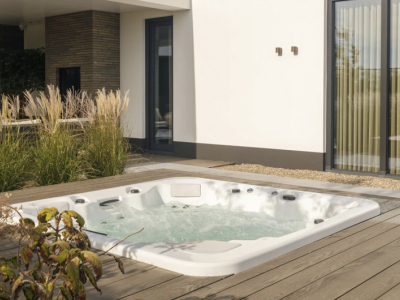
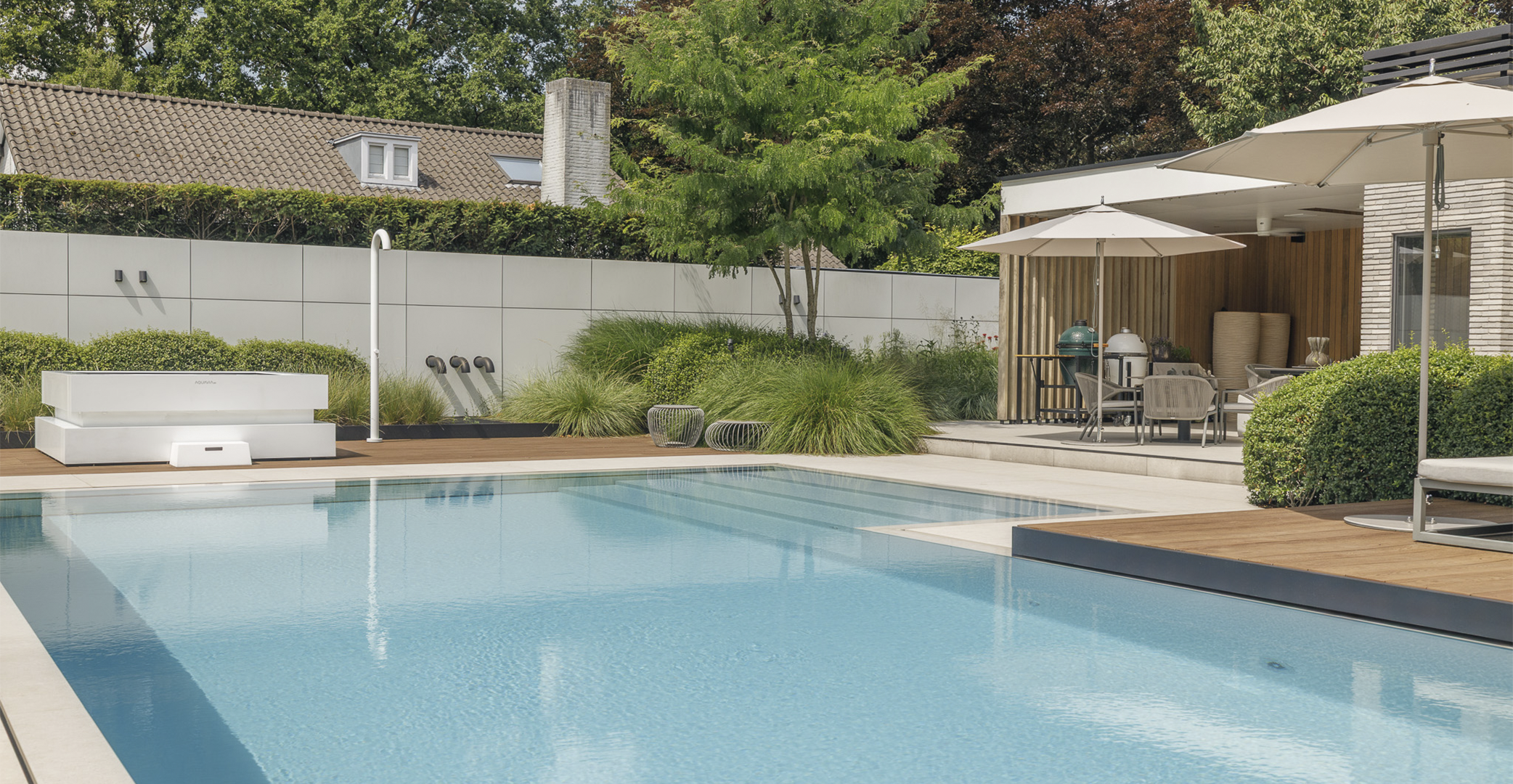
At a Hot tub for the garden Depending on the available space, you can choose compact models or versions with more seats. Acrylic offers a wide range of configurations and finishes; stainless steel adds a distinct architectural touch. With both materials, be sure to allow space for access, covers, and maintenance.
For the terrace
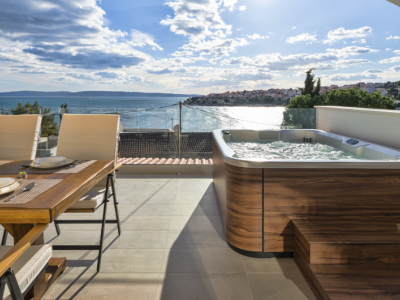
At a Hot tub for the terrace Dimensions, transport route, and load-bearing capacity are crucial. The weight of the filled hot tub, including its users, must be taken into account. For raised terraces, a qualified professional should inspect the supporting structure. Connections and technical components must remain accessible on acrylic and stainless steel models.
For the balcony
A Whirlpool for the balcony This requires particularly careful examination of the movement area, permissible load, transport route, and maintenance access. Compact models can make better use of the available space. The material should only be decided upon once the technical feasibility has been clarified.
For hotels and wellness areas
Frequency of use, water treatment, and daily operations play a crucial role here. Stainless steel can lend a distinctive design to a wellness area. An acrylic model can also be suitable for professional projects if its technical specifications match the intended use. Capacity, filtration, cleaning, and service access should be determined early on.
For architecture and design projects
If the whirlpool is to be integrated into the floor, a platform, or the room's geometry, early consultation between the architect and a whirlpool specialist is recommended. Stainless steel offers a striking material aesthetic; an acrylic model, with its shape and a suitable surround, can also become part of a customized design. The placement of the technical components and maintenance access points should be included in the planning from the outset.
Stainless steel whirlpool vs. acrylic: comparison chart
| Criterion | Stainless steel whirlpool | Acrylic whirlpool |
| Appearance | Metallic, reduced surface | Various colors and shaped inner contours |
| Seating comfort | Depending on the design of the model | Wide variety of ergonomic seats and loungers |
| Integration | Particularly striking in architectural concepts | Freestanding or, depending on the model, integrated |
| Surface care | Suitable means and careful handling of residues | Soft cloths and non-abrasive cleaners |
| Energy efficiency | Depends on insulation, covering, and overall construction. | Depends on insulation, covering, and overall construction. |
| Planning focus | Material properties, installation and technical design | Space, seating arrangement and equipment |
| Investment | Often higher initial costs; project-dependent | Wide selection of sizes and configurations |
The table describes typical differences. The final choice always depends on the specific model's features and the complete installation package.
Which whirlpool material is the best choice?
The best choice arises from the interplay of intended use and available space. If ergonomic versatility, color options, and a wide selection of models are paramount, acrylic is often a good starting point. If the bathtub itself is intended to be a defining element of high-quality architecture, stainless steel deserves closer consideration.
Next, compare specific models using the same questions: Who will be using the hot tub? How many seats will actually be needed? How well is it insulated? Where is the technical access located? What does the installation include? This way, a general comparison of materials will lead to a decision that will also prove its worth in daily use.
Stainless steel whirlpool or acrylic: Which solution suits you best?
The material of a hot tub not only influences its appearance, but also its durability, maintenance, and possible uses. The right choice therefore depends on your project, the space you have available, and your personal requirements.
Discover the stainless steel whirlpools from Aquavia Spa and find out which solution best suits your wellness project.