es
 fr
 de
 nl
 en
 it
 pt
 ro
 sv
 ru
 hr
 da
 si
 pl
 no
 cs
 fi
 el
 sr
 sk
What is a swim spa and how does it work?
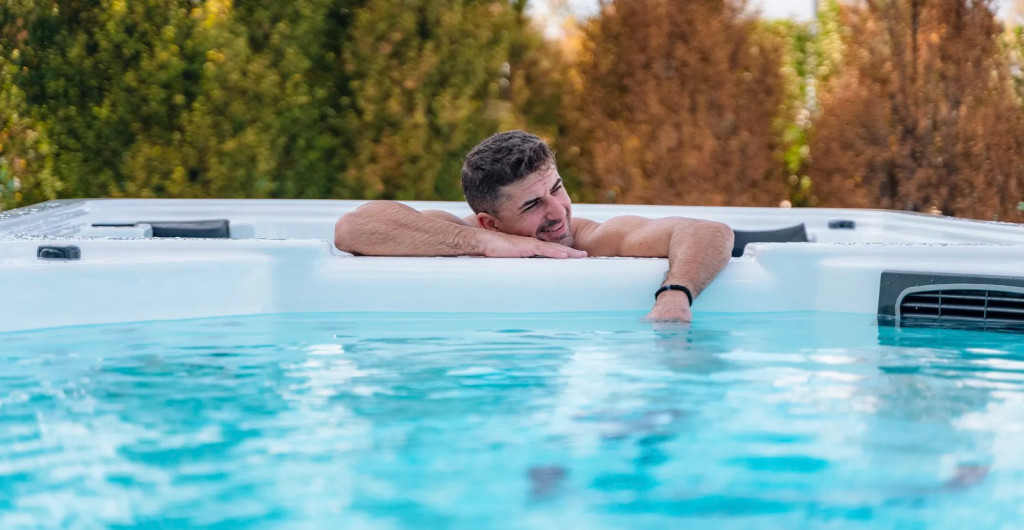
A swim spa brings together, in a single installation, a water area for physical exercise and, depending on the configuration, hydromassage. If you are wondering what a swim spa is, picture a compact pool fitted with a system that drives water against you. Instead of swimming lengths, you can stay in a relatively stable position while matching your pace to the current.
The concept goes beyond swimming. You can walk in the water, work on mobility, do low-intensity exercise and share moments of wellbeing. That is why a swim spa is appealing when you want to make the most of your garden or an outdoor area for different activities without giving the whole space over to a conventional pool.
A counter-current pool uses pumps and nozzles to create a flow of water. The experience depends on the flow rate, the width of the swimming area, the available adjustment and each person's technique. It is worth trying the current before choosing, as a high flow rate alone does not guarantee a comfortable or even feel.
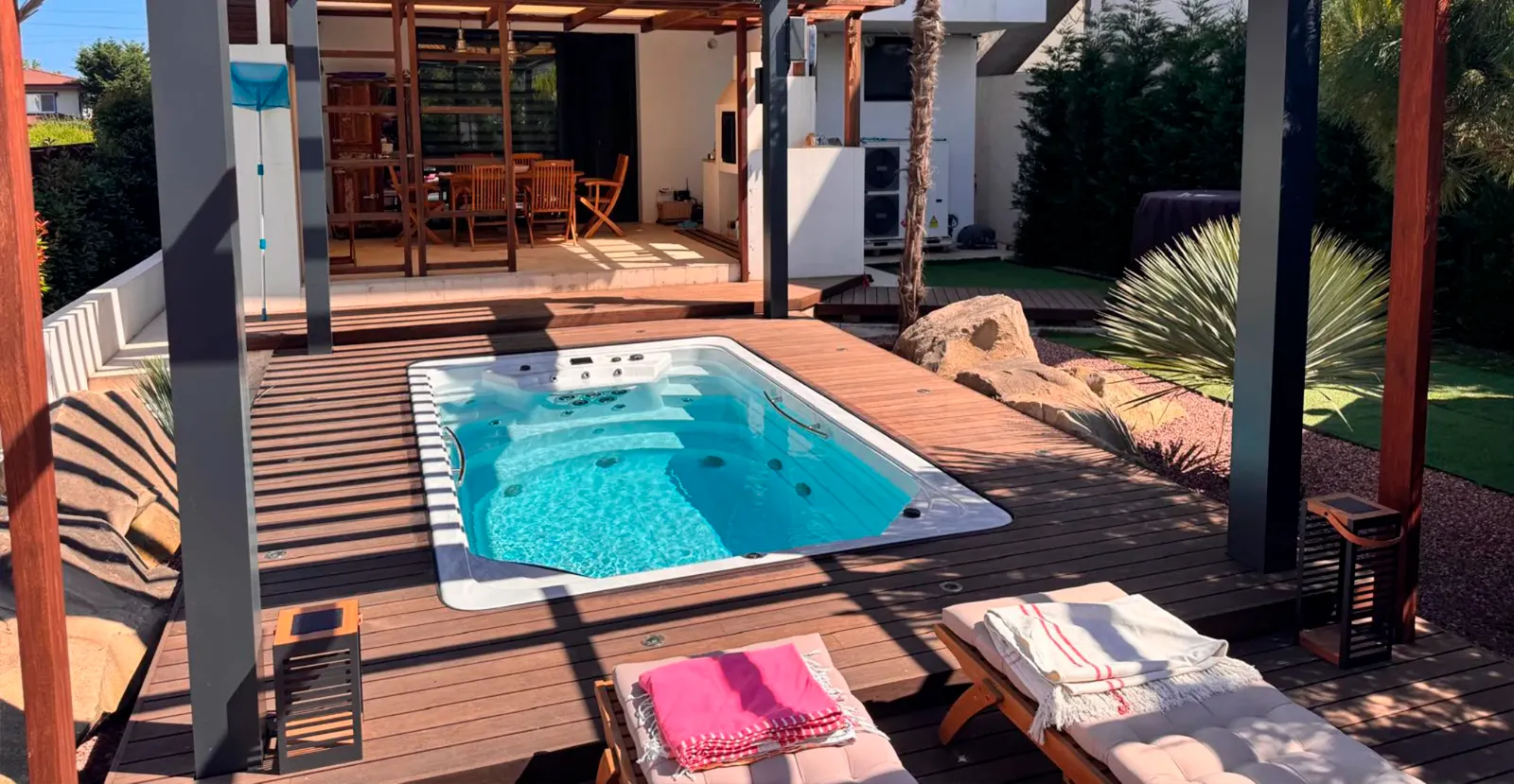
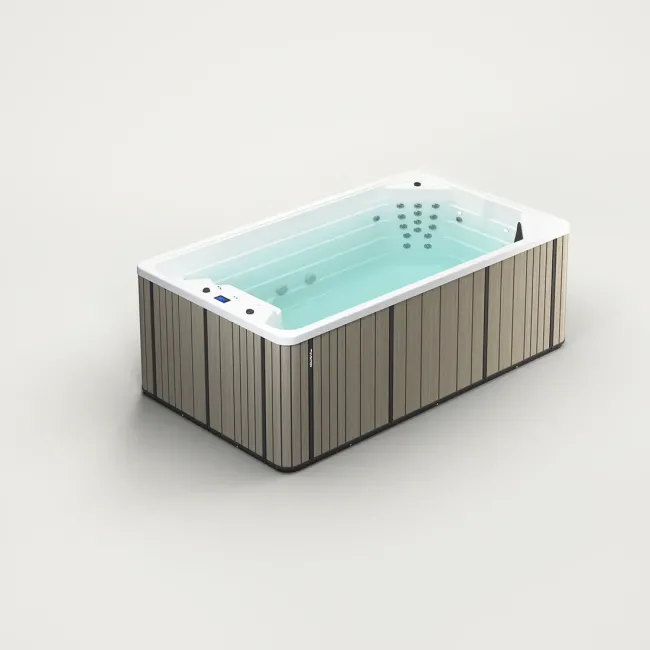
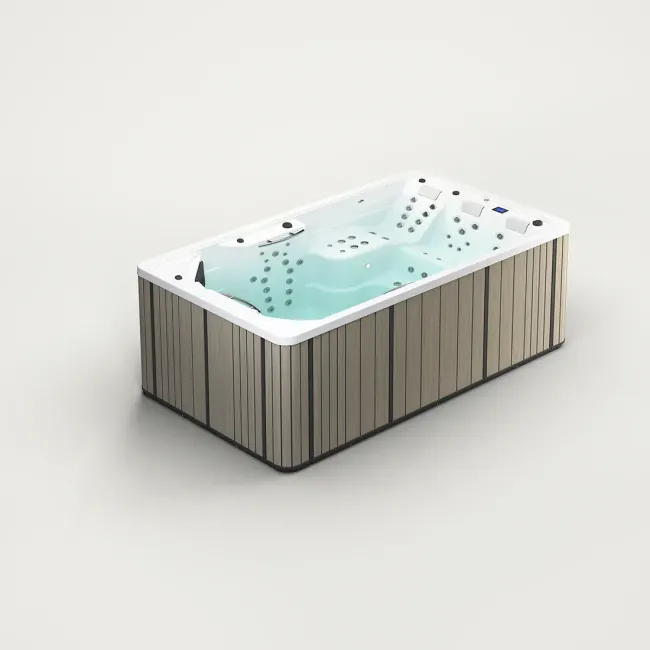
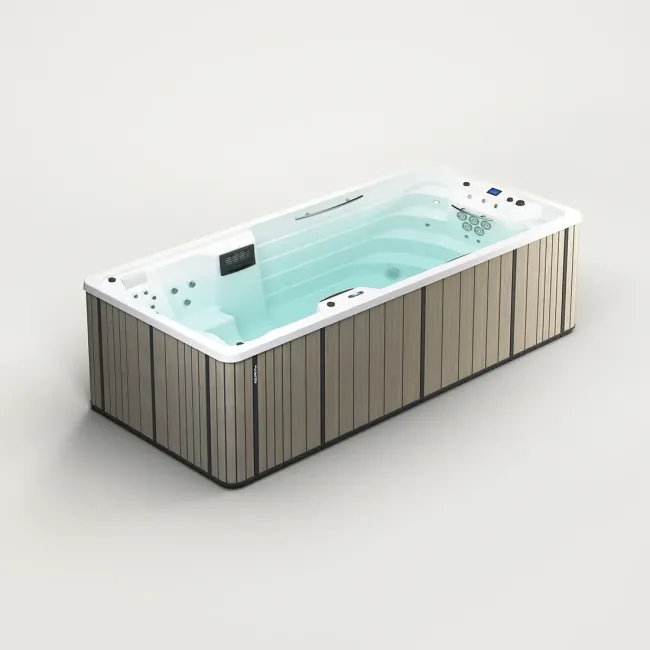
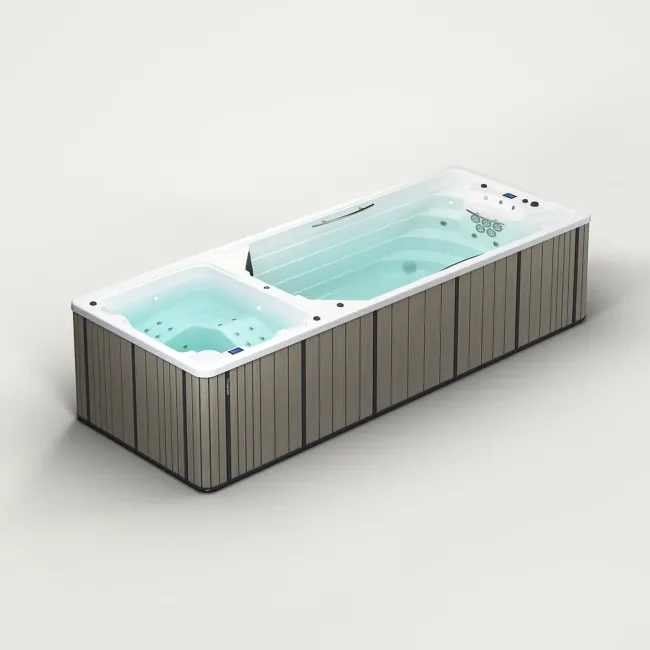
The Aquavia Spa range offers options for different uses: Compact Pool is geared towards exercise in a compact format; Fitness combines swimming and massage areas; Amazon extends the swimming space; and Duo separates two environments. Your choice should start from how you will actually use it, not just from size or the number of jets.
Swim spa vs pool: space, building work, running costs and year-round use
The main difference between a swim spa and a pool lies in how the space is used. A traditional pool allows continuous lengths, games and a larger bathing area. A swim spa has a smaller footprint and makes stationary swimming possible. The right comparison is not which is better in absolute terms, but which suits each household's priorities.
A pool may be preferable when several people want to swim freely, when there is enough room and you want a large leisure area. A swim spa is better suited to projects that value frequent exercise sessions, control over the bathing environment and several functions combined in one compact installation.
As for building work, some swim spas can be installed on a strong, level base, while others can be sunk into the ground. That does not mean they need no groundwork, utility connections or permits. Energy costs depend on water volume, climate, set temperature, insulation, cover and frequency of use; it would not be accurate to claim they always cost less to run than a pool.
Using it for more months of the year is a potential advantage of a swim spa, as the unit has built-in heating and the water can be kept warm all year round if you wish. The cost of maintaining the temperature varies with the location and the type of insulation of the swim spa, so it is worth considering a thermal cover, efficient usage habits and the EcoSpa insulation options.
To compare solutions, explore our pools with a counter-current system. Always ask for an installation and running-cost estimate tailored to the conditions of your project.
Swim spa vs hot tub: exercise versus relaxation
The difference between a swim spa and a hot tub is mainly one of purpose. A hot tub or hydromassage spa is designed for enjoying water jets while sitting or lying down and, depending on the model, air massage. A swim spa includes an area where you can move around and, on certain models, hydromassage seats as well. Neither automatically replaces the other.
If your priority is to unwind after work, enjoy short massage sessions or install a wellness feature for two, a home spa may be enough. If you want to train several times a week, do aquatic exercise and still be able to relax, a swim spa offers greater versatility.
There are hybrid solutions. Fitness Spa combines an activity area with massage seats. Amazon integrates a counter-current swimming area and a hydrotherapy zone. Duo has two separate spaces, a useful configuration when you want to set the conditions for exercise and relaxation independently.
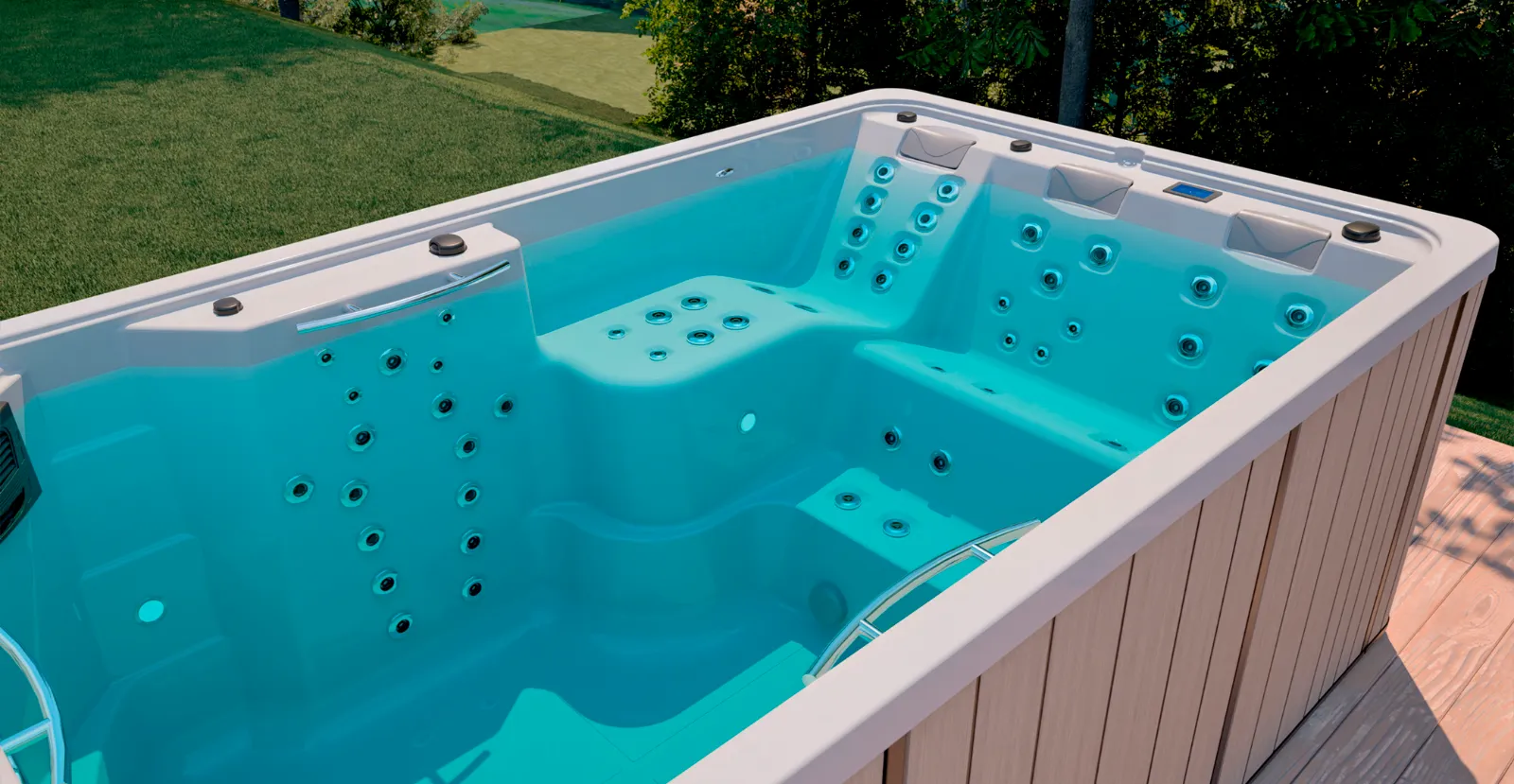
Before deciding, think about how many times a week you will exercise, how many people will use it and whether you need different temperatures for swimming and for massage. This is far more useful than simply comparing photographs or sales claims.
Who can use a swim spa? Athletes, families, rehabilitation and older people
A swim spa can appeal to many different people, but exercise and safety conditions should be adapted to each person. For regular athletes it allows endurance and technique work without having to travel to a pool. Adjusting the current helps to plan progressive sessions, provided the system and the swimming level are compatible.
Families can use it as a space for activity and time together. Children need constant adult supervision and the usual water safety measures; a swim spa should never be regarded as risk-free just because it is more compact. It is essential that children do not get in on their own and that the cover is fitted whenever the swim spa is not in use.
For older people or those with reduced mobility, water can make certain low-impact activities easier, but access, depth, temperature and the availability of supports should be assessed beforehand. Features such as the swim spa access steps and the interior grab bars on models that include them are worth considering.
In physical recovery settings, aquatic exercise can form part of a professional programme, but a swim spa should not be presented as a medical treatment in itself. If you have an injury, cardiovascular disease, breathing difficulties or need rehabilitation, consult the healthcare professional responsible for your care and follow a personalised plan.
It is also useful for people who prefer to walk or make gentle movements in the water without swimming against the current. In any case, access design, comfort, intensity control and safety matter more than a generic promise of benefits.
Types and sizes: compact, 2-zone, in-ground
Models differ in length, layout, current strength and massage. Among the Aquavia Spa options, Compact Pool and Swimspa Sky have a 400 × 230 × 138 cm structure designed for aquatic activity; Fitness Spa also measures 400 × 230 cm and combines sport with massage positions; Amazon reaches 500 × 230 × 138 cm; and Duo goes up to 600 × 230 × 138 cm, with two separate zones. Here, the 2-zone swim spa is especially interesting for anyone who wants to keep swimming and hydromassage apart.
A small swim spa can be the answer when garden space is limited, although extra room is needed for access, maintenance and delivery manoeuvres. Longer versions offer a wider area for movement and can meet different sporting goals.
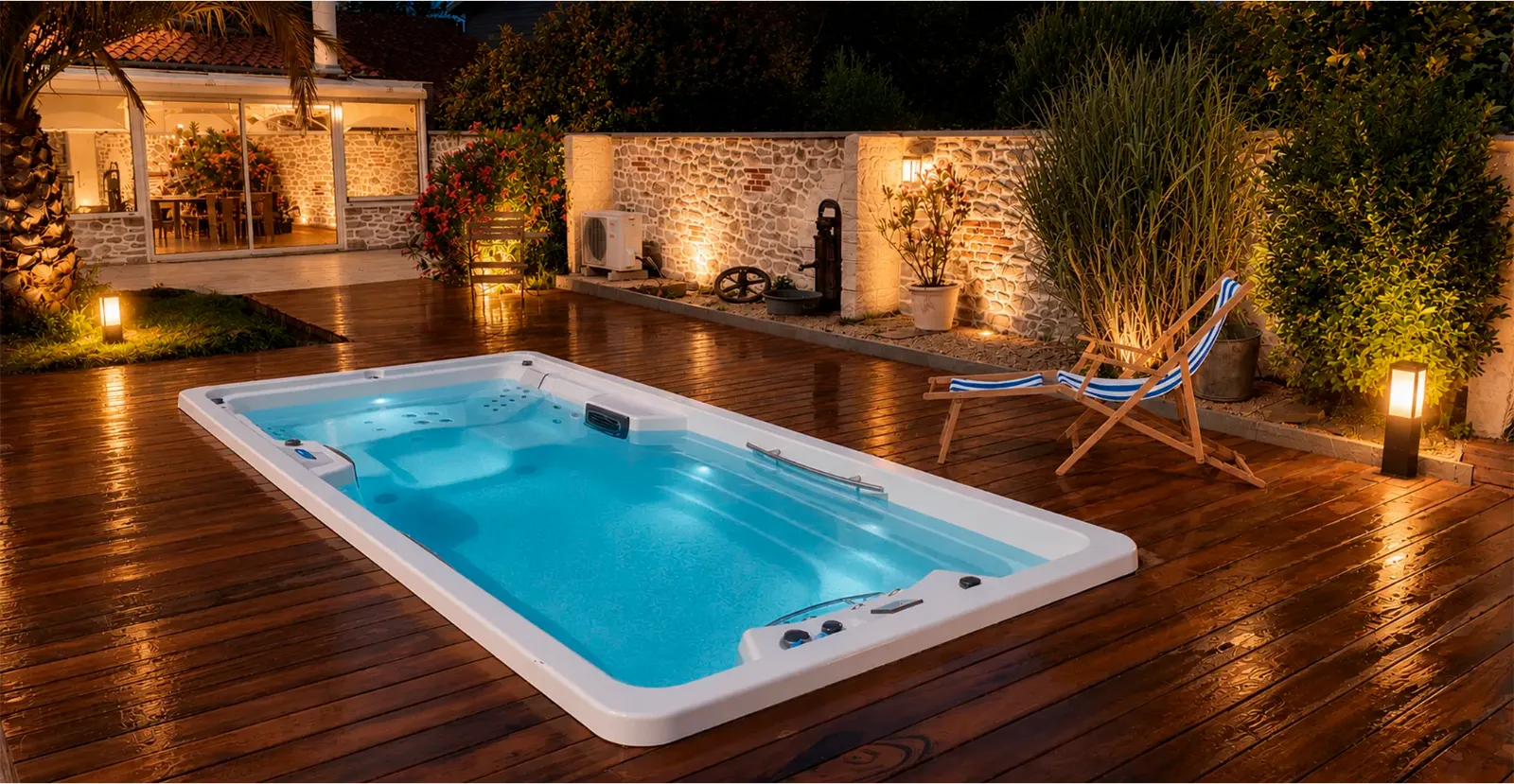
In a carefully designed architectural project, an in-ground swim spa can be integrated with paving and decking. The integration must include technical access hatches, drainage, ventilation where appropriate and service access.
Installation and permits
Choosing the location is a technical decision. Before ordering, check the external dimensions, the delivery route, whether a crane may be needed and any obstacles on the way in. Also make sure the base can bear the total weight including water and bathers, especially on terraces and raised floor slabs.
You cannot assume that a pool needs no planning permission. Planning rules vary from country to country and between local authorities, and may depend on land classification, the type of installation and the work planned. Even a prefabricated, above-ground swim spa may require formal approval. Check with your local authority and, where appropriate, a qualified professional before starting the installation.
For outdoor installations it is worth considering orientation, exposure to wind, privacy and a non-slip surface around the unit. For indoor use, humidity control, ventilation and possible structural requirements also come into play.
Price and maintenance
The price of a swim spa depends on its size, the design of the counter-current area, insulation, hydromassage equipment, finishes and accessories. A full budget should cover delivery, offloading equipment, the supporting base, electrical installation, commissioning and any integration work.
Daily and weekly maintenance involves filtration, cleaning the filters and monitoring pH and sanitiser. You will also need to follow the water-change procedures and the manufacturer's recommendations for the cover. How often you need to act will depend on how many people use the swim spa and the water treatment used.
Frequently asked questions
Can you really swim in a swim spa?
Yes. The counter-current system lets you swim without moving along a long pool. How comfortable it feels will depend on the current, the space available and each user's technique. Ideally, try it before you decide.
Does a swim spa need building work?
It needs a suitable base and connections; the extent of the work varies. In-ground installations usually involve more work than above-ground ones. Local authority approval cannot be taken for granted.
Can it be used in winter?
Yes, Aquavia Spa swim spas are designed to be used all year round, even in winter. Thanks to their heating system, they keep the water at a comfortable temperature whatever the season.
How do I know which model to choose?
Start with the space, the swimming intensity you need and the number of users. Then consider whether you want hydromassage, one or two zones, the type of installation and your overall budget.
Request a quote for your swim spa
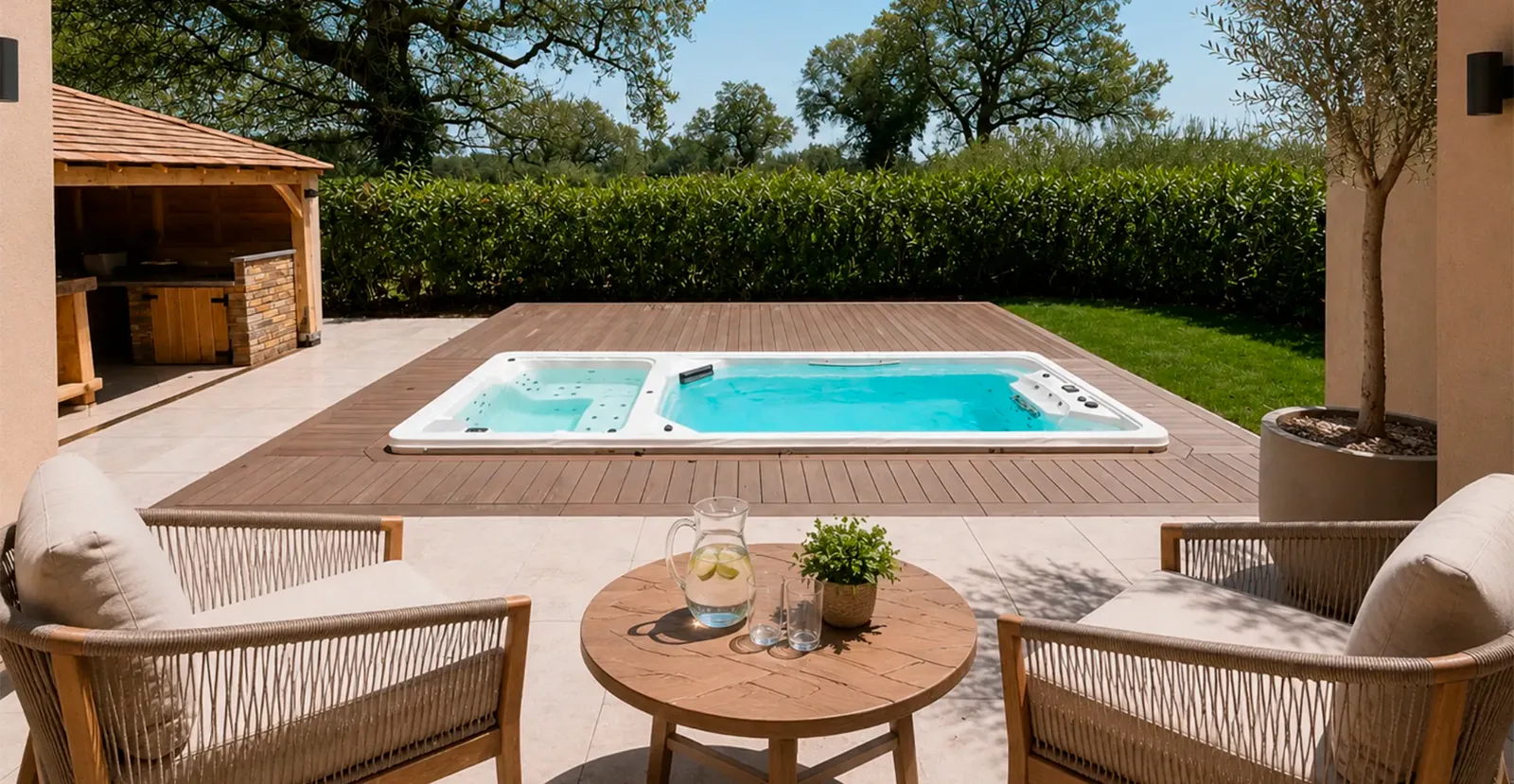
Would you like to turn your outdoor space into a training and wellness area? Explore the Aquavia Spa Swimspa range and request a swim spa quote tailored to your installation, exercise and relaxation needs. Our team can advise you on dimensions, options and configuration.