es
es fr
fr de
de nl
nl en
en it
it pt
pt ro
ro sv
sv ru
ru hr
hr da
da si
si pl
pl no
no cs
cs fi
fi el
el sr
srA compact solution for all year round
A new concept in residential pools is gaining popularity: the swim spa . This equipment is much more than a simple hybrid between a swimming pool and a spa. In fact, its rapid evolution in recent years has made this "wellness pool" a clear, high-value alternative for pools in private homes, where the combination of relaxation, exercise, and family fun is becoming increasingly important. The swim spa offers all the advantages of a residential pool, while incorporating a range of improvements that allow it to be used year-round, adapt to multiple uses, reduce space requirements, and overcome one of the obstacles that, until recently, was a major drawback when this type of equipment was compared to much larger pools: the ability to practice swimming and other sports that are difficult to combine with traditional pools. 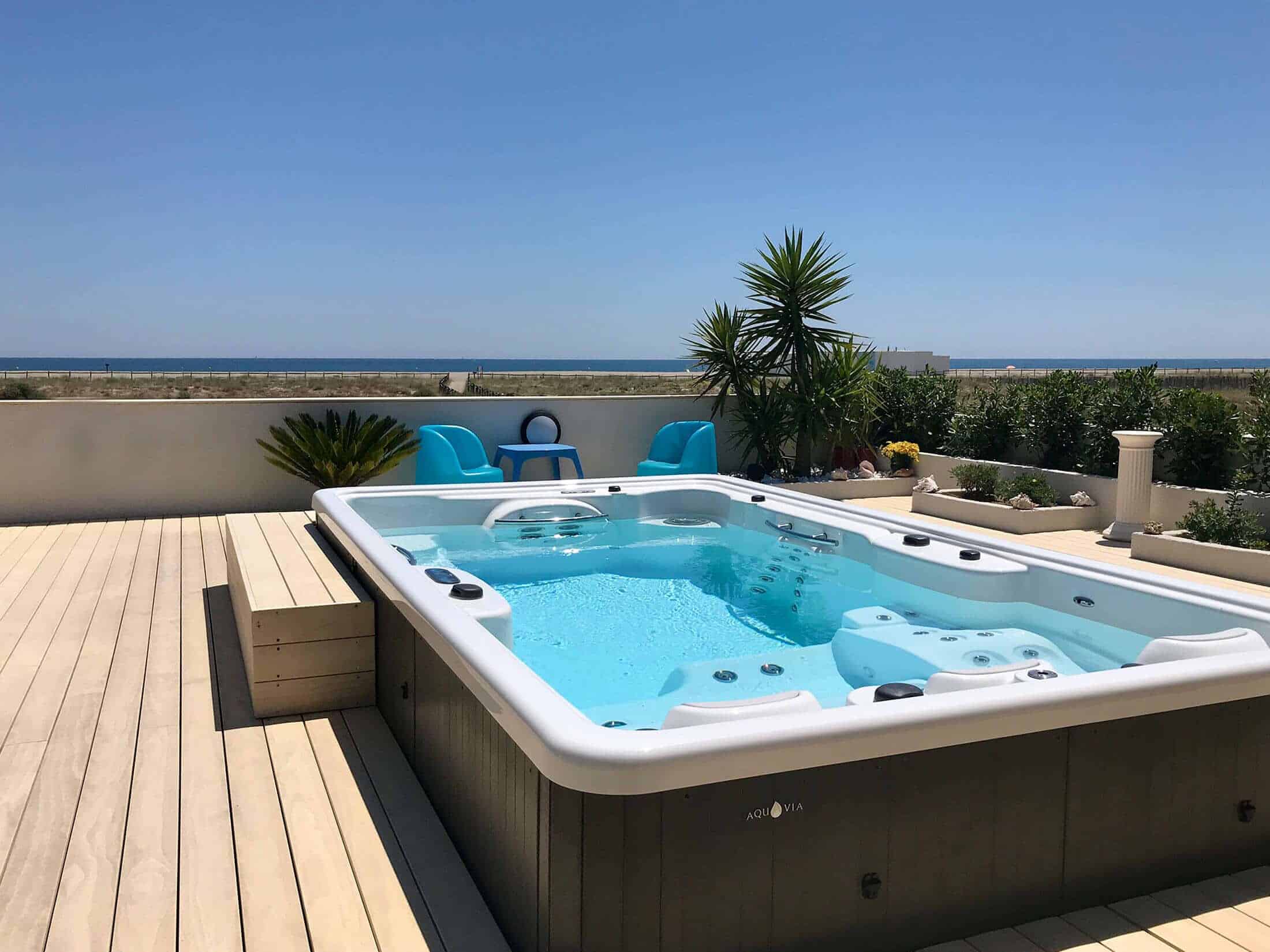 [/caption] Swim Spa
A hydromassage pool for the entire residence, for year-round use, and in a much smaller space.
For practical reasons, a swim spa is a small pool (generally between 4 and 5 meters long) with clearly defined hydromassage and swimming or fitness areas. The major advantage of this type of pool lies in its ability to combine massage and exercise in a compact space, at levels far exceeding those of a traditional swimming pool, thanks to the technology incorporated into these devices, ultimately making them true wellness machines. Swim spas currently on the market fall primarily into two categories:
- The category of swim spas that have only one bathing area and offer several product configurations:
- Swim spas are designed for users who want to swim intensely while also enjoying recovery massages, therapy, or relaxation sessions without changing compartments. These spas are also ideal for people who want to take turns doing sets of physical activity in pairs. A single space is therefore available for both hydromassage and swimming.
- Swim spas are designed for fitness and equipped with counter-current swimming jets, as well as various kits for fitness exercises, swimming, and even rowing. Within the same space, these pools allow you to exercise while also providing seating, loungers, or vertical hydromassage compartments. Furthermore, their shallow depth is ideal for performing exercises in a standing position or even for aquacycling.
- The category of two-zone swim spas, also known as dual swim spas, features two completely independent sections, one for hydromassage and the other for swimming or water aerobics. The key difference lies in the separation of the compartments, allowing each to be at a different temperature, with exercise requiring a much lower temperature than relaxation.
However, residential swimming pools are still, in most cases, larger than swim spas , and can therefore accommodate a greater number of users. This is why, among other reasons, it is worthwhile to weigh the pros and cons of a swim spa against those of a private pool. [caption id="attachment_9378" align="aligncenter" width="2200"]  Fitness Spa [/caption]
The advantages of a swim spa
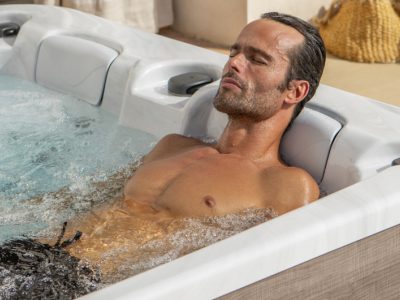
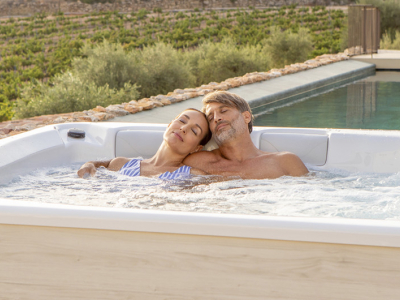
- Hydromassage : a swim spa is obviously equipped with a space furnished with hydromassage jets which can be used not only to relax, but also to accelerate recovery and improve muscle toning.
- Compactness : a swim spa is designed to make the most of every available space, so it needs very little room and is totally versatile, making massage compatible with sports or family fun.
- Custom design : the wide variety of configurations available on the market means that almost any user can own a swim spa that suits their needs, whether through the arrangement of jets and hydromassage nozzles or through the complementarity of equipment intended for aquafitness.
- Year-round use : Thanks to its water heating system, the swim spa can be used at any time of year, including outdoors, where its temperature is maintained by highly insulating materials and a thermal cover.
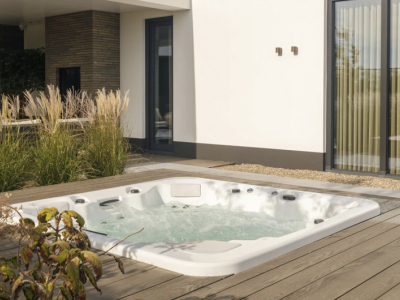
- Plug-and-play : a swim spa includes all the technical equipment necessary for its operation (pumps, water heaters, and filtration systems). Easy to transport and install, it can also be set up in the garden without digging a pit, as it can be fitted with a surround or built-in.
[caption id="attachment_9379" align="aligncenter" width="2000"]  Swim spa: easy to transport and install [/caption] Disadvantages of a swim spa
- Investment : It's clear that buying a swim spa isn't as economical as building a swimming pool. Furthermore, this type of product comes fully equipped (it can even include chromotherapy or aromatherapy features), whereas a swimming pool allows for the addition of extras over time.
- Energy Consumption : Logically, a swim spa is a wellness device that consumes electricity to heat the water and power its hydromassage system and counter-current swimming jets. Furthermore, filtration is more economical than that of a swimming pool due to the smaller volume of water in the spa (between 6 and 9 m³). Generally speaking, you should expect to use 3 kW for heating and approximately 6 kW for the hydromassage pumps when they are running. It's worth noting that modern insulation systems optimize temperature retention.
- No electrolysis : purification using a saline system is not currently available, although this technology is expected to become available soon. However, ultraviolet (UV) light disinfection systems do exist, a highly effective device for eliminating bacteria and fungi in water and which can save up to 80% on the disinfection products used in swimming pools.
Ultimately, the swim spa , despite its inherent limitations, has already become the obvious value-added solution for private swimming pools. Many families don't need more space to install a pool, while others simply don't have enough room for a traditional pool. At the same time, growing concerns about well-being and health have propelled this type of spa to the top of the list of desired private home amenities.