es
 fr
 de
 nl
 en
 it
 pt
 ro
 sv
 ru
 hr
 da
 si
 pl
 no
 cs
 fi
 el
 sr
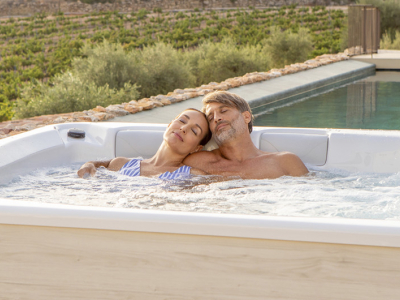
A hotel rooftop hot tub answers a question many urban hoteliers are already asking: what to do with a terrace that has the best views in the building yet is only used for a few months a year. This guide covers what you should decide before planning one: how much it weighs, how it gets up there, which format to choose and how to maintain it when many guests use it every week.
What is urban wellness and why is it thriving on rooftops?
Urban wellness brings together recovery rituals (hot water, silence, rest) that guests can enjoy without leaving the city. The Global Wellness Institute lists it among its 2026 wellness tourism trends under the name urban recovery travel: 48- to 72-hour stays focused on reducing physical and mental fatigue through recovery technology, movement, nutrition and rest. A rooftop spa fits this approach perfectly because it does not require a whole day: guests take the lift up, slip into the water and head back down to sleep.
From the long holiday to the 48-hour break
Urban travellers, whether they are in town for business, a concert or a weekend away, rarely have time for a thermal spa. What they do have is a free evening. Offering them hot water in the open air, with the city lit up around them, turns that evening into a reason to book rather than a gap to fill. For this audience, hotels with a rooftop hot tub compete in a different league from a hotel whose wellness offer is limited to an indoor gym.
Why the rooftop is the natural place for a rooftop spa
There are three practical reasons. The first is the view, an asset the hotel already has and does not need to build. The second is the distance from the street, which provides privacy. The third is that evening use does not disturb the rest of the building. The same GWI report describes privacy as a new status symbol (it calls it ‘the luxury of privacy’), and a spa on a high hotel terrace offers exactly that: space and silence without leaving the building.
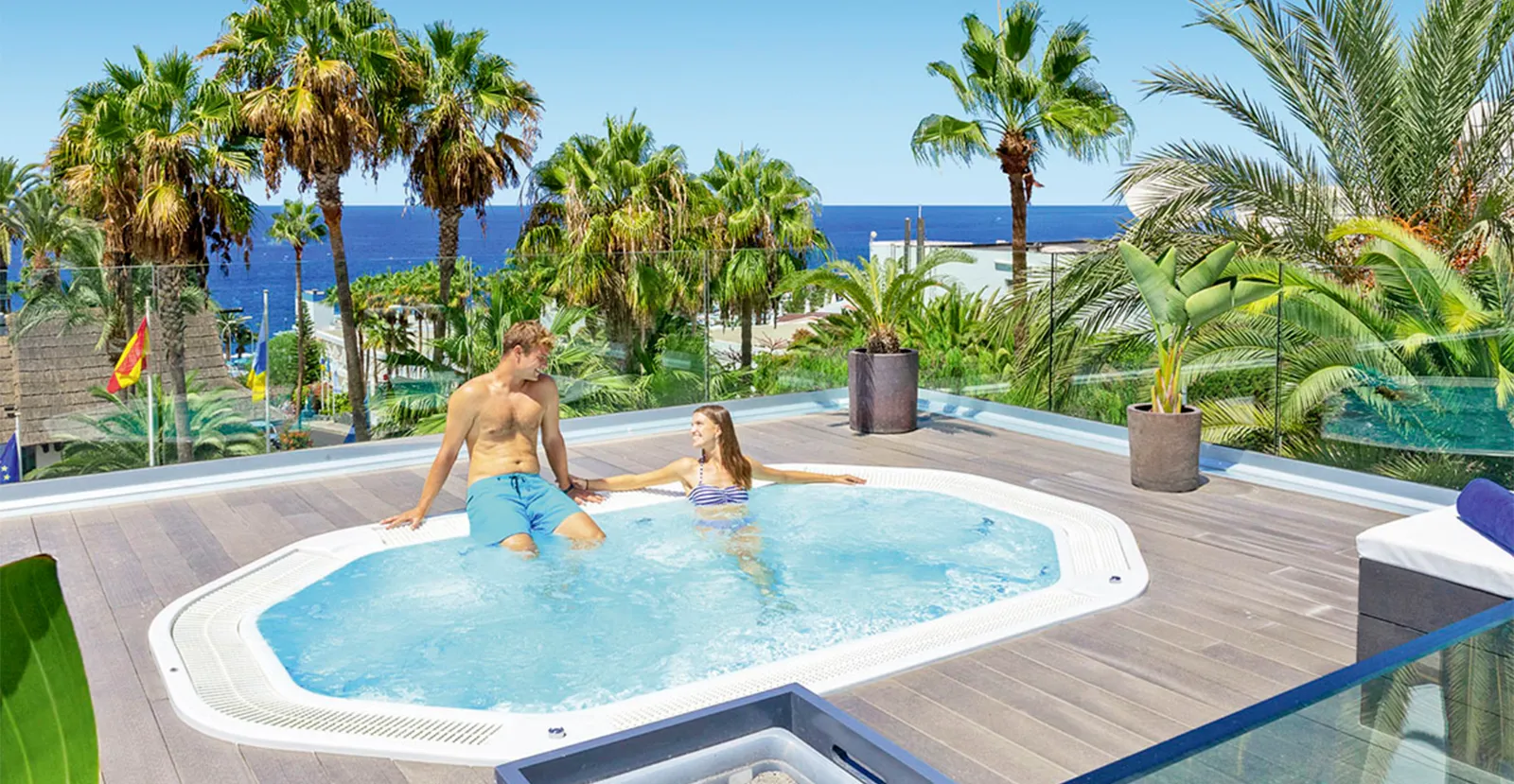
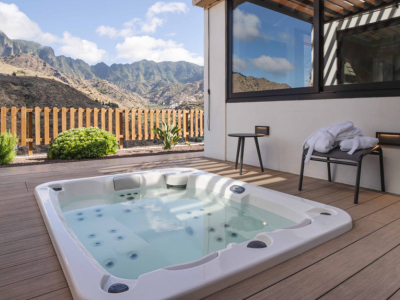
Spa Hydra installation at Hotel Los Ibizcos
Benefits of a rooftop spa for hotels: experience, ADR and reviews
A hot tub on a hotel terrace can support a differentiation strategy and give guests an extra reason to choose your property. The benefits of a rooftop spa are measured with three indicators the hotel already tracks: guest experience, average daily rate (ADR) and reviews.
Guest experience: tailored lighting, sound and temperature
A hot tub lets you adjust the atmosphere to the time of day. Colour Sense chromatic lighting changes the colour of the underwater light, the Bluetooth audio system lets users play their favourite music from any device, and the Silent Pump stops filtration noise from competing with the calm of the rooftop.
ADR: how it translates into revenue
ADR (average daily rate) can benefit when the hotel manages to sell a clearly superior experience. However, the increase is not automatic: it should be analysed alongside occupancy, RevPAR, staff costs, energy, water, consumables and depreciation. It is advisable to compare equivalent rooms or periods and to distinguish genuinely incremental revenue from simple shifts in demand.
A real case in Tarragona illustrates the commercial potential of adding private wellness to a hotel offer. A four-star hotel fitted four suites with the Hotel Spa by Aquavia Spa model to differentiate the rooms and raise their perceived value. According to the project data shared, the ADR of these suites rose from €171 to €285, an increase of approximately 67%. This example shows how a distinctive wellness proposition can contribute to a higher value-per-room strategy.
Reviews: what guests photograph
A good experience can also encourage recommendations and reviews, provided the facility is available, clean and well managed. Time-slot booking, clearly displayed rules and a prompt response to any issues matter as much as the design of the hot tub itself.
Technical requirements: structural load, crane access, waterproofing and regulations
A rooftop hot tub is planned before it is bought. These are the four points that shape the project.
Structural load
Every 1,000 litres of water weighs 1,000 kg, and on top of that you need to add the weight of the spa itself and its bathers. A rooftop is not always designed to bear such a concentrated load, so the first step is a report from a structural engineer: the permissible load per square metre and the recommended area (next to columns or load-bearing walls) on which to place the base.
Crane access
A hot tub is delivered as a complete unit, so the route must be measured before buying: the width of openings, stairs and the goods lift. If it will not fit, a crane is needed, usually along with a council permit to occupy the public road. Always ask the manufacturer for the model’s dimensions and dry weight before planning the logistics.
Waterproofing and drainage
The base must be waterproofed, with a fall towards drains and an outlet planned for emptying the spa. A leak affects the floors below, in other words occupied rooms. You also need to plan for an electrical supply with residual current protection, access to water for filling and ventilation for the technical compartment.
Regulations and safety
Requirements vary by municipality and region, and this guide is no substitute for a project by a qualified professional. Before you start, check with your architect about the licence or notification to the local authority, the health regulations applicable to shared-use pools and spas, maximum capacity, fall protection (railings), non-slip flooring and public liability insurance.
Overflow, built-in or cabinet hot tub: which format to choose
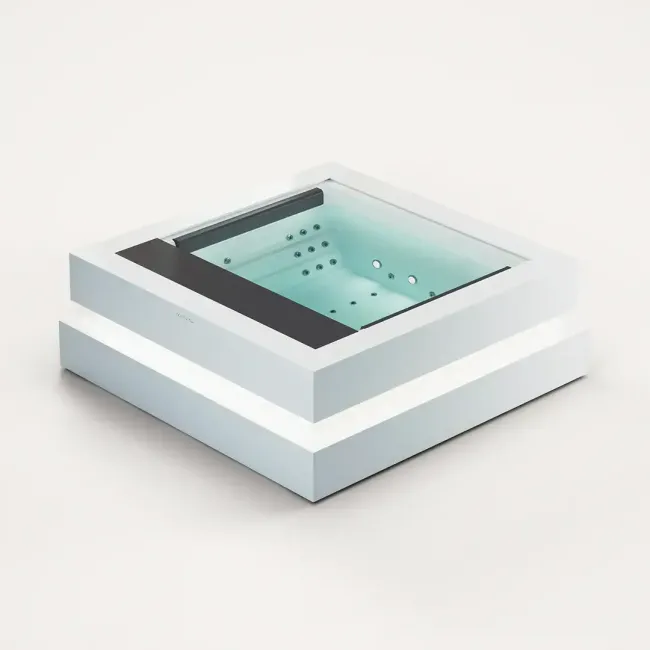
Aquavia Spa groups its hot tubs by format: built-in spa, overflow spa and spa with cabinet. On a rooftop, each one involves a different level of building work.
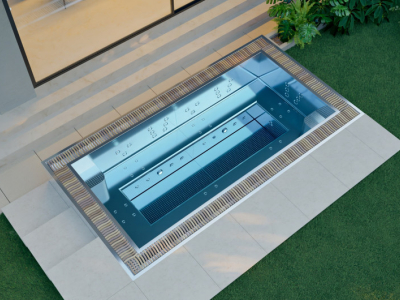
Built-in hot tub: integrated into the floor
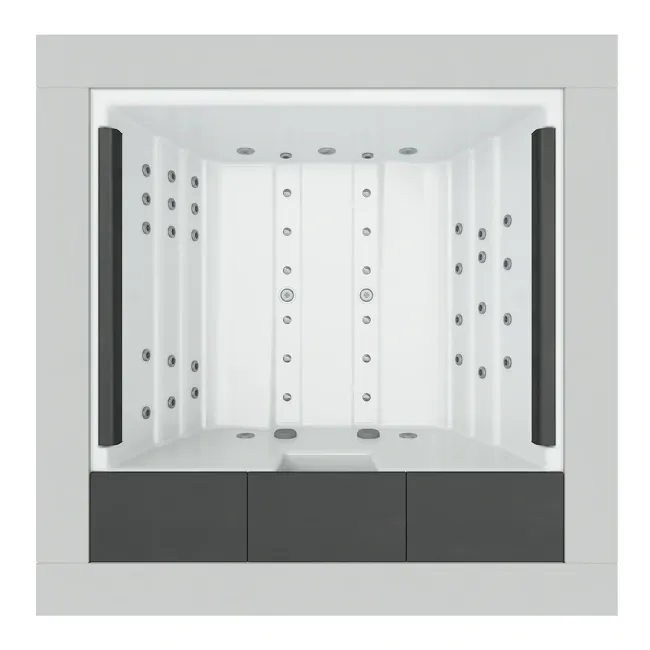
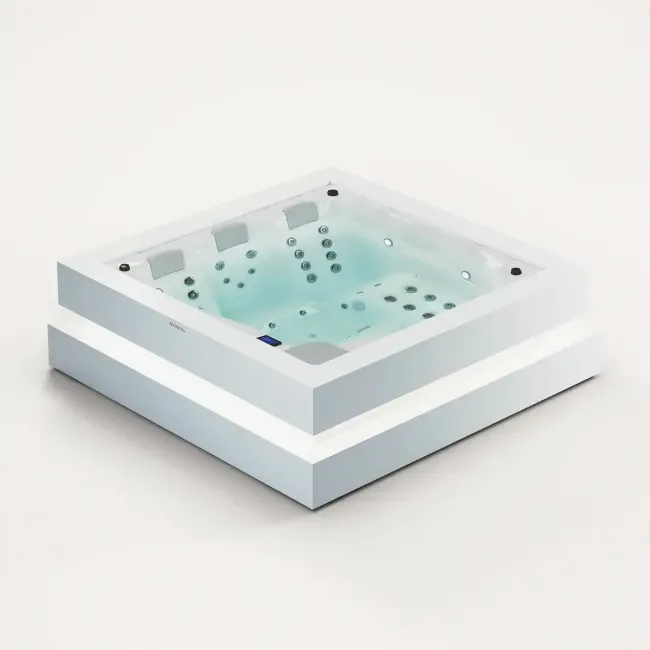
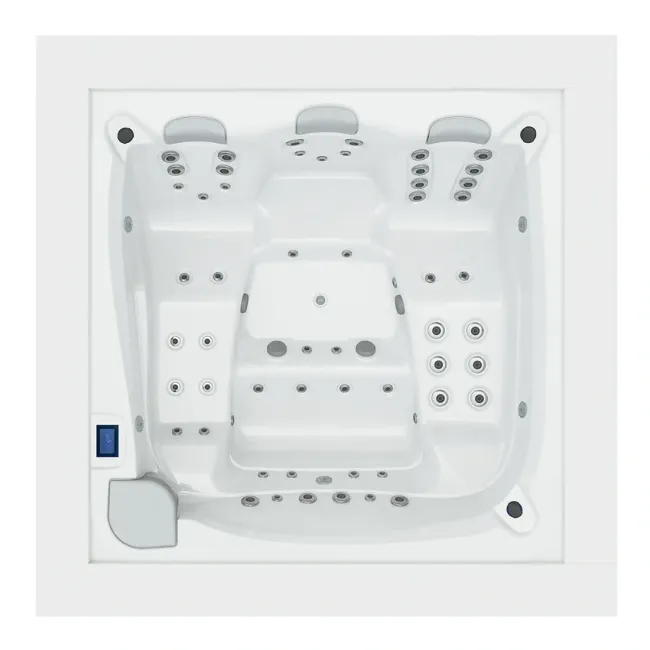
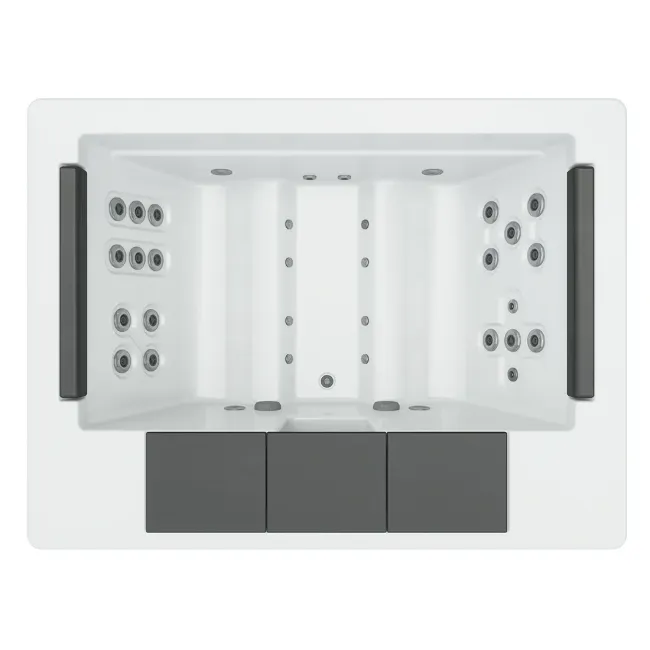
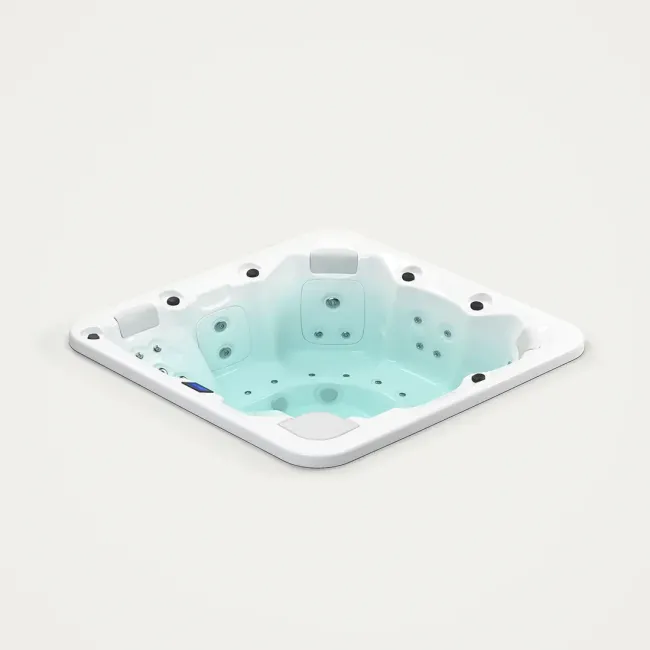
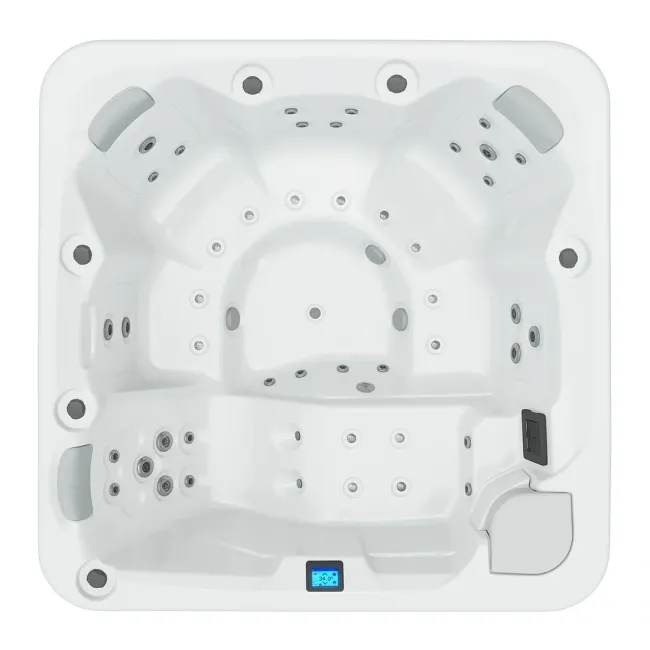
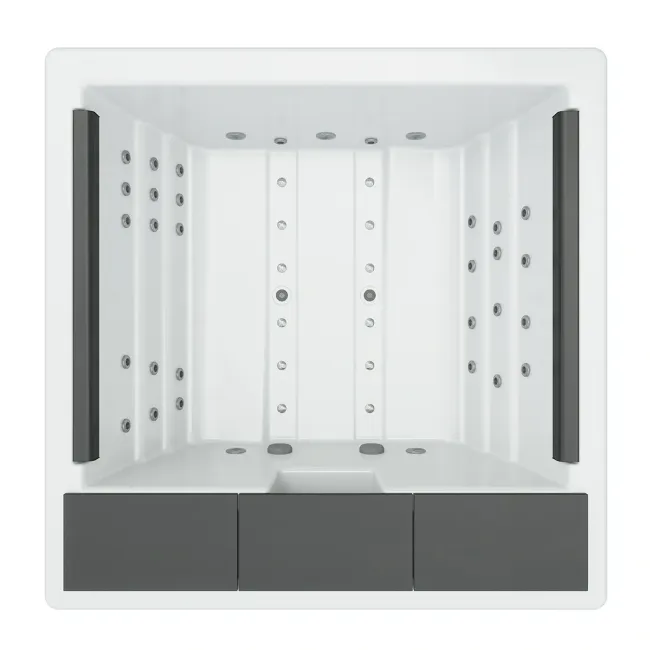
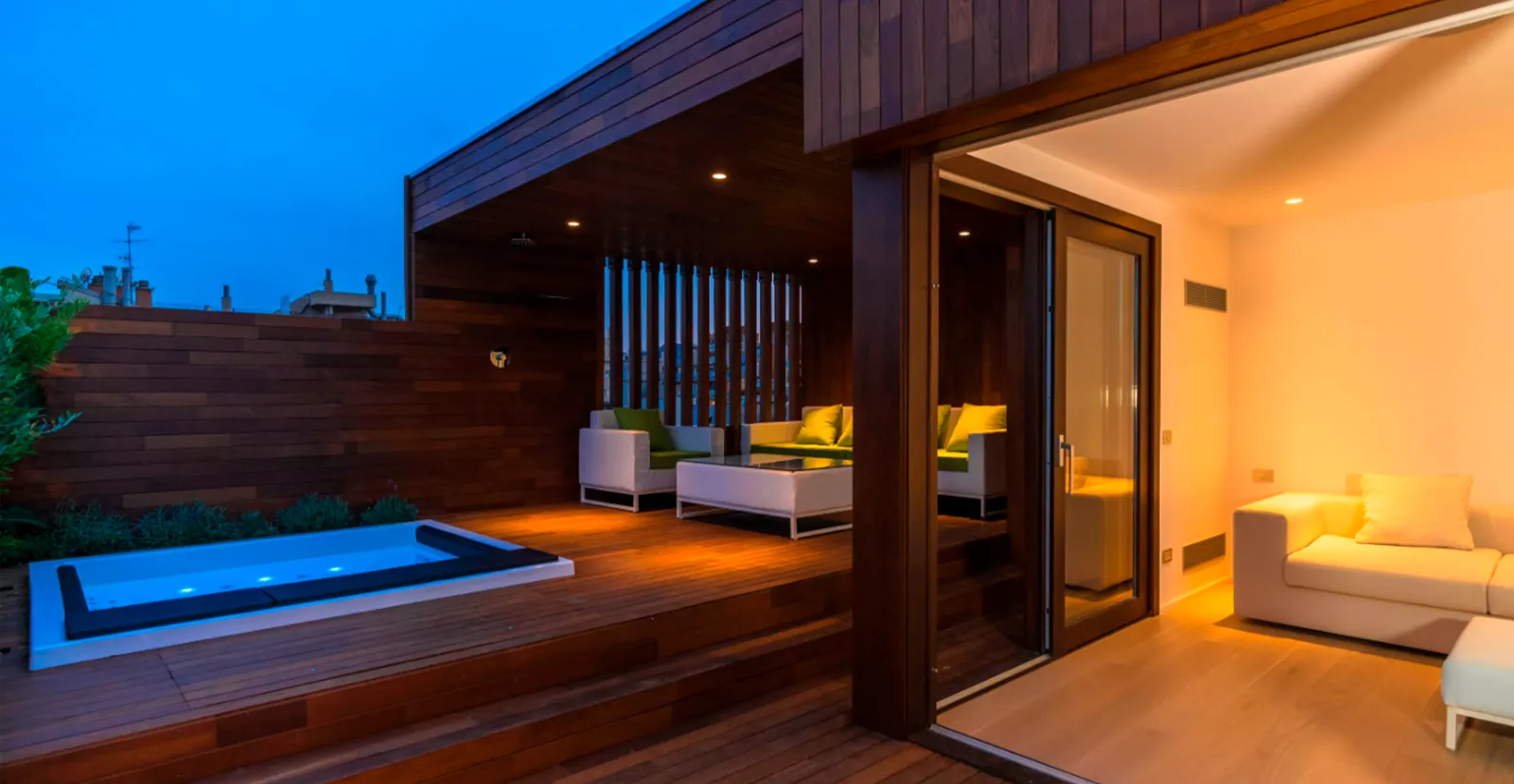
A built-in spa sits flush with the floor, with no visible cabinet. On a rooftop there is no digging: the floor is raised on a technical platform and the spa sits flush with that level. The Spa Quantum, in this category, seats 4 people, measures 198 x 198 x 76 cm and has 27 jets.
Overflow hot tub: the sheet-of-water effect
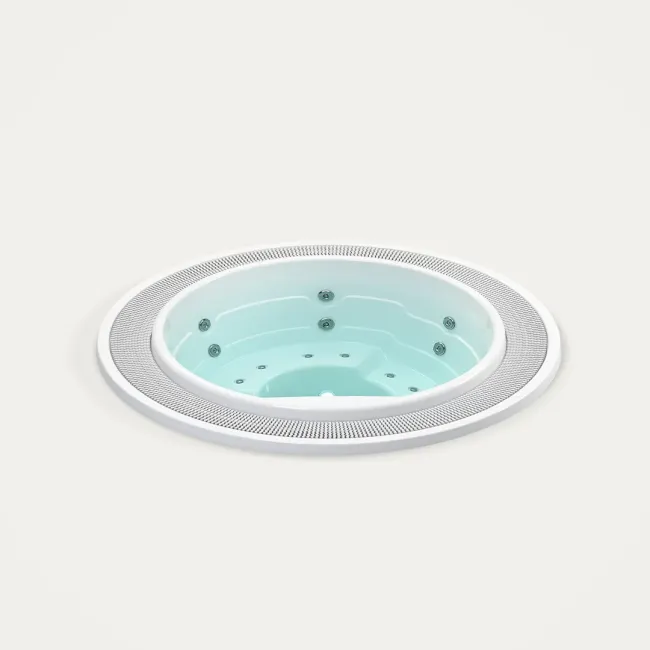
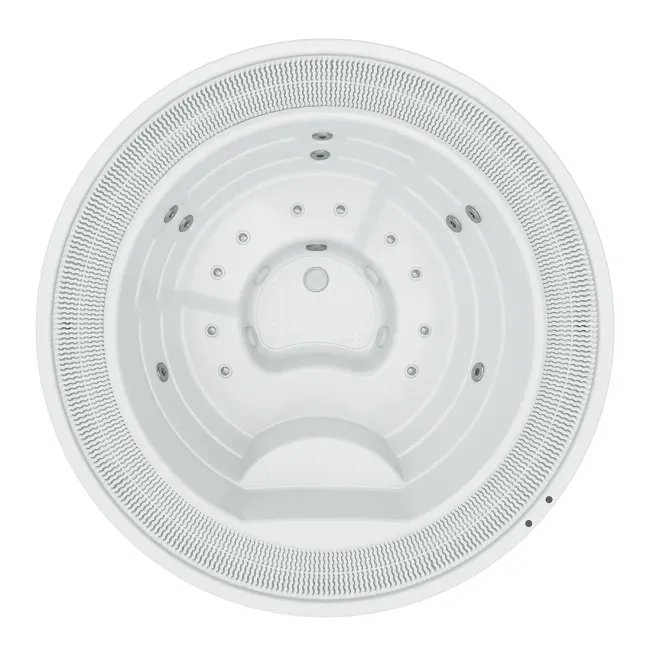
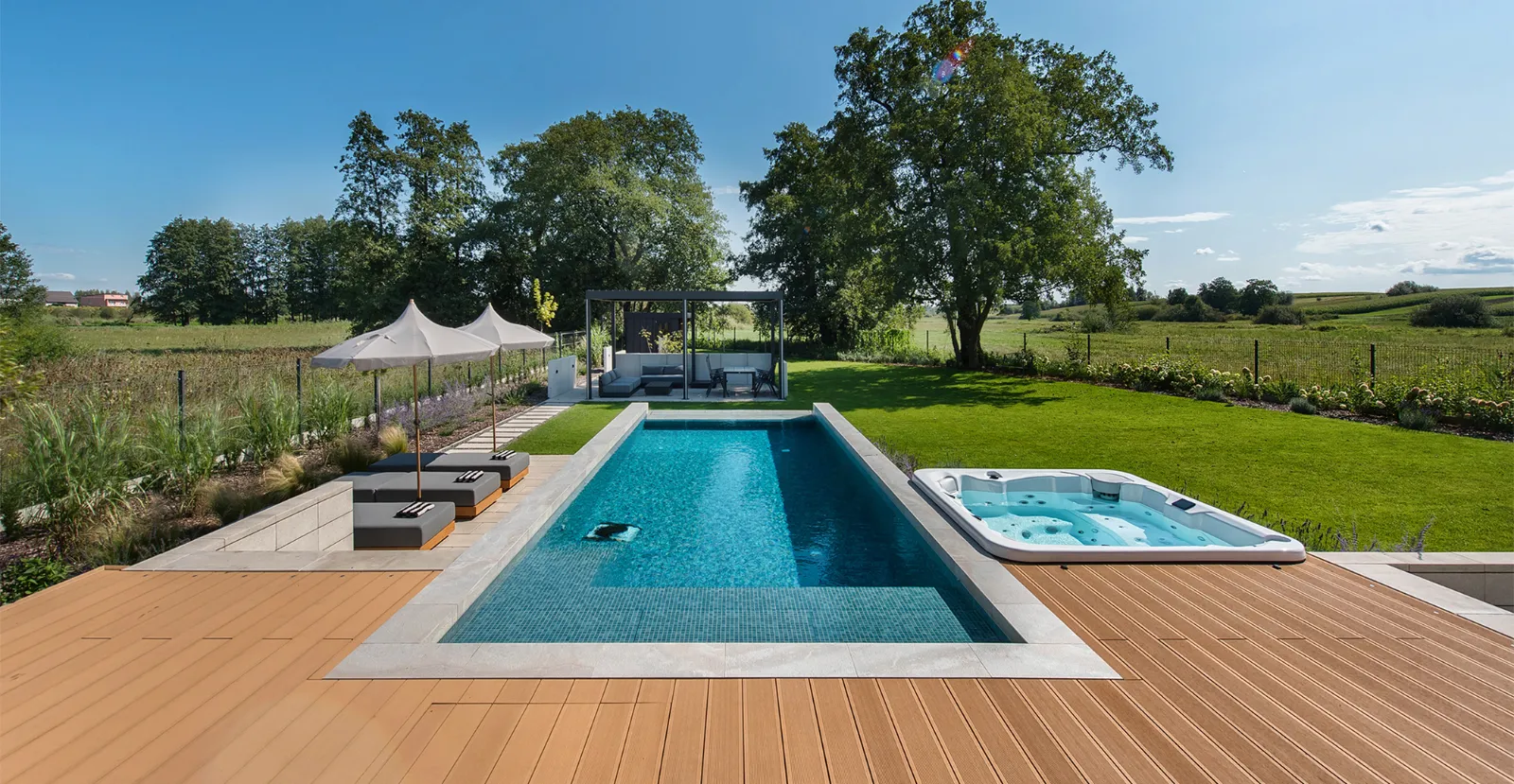
In an overflow spa the water spills over the edge into a collection channel, which adds a return system to the project. The Spa Martinique is a circular model, 250 cm in diameter with 6 seats, designed mainly for professional use.
Cabinet hot tub: the format with the least building work
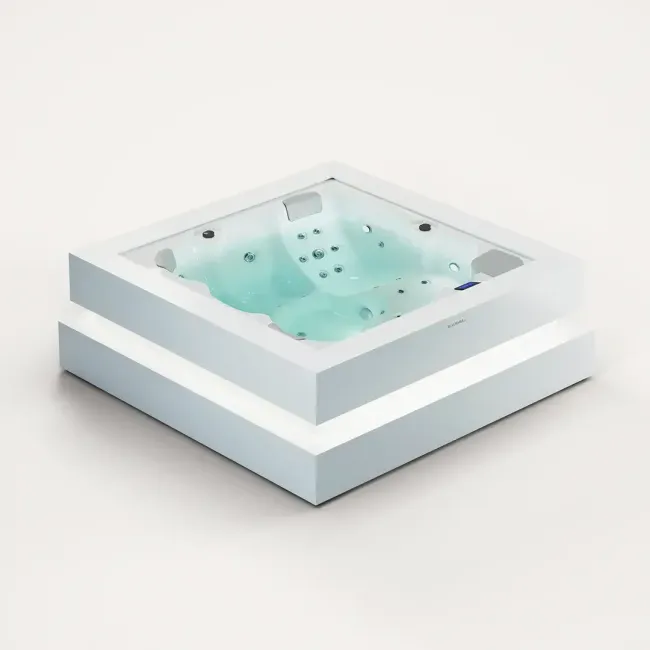
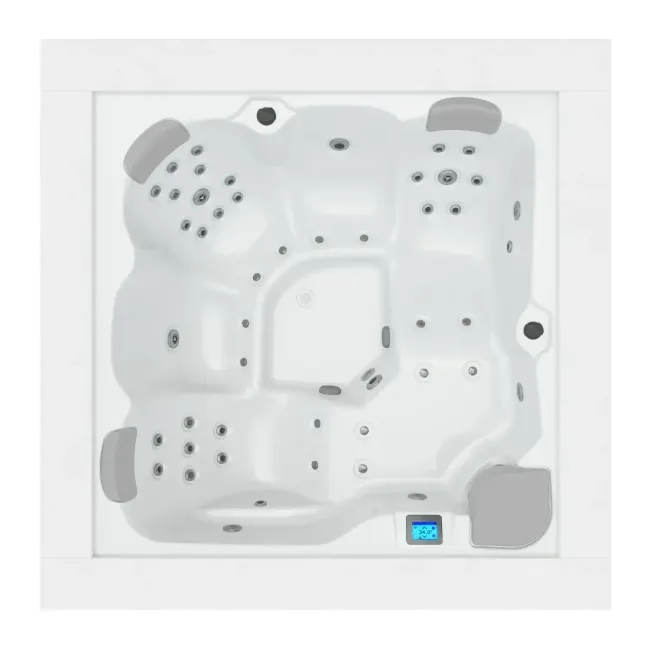
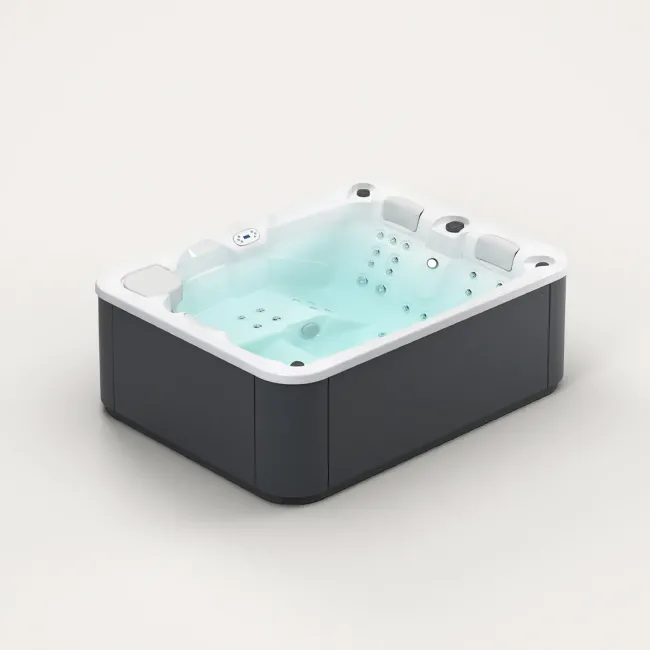
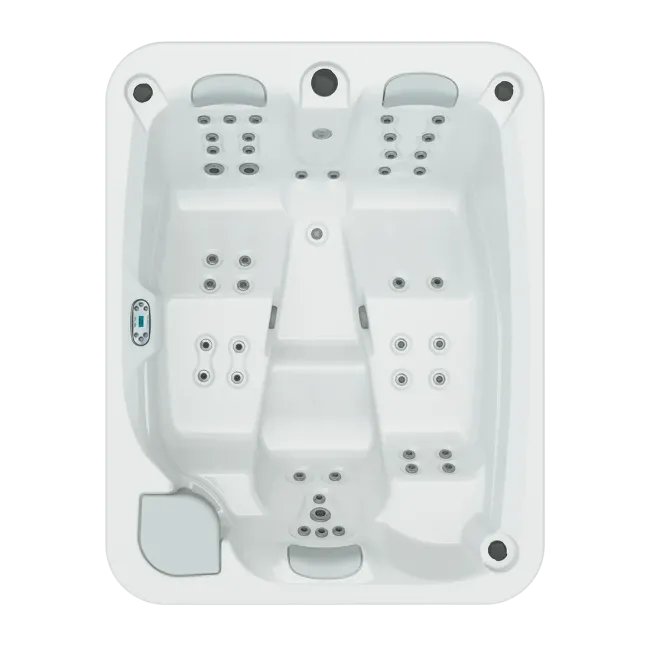
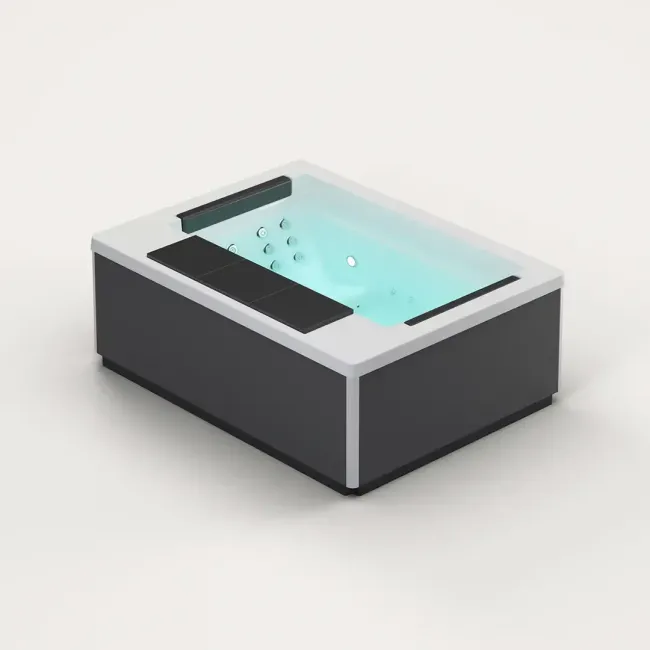
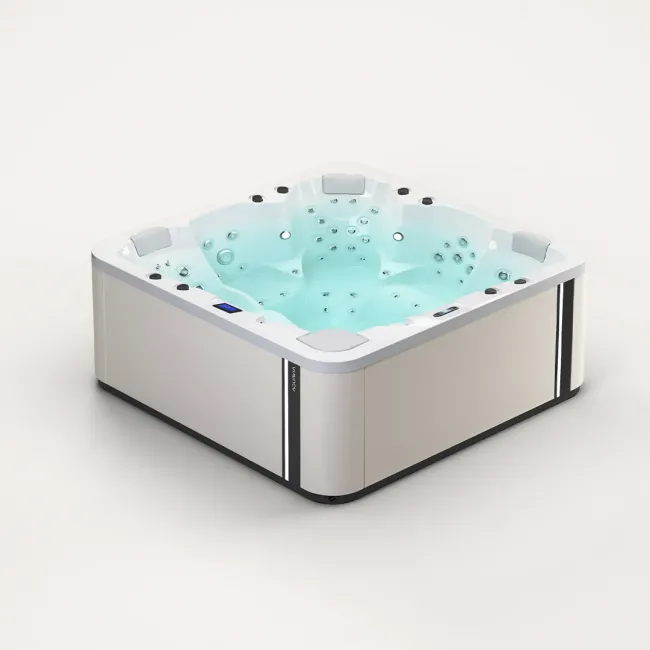
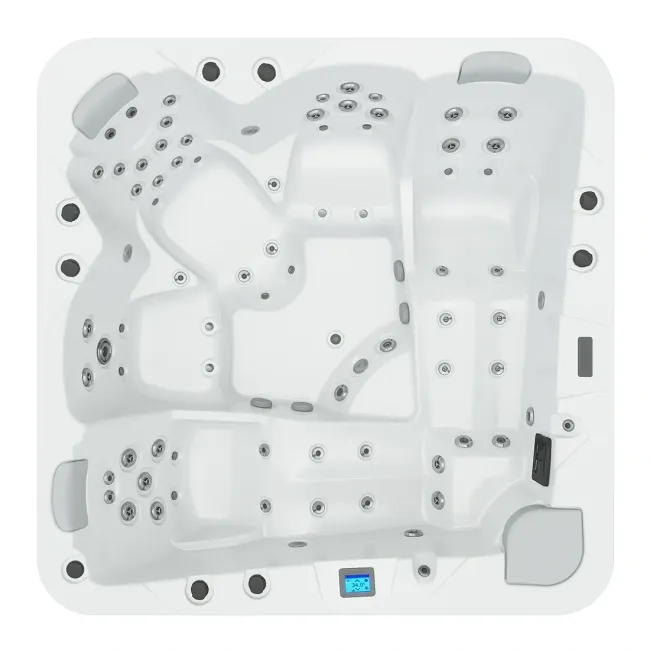
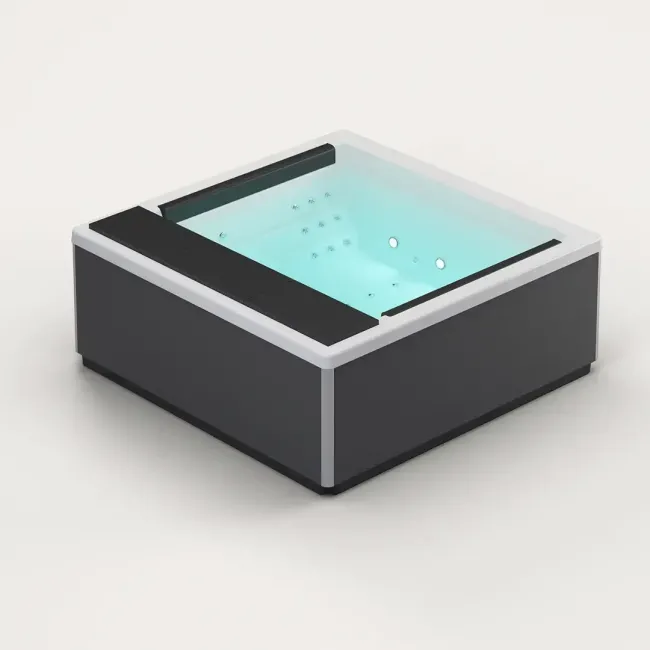
A spa with cabinet rests on a base and does not need to be built in. For an existing rooftop it is usually the format that requires the least building work. The Spa Home measures 215 x 174 x 75 cm, has two loungers with up to four positions and combines 20 water jets with 8 air jets; Aquavia Spa offers it for both homes and hotel suites.
All Aquavia hot tubs are made in Europe and come with a 15-year warranty on the structure, 10 years on the acrylic and 2 years on the components, except in Spain and Portugal, where the components warranty is 3 years.
Maintenance under intensive use
In a hotel the hot tub is used more often and by more people, so the water needs closer monitoring. These are the elements that help:
- Monitoring: Blue Connect lets you track water parameters from your phone.
- Disinfection: the water disinfection kit and ultraviolet treatment.
- Cover: the Prime Tex Cover reduces heat loss, and a cover lifter makes it easy for staff to remove and replace it in seconds.
- Energy use: hot tub with heat pump models help keep heating costs down.
- Safe access: a spa handrail helps users get in and out of the water.
Frequently asked questions
Can a hot tub be installed on any hotel rooftop?
It depends on the structure. If the structural report confirms that the rooftop can bear the load, it is feasible. If not, reinforcement or smaller-capacity models can be considered.
How much does a full hot tub weigh?
Every 1,000 litres of water adds 1,000 kg, on top of the weight of the empty spa and its bathers. Ask the manufacturer for the model’s dry weight and water capacity.
Does Aquavia support the project?
Yes. You can view Aquavia Contract projects for hotels and professional spaces.
Request your professional quote
Are you considering a hot tub on your hotel rooftop? Tell us the surface area, the permissible load and the expected number of users, and we will advise you on the format and budget. Request a professional quote through Aquavia Contract or browse our professional hot tubs for hotels.