es
 fr
 de
 nl
 en
 it
 pt
 ro
 sv
 ru
 hr
 da
 si
 pl
 no
 cs
 fi
 el
 sr
Climate change is transforming the way we enjoy our outdoor spaces. Summers are getting hotter, heatwaves are more frequent and energy efficiency has become a key criterion when choosing equipment for the home.
Against this backdrop, owning an energy-efficient hot tub no longer simply means keeping the water warm through the winter with the lowest possible consumption. It also means being able to adjust the water temperature to the season, cool off during the warmest months and enjoy hydrotherapy without sacrificing comfort.
At Aquavia Spa we are committed to technological solutions that combine wellbeing, innovation and sustainability. From hot tub insulation systems to reversible heat pumps, every element helps to optimise hot tub energy consumption and extend its use throughout the year.
Climate change and wellbeing: why your hot tub's efficiency matters
We traditionally associate a hot tub with hot water, especially in autumn and winter. However, extreme temperatures are changing our wellbeing habits.
During a heatwave, when the outside temperature rises above 35 °C, getting into a spa with the water at 37 °C can feel far from pleasant. In these conditions, being able to cool the water becomes just as important as heating it.
A sustainable hot tub has to meet both needs: offering a warm, relaxing experience in winter and becoming a refreshing retreat in summer.
Water temperature: a new way of thinking about wellbeing
The ideal temperature depends on personal preference, the climate and the kind of experience you are looking for.
| Water temp. | Experience |
|---|---|
| 26-30 °C | A refreshing dip in summer |
| 30-34 °C | Gentle hydrotherapy in warm weather |
| 34-36 °C | Relaxation with moderate warmth |
| 36-38 °C | Traditional warm hydrotherapy |
These ranges are a guide only. The temperature should be adapted to the weather, the length of your soak and each user's needs.
That is precisely the advantage of a hot tub with a heat pump that is reversible: rather than being tied to a single temperature, you can adapt the water to every moment of the year.
How much does a hot tub really cost to run? Key factors
One of the most common questions before installing a hot tub is how much a hot tub costs to run and how it affects your electricity bill.
There is no one-size-fits-all answer. Consumption depends on the volume of water, the chosen temperature, how often it is used, the climate and the technology fitted.
The main factors are:
- Water temperature: the greater the difference from the outside temperature, the more energy is needed to maintain it.
- Thermal insulation: a well-insulated hot tub holds its temperature better and reduces energy losses.
- Thermal cover: limits evaporation and heat loss when the hot tub is not in use.
- Heating and cooling system: a heat pump can deliver more thermal energy than the electricity it consumes.
- Frequency of use: hydrotherapy sessions and filtration cycles also affect running costs.
It is also important to distinguish between installed electrical power and actual consumption. A 3 kW heater, for example, uses 3 kWh if it runs for a full hour, but it does not necessarily stay on continuously.
That is why choosing an energy-efficient hot tub means looking at the system as a whole, not just the power rating of its components.
Insulation: EcoSpa and Nordic Insulation System
Energy efficiency starts long before the heating system kicks in. Good insulation keeps the water at temperature and reduces the work needed to maintain it.
Aquavia Spa builds technologies into its hot tubs that are designed to improve their thermal performance.
EcoSpa: energy efficiency by design
The EcoSpa system is an optional insulation made up of several layers of high-density polyurethane foam. Its job is to preserve the water temperature and reduce heat loss, which is especially valuable in winter, when the difference between the water and the air is greatest.
Tests carried out by the Aquavia Spa R&D team confirm its effectiveness: up to 69% energy savings, even at extreme temperatures of -15 °C. It is particularly recommended for outdoor hot tubs and cold climates, or for anyone wanting to optimise their energy consumption.
Consumption keeping the water at 38 °C:
| Ambient temp. | Consumption | Insulation | Saving |
|---|---|---|---|
| +20 °C | 6.48 kWh | EcoSpa | 67% |
| +20 °C | 19.52 kWh | No insulation | 0% |
| -15 °C | 17.84 kWh | EcoSpa | 69% |
| -15 °C | 58.40 kWh | No insulation | 0% |
As you can see, the savings are significant in any conditions: even at an outside temperature of 20 °C, EcoSpa cuts consumption by two thirds.
Nordic Insulation System: extra thermal protection
The Nordic Insulation System is a complementary insulation solution, available as an option on certain models and designed for countries with extremely low temperatures.
It is a 10 mm, five-layer material fitted to the sides and curves of the hot tub cabinet, creating an insulating air chamber inside. Its effectiveness has been verified through heat-loss tests with a thermal imaging camera.
The result: up to 80% energy savings at -15 °C, eleven points more than EcoSpa under the same conditions.
Consumption keeping the water at 38 °C:
| Ambient temp. | Insulation | Consumption | Saving |
|---|---|---|---|
| -15 °C | Nordic Insulation System | 11.81 kWh | 80% |
| -15 °C | EcoSpa | 17.84 kWh | 69% |
| -15 °C | No insulation | 58.40 kWh | 0% |
Combining both technologies improves the hot tub's thermal performance, whether you want to keep the water hot or maintain a cooler temperature.
Models such as the Touch PRO, the Essence and the Soft come with EcoSpa as standard and offer the Nordic Insulation System as an option.
Energy Saving Cover: holding the temperature saves energy too
A large share of a hot tub's energy losses occurs at the water surface, mainly through evaporation. That is why the thermal cover is an essential component for reducing consumption.
The Energy Saving Cover, designed to limit heat loss, helps maintain the set temperature while the hot tub is closed.
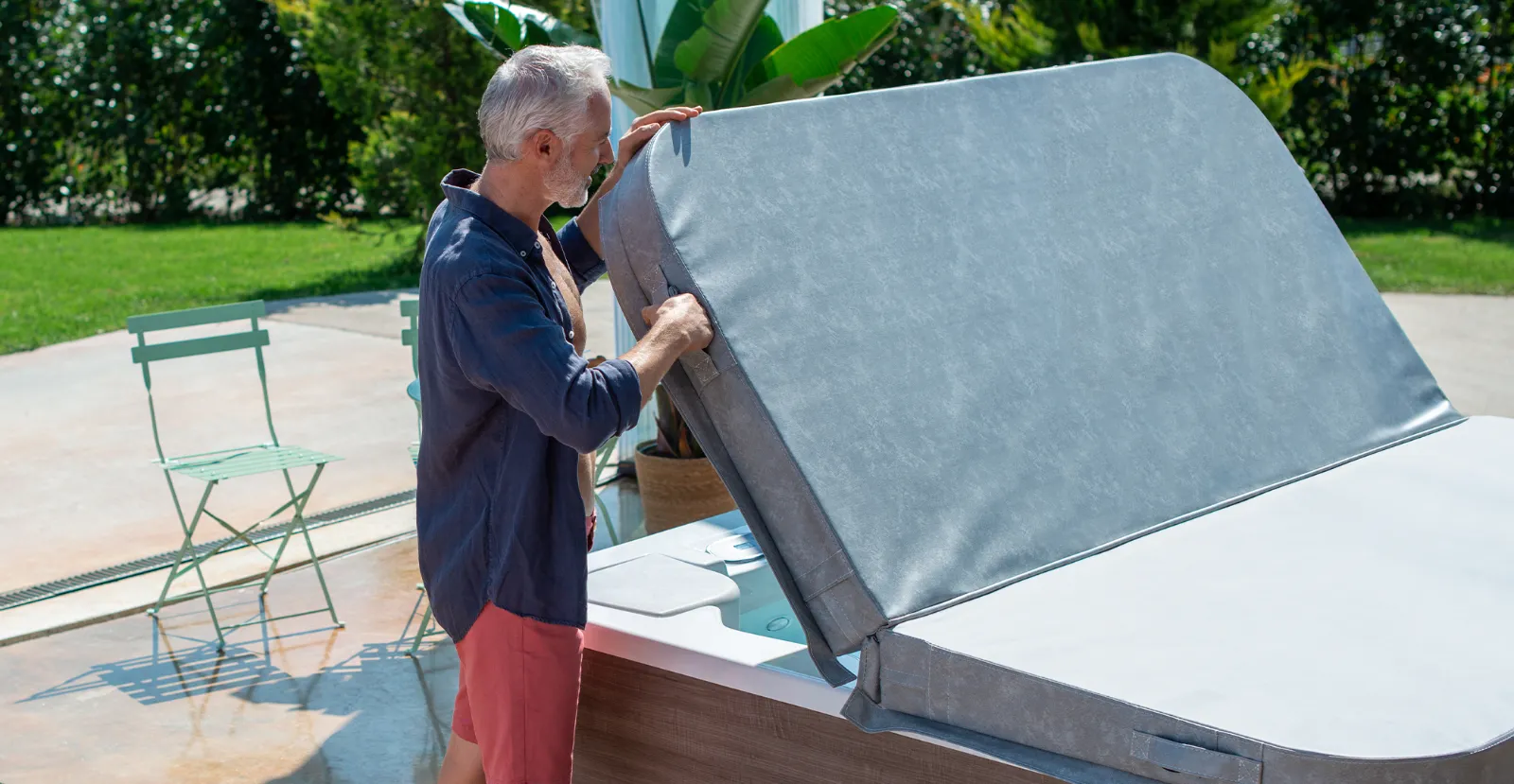
Its benefits include:
- Reducing heat loss during the colder months.
- Limiting heat gain from outside and evaporation during the summer.
- Reducing the need to run the heating and cooling systems.
- Protecting the water from leaves, dust and other debris.
Using the cover properly is one of the simplest ways to optimise hot tub energy consumption, whatever the season.
Heat pump and quiet filtration pump
The heat pump is one of the most interesting solutions for adapting hot tubs to new climate conditions. Its main advantage is that it heats or cools the water by transferring energy, rather than relying solely on an electric heating element.
A hot tub heat pump that heats in winter and cools in summer
A reversible heat pump has two functions:
- In winter, it extracts heat from the outside air to warm the water. It can be up to 5 times more efficient than a conventional electric heater, so it needs far less electricity.
- In summer, it reverses its operation to extract heat from the water and release it outside, cooling the water to as much as 10 °C below the outside temperature.
This second function is becoming increasingly relevant as summer temperatures rise. Picture a Mediterranean terrace in August, with an outside temperature of 36 °C. In these conditions, a hot tub with the water at 38 °C is hardly going to feel refreshing. With a reversible heat pump, you can bring the water temperature down to, say, 26 °C and turn your hot tub into a far more pleasant wellbeing space.
Cooling also opens up new possibilities: with water at 10-15 °C you can enjoy cold therapy sessions without ice, at a controlled and comfortable temperature, as an alternative to traditional ice baths.
The hot tub is therefore no longer just about hot water: it becomes a wellbeing solution for all four seasons.
Suite 4 Seasons: the hot tub designed for year-round enjoyment
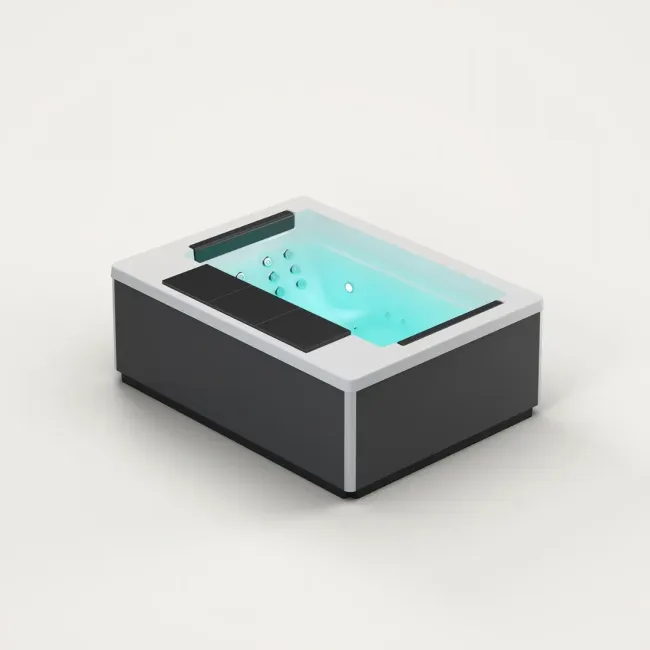
A great example of this philosophy is the Suite 4 Seasons, a 4-seat hot tub ideal for couples, which features the reversible heating and cooling heat pump so you can enjoy hot water in winter and a refreshing experience in summer. With 28 massage points and two ergonomic loungers, it offers complete hydrotherapy in both warm and cold water. Everything is controlled from the hot tub's touchscreen, and at 203 x 150 x 72 cm it is a versatile choice for both outdoor and indoor use.
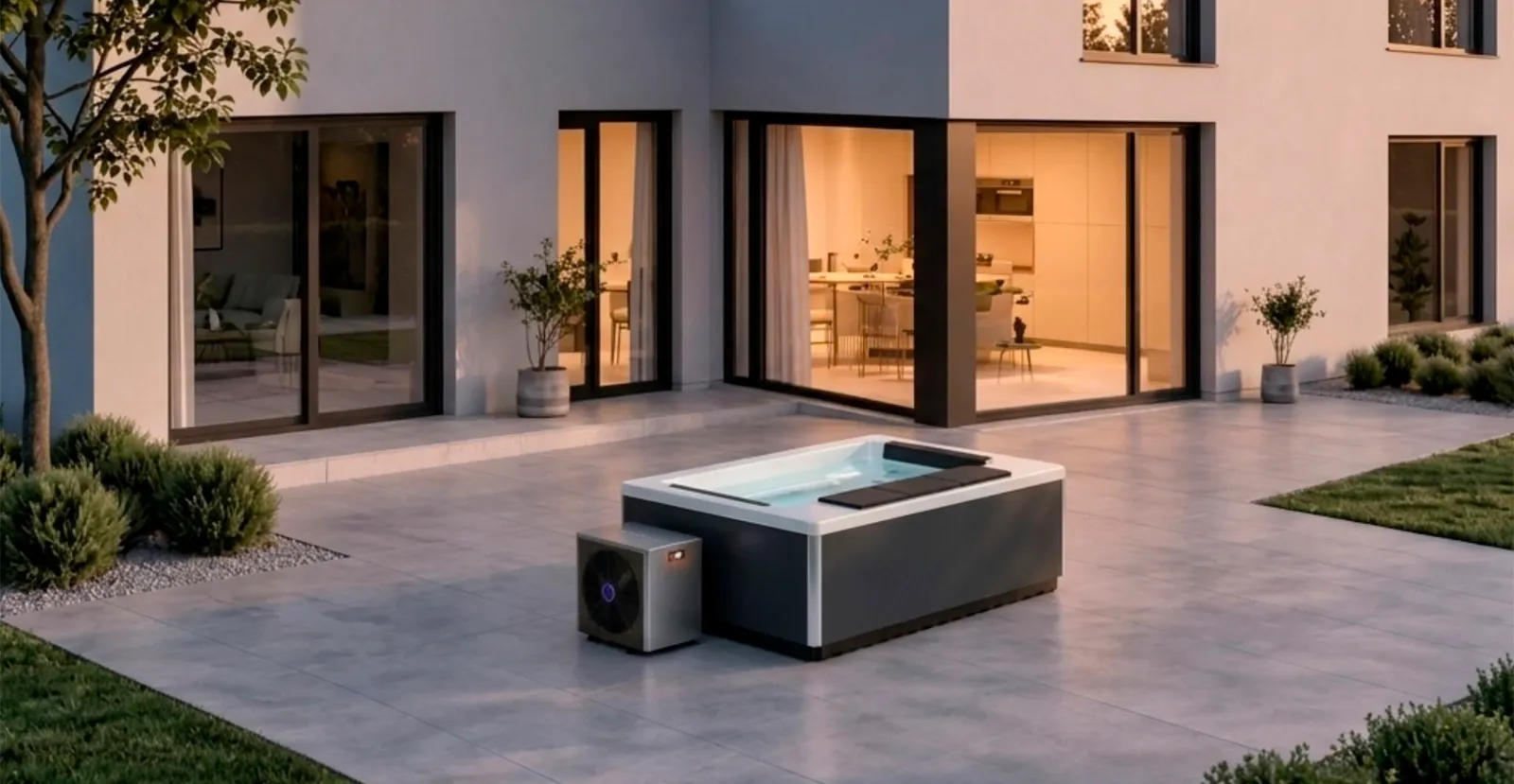
Discover our range of hot tubs with a heat pump and enjoy efficient climate control that heats or cools the water to suit the season, optimising energy consumption without compromising on wellbeing all year round.
Sustainable manufacturing near Barcelona: efficiency from the source
A hot tub's sustainability does not depend solely on the electricity it uses while running. It is also linked to its design, manufacture, durability and maintenance.
Aquavia Spa designs and manufactures its hot tubs near Barcelona, championing European production and full control over its industrial processes.
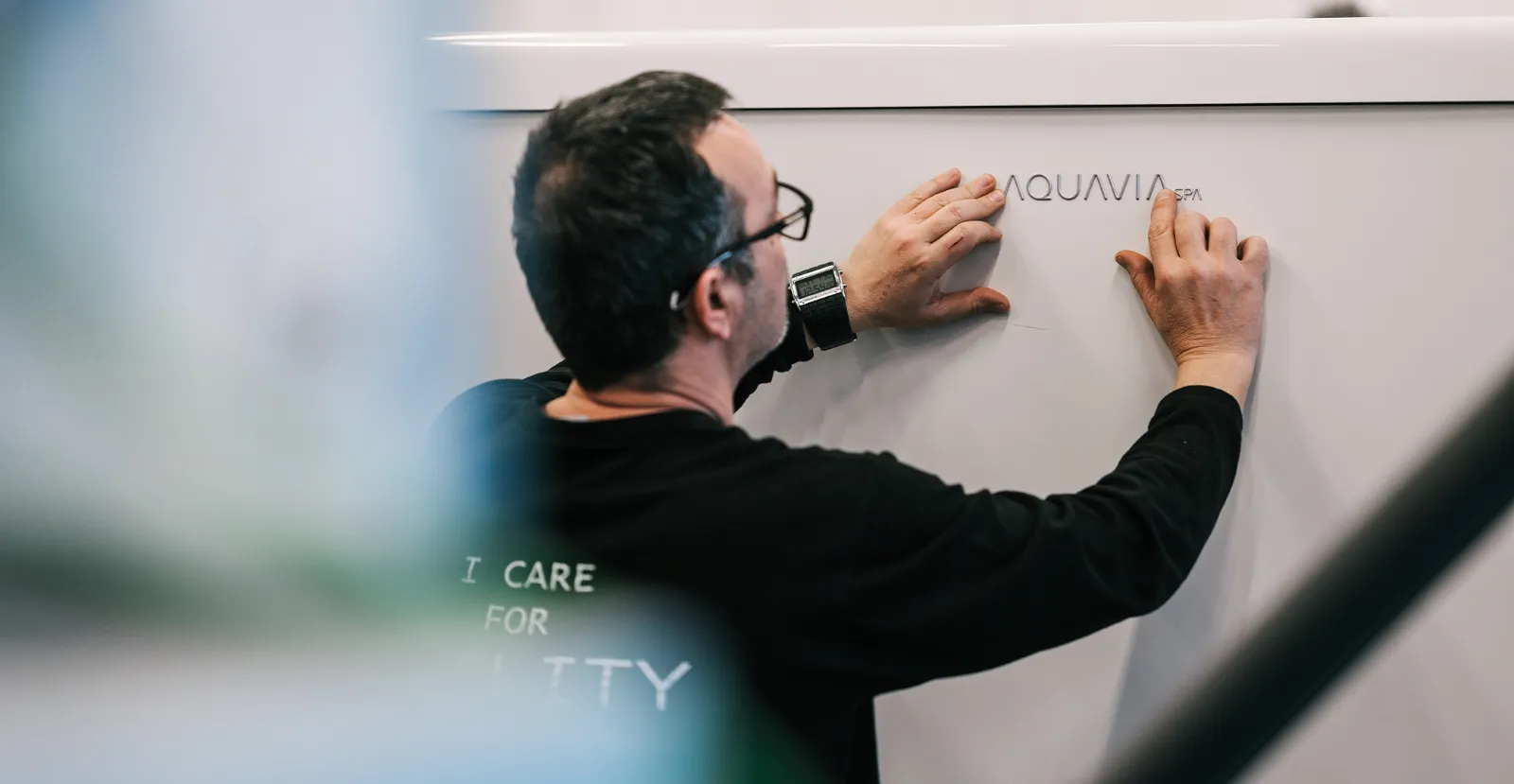
This approach makes it possible to build quality- and efficiency-focused solutions into the earliest stages of product development.
The combination of durable materials, insulation systems and efficient heating and cooling technologies helps to extend the hot tub's lifespan and optimise its performance.
Manufacturing in Europe also keeps design, production and quality control closely connected.
Choosing a sustainable hot tub means considering its efficiency in use as well as the product's durability and where it is made.
8 tips to reduce your hot tub's energy consumption
Whichever model you choose, there are habits that can improve energy efficiency and help you enjoy hydrotherapy more responsibly.
- Adjust the temperature to the season. Don't keep the water at 38 °C all year round. In summer, a lower temperature can be more comfortable.
- Use a reversible heat pump. It heats and cools the water with potentially higher efficiency than conventional electric systems.
- Keep the hot tub covered. Put the cover on whenever you are not using it to limit heat loss and evaporation.
- Prioritise good insulation. Technologies such as EcoSpa and the Nordic Insulation System help maintain the set temperature.
- Schedule heating and cooling. Match operating times to your habits and avoid unnecessary temperature changes.
- Protect the hot tub from excessive sun. In summer, a pergola or shaded area can help prevent the water from overheating.
- Keep the filters clean. A well-maintained filtration system helps the equipment run efficiently.
- Carry out regular maintenance. Checking the cover, insulation, pumps and climate control components helps preserve the hot tub's performance.
The key is not to give up on wellbeing, but to use energy intelligently.
Frequently asked questions about hot tub energy consumption
How much does a hot tub cost to run per month?
It depends on the volume of water, the climate, the chosen temperature, the insulation and how often it is used. To get an estimate, Aquavia Spa offers its hot tub energy consumption calculator, a tool that estimates your monthly electricity cost based on your usage habits, location and electricity tariff.
Can a heat pump cool the water in a hot tub?
Yes, as long as it is a reversible heat pump designed to provide both heating and cooling. This technology lowers the water temperature during the hottest months and extends the ways you can use your hot tub.
Is insulation also useful when you want to cool the water?
Yes. Good insulation reduces heat exchange with the outside. So it helps both to retain heat in winter and to keep the water cool in summer.
Aquavia Spa: sustainable wellbeing 365 days a year
The future of wellbeing lies in installations that can adapt to the climate, optimise energy consumption and offer personalised experiences all year round.
Because enjoying a hot tub should no longer depend on whether it is cold or hot outside, but on being able to choose the ideal temperature at any moment.
Discover our range of hot tubs with a heat pump and request a personalised quote to find the solution that best suits your space, your needs and the way you like to unwind.