es
es fr
fr de
de nl
nl en
en it
it pt
pt ro
ro sv
sv ru
ru hr
hr da
da si
si pl
pl no
no cs
cs fi
fi el
el sr
srSpa insulation: usefulness, comfort and savings guaranteed
Choosing a spa for private use isn't just about the number of seats, massage jets, or exterior design. Spa insulation is a strategic criterion, as it directly influences comfort, energy efficiency, equipment durability, and daily operating costs. A well-insulated spa retains heat better, puts less strain on the heating system, and allows you to enjoy pleasant water all year round, even outdoors.
For individuals wondering how much electricity a spa consumes, the answer depends on several factors: the set temperature, the climate, the frequency of use, the quality of the cover, wind exposure, and the spa's level of thermal insulation. This is why insulation should be considered an investment, not just an accessory.
.webp)
Why is spa insulation so important?
Reduce heat loss
A spa contains a volume of water maintained at a high temperature. Without effective insulation, heat escapes through the plumbing, the apron, the lower part, and the water surface. These heat losses force the heater to operate more frequently, which increases the spa's electricity consumption.
Maintain a constant temperature
Good insulation helps stabilize the temperature between uses. This prevents significant fluctuations and makes the experience more comfortable. For a spa installed in a garden or on a terrace, this stability is essential, as the electricity consumption of outdoor spas is more sensitive to weather conditions.
Improving user comfort all year round
A well-insulated spa allows for regular use in autumn, winter, and spring. The water more easily maintains the desired temperature, preheating time is reduced, and the user can enjoy consistent comfort without constantly worrying about the weather.
How does the thermal insulation of a spa work?
Tank insulation
The spa tub is one of the main points of heat loss. Effective insulation limits heat exchange between the hot water and the outside air. It also helps to protect the spa's structure from temperature variations.
Plumbing insulation
The pipes carry water to the jets and various hydraulic circuits. If they are not protected, they become a source of heat loss. Plumbing insulation is therefore important to maintain the overall performance of the system.
The role of thermal insulation
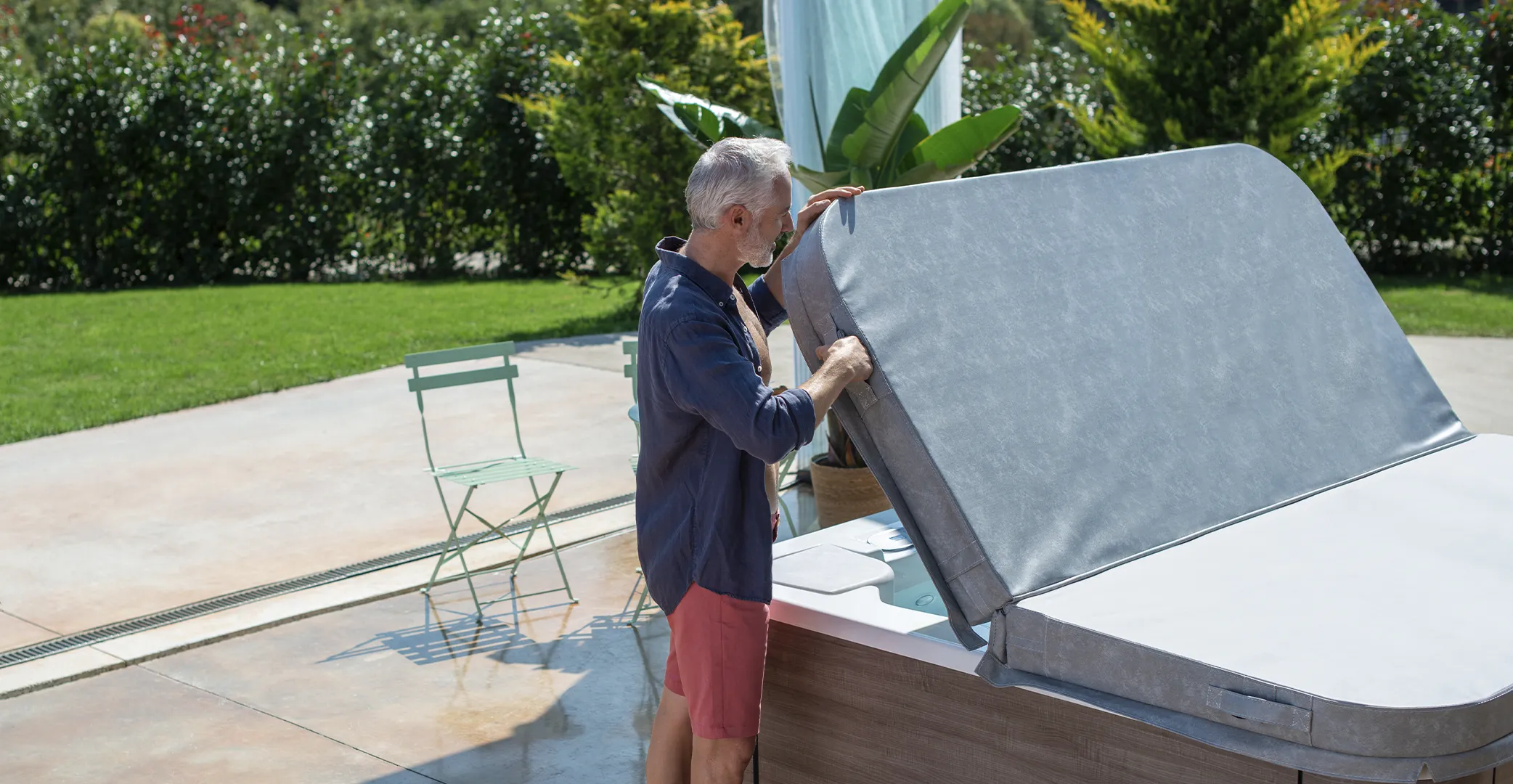
The water's surface is one of the areas where heat escapes most quickly. A spa thermal cover limits evaporation, protects the water from dirt, and reduces heating needs. At Aquavia Spa, , Prime Tex Cover or theEnergy Saving Cover It is designed to maintain water temperature and quality, with a clear objective: to reduce consumption by up to 67%.
The insulating panels of the deck
A spa's apron isn't just for looks. Well-designed insulating panels create a barrier against the cold, especially on the sides. They contribute to energy efficiency and protect the internal components.
The different types of insulation for a spa
Complete insulation Nordic Insulation System
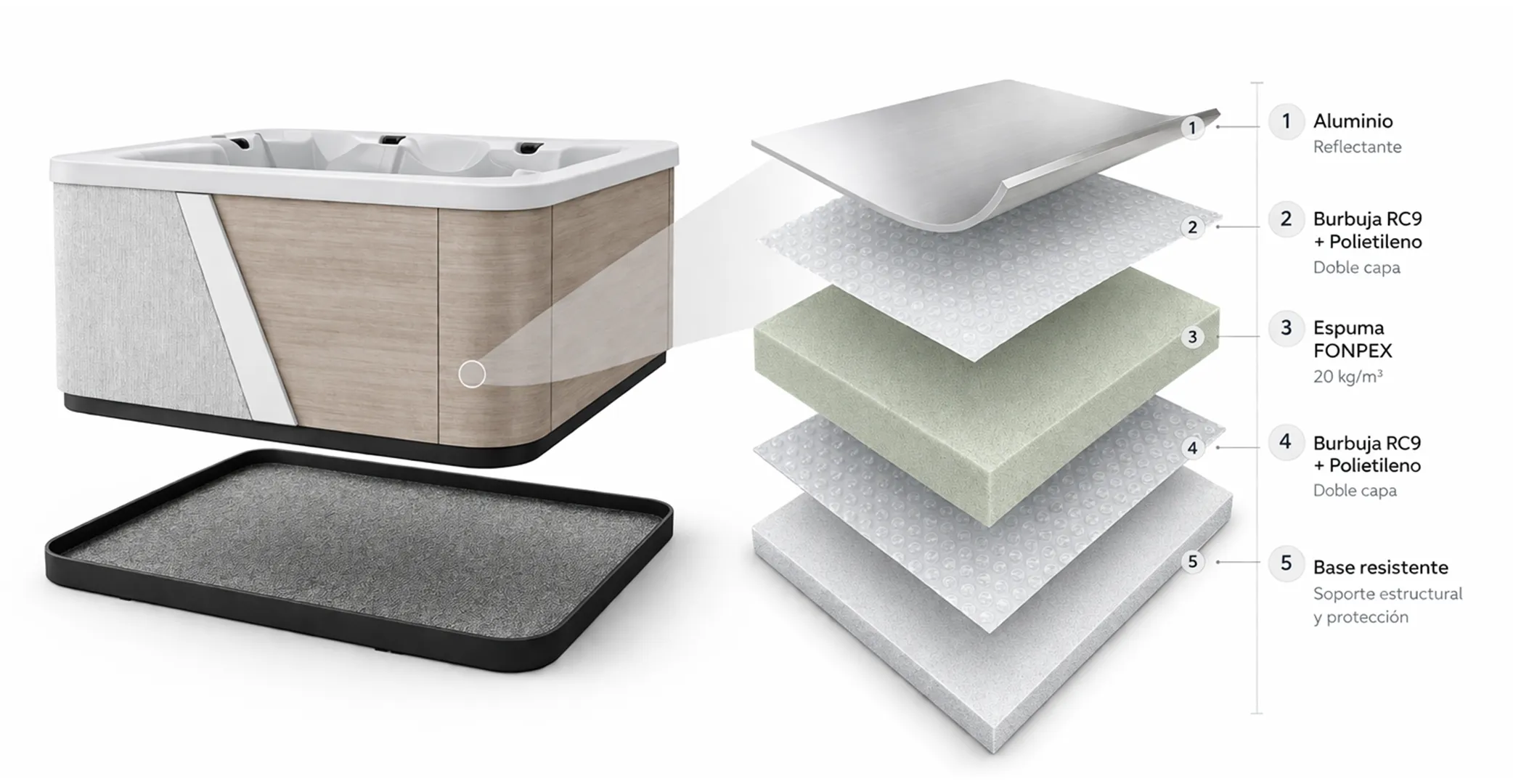
THE Nordic Insulation System d'Aquavia Spa This is a solution developed for demanding climates. It is a 5-layer insulation system that covers the side surface of the spa, in addition to the standard integrated lower insulation found in spas. Aquavia. It creates an air chamber that limits heat loss and optimizes energy efficiency.
Complete insulation EcoSpa
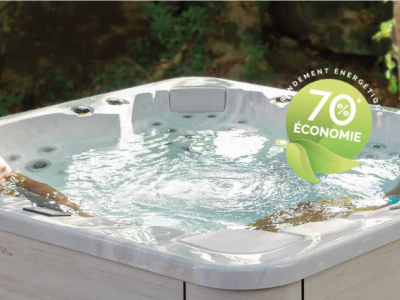
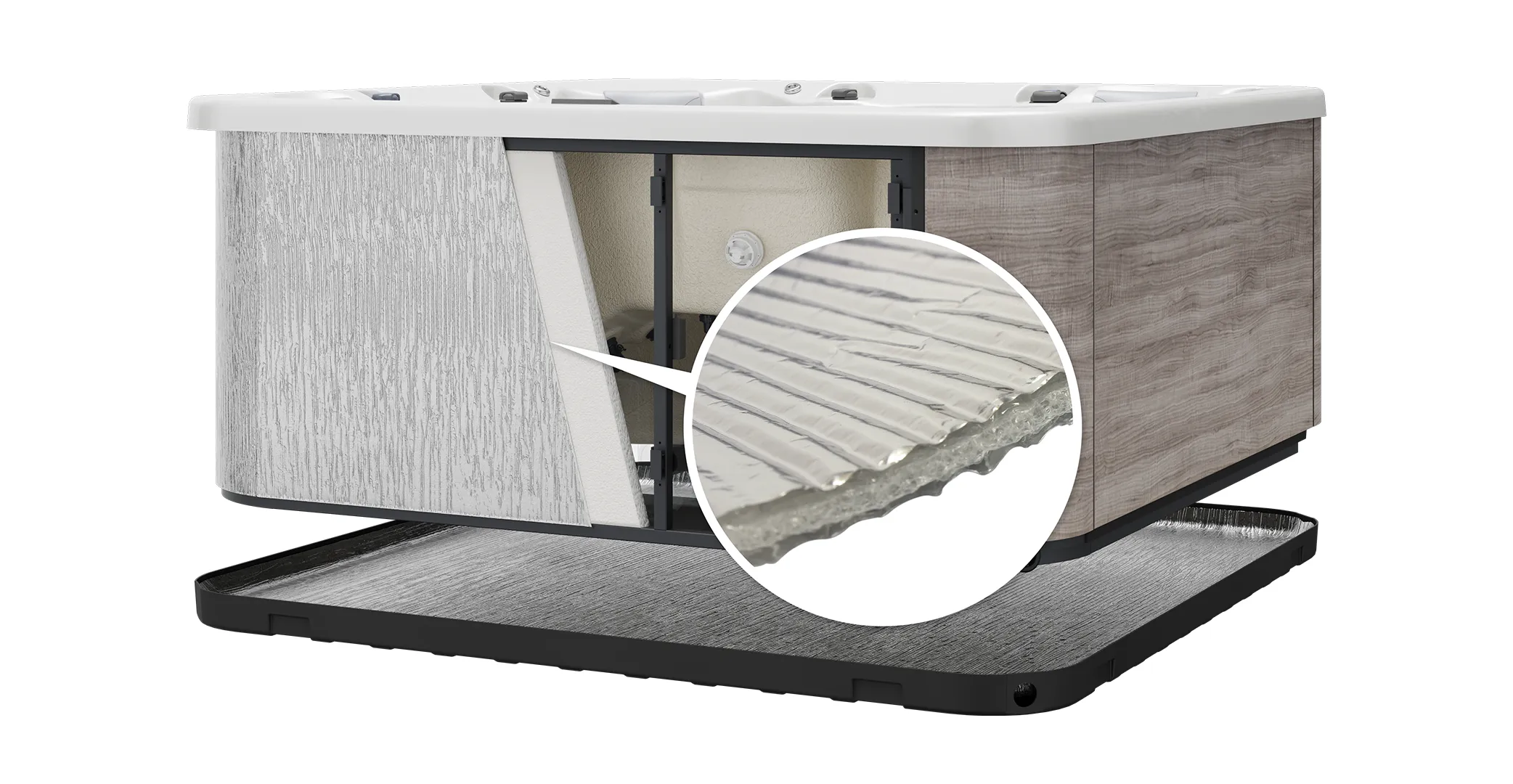
The system EcoSpa d'Aquavia Spa This is a complete insulation solution designed to improve the spa's energy efficiency during daily use. Its function is to reduce heat loss and help maintain a more stable water temperature. Thanks to this thermal protection, the heating system operates less frequently, thus optimizing electricity consumption. EcoSpa This is particularly interesting for users who want to enjoy their spa year-round with greater comfort and better energy efficiency.
Which solution is the most effective ?
|
Criteria |
EcoSpa |
Nordic Insulation System |
|
Composition |
An additional 3 cm layer of polystyrene around the spa furniture |
10 mm thermal insulation composed of five layers, with an insulating air chamber on the base and sides |
|
Economy energy |
69% |
Until 80% |
|
Reference conditions |
Maintains water temperature even at -15°C |
Water at 38°C with an outside temperature of -15°C, compared to a spa without this insulation |
|
Recommended For |
Users who wish to improve energy efficiency and reduce daily consumption |
Cold climates, outdoor spas, and intensive year-round use |
How much can you save with good insulation?
Reduction in electricity consumption
The electricity consumption of a jacuzzi can vary significantly depending on the model, the outside temperature, and usage habits. High-quality insulation reduces heating cycles and helps keep the water hot for longer.
Impact on energy bills
Better insulation doesn't eliminate energy consumption, but it does allow you to control it. For a homeowner, this means more worry-free use: less heat loss, fewer heating cycles, and a more predictable bill. The issue of electricity consumption in a jacuzzi should therefore be analyzed over the entire lifespan of the spa, and not just at the time of purchase.
A concrete example of annual consumption
The example below is indicative. It does not replace a personalized estimate, as each installation depends on the climate, electricity rates, model, and usage.
|
Situation |
Efficiency Energy |
Consumption annual estimated |
Cost annual approximate* |
Consequence likely |
|
Spa without insulation |
Weak |
4,000–6,000 kWh/year |
€800–1,200/year |
More frequent heating and high heat loss |
|
Spa with good thermal cover |
Average has High |
2,500–4,000 kWh/year |
€500–800/year |
Reduced evaporation and better heat retention |
|
Spa with insulation EcoSpa |
High |
1,240–1,860 kWh/year |
€248–372/year |
Better controlled consumption thanks to energy savings of up to 69% |
|
Spa with Nordic Insulation System |
Very high |
800–1,200 kWh/year |
€160–240/year |
Maximum thermal efficiency, with up to 80% energy savings compared to a spa without this insulation |
*Estimate calculated with A price indicator of electricity of €0.20/kWh. The numbers are approximate And can vary according to THE climate, there temperature of order, there frequency usage, , THE model of spa And THE price subscribed.
What factors influence the energy efficiency of a spa?
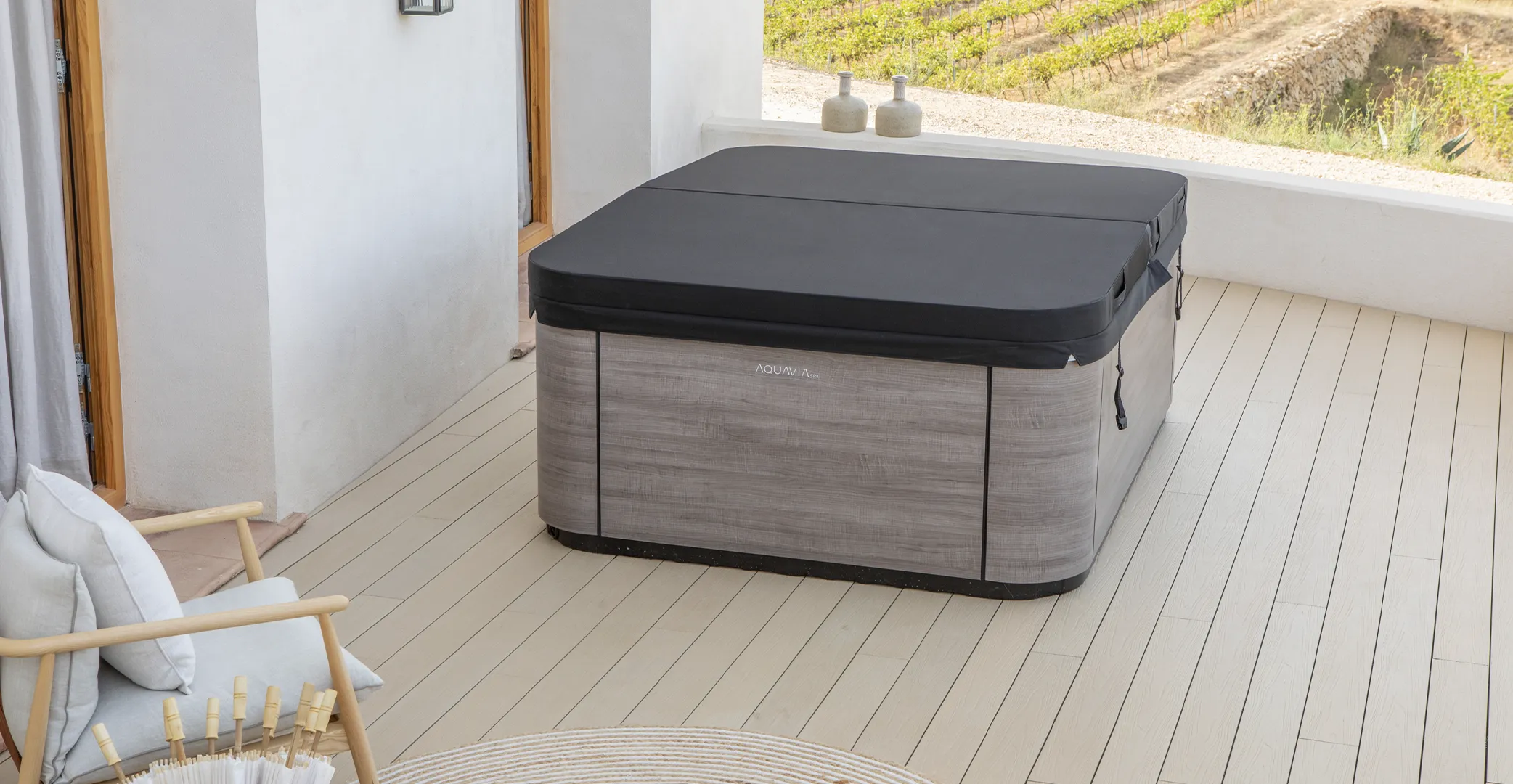
Several parameters determine actual performance: the quality of the insulation, the programmed temperature, the frequency of cover opening, wind exposure, outside temperature, the spa's location, the quality of the seals, the water volume, and the efficiency of the components.
How can I improve the insulation of my existing spa?
Install better coverage: The first improvement often involves replacing an old, deformed, or poorly fitting cover. A high-performance cover reduces evaporation losses and better protects the water's surface.
Check the seals: Worn or poorly positioned seals can cause cold air leaks. Regular checks help maintain thermal performance and prevent unnecessary increases in energy consumption.
Add insulating panels: In some cases, it is possible to add or improve the insulating panels around the spa deck. This work must be carried out carefully to avoid blocking access to the technical components. For example, all spas in the line Exclusive have insulation Ecospa Integrated as standard.
Protecting the spa from the wind: Wind accelerates heat loss. Installing the spa in a sheltered area, adding a privacy screen, or integrating the equipment into the landscaping can significantly improve user comfort.
Why choose a spa with premium insulation?
A worthwhile investment: A well-insulated spa may have a higher initial cost, but it generates value over the long term. Controlled energy consumption, consistent comfort, and reduced heating efforts improve the return on investment.
Greater everyday comfort: Users enjoy more stable water, a more pleasant spa experience, and a wellness experience available at any time. This is particularly important for families who want to integrate the spa into their relaxation routine.
Extended equipment lifespan: When the heating and components are under less stress, the entire system operates under better conditions. This can help preserve the spa's performance over time. Aquavia Spa reinforces this logic with European manufacturing focused on quality, design and durability, as well as comprehensive support: customer service, technical support, spare parts, distributor network and premium guarantees.
At the house of Aquavia Spa, Our spas and swim spas feature high-performance insulation to limit heat loss and reduce your electricity consumption throughout the year.
Discover our collection of spas and find the ideal model to enjoy optimal comfort while saving energy.